
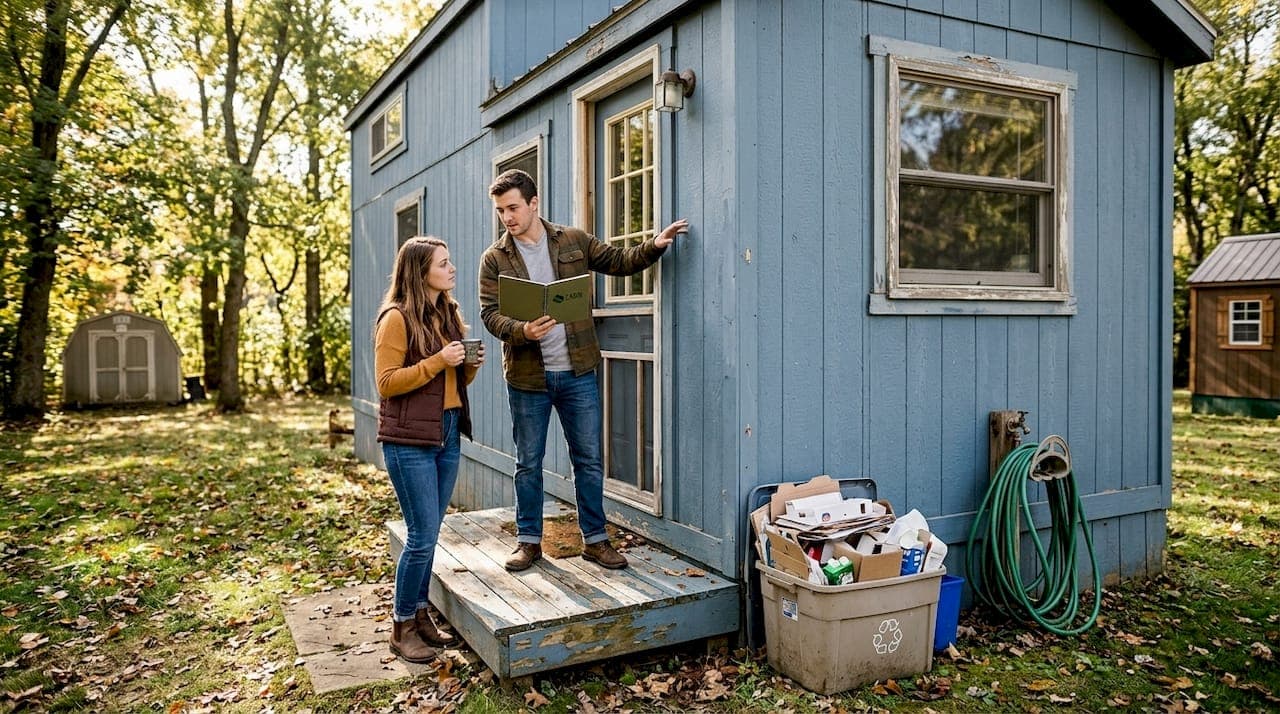
Homeowners and renters across Kentucky and Ohio face a growing challenge: finding affordable, flexible storage without sacrificing valuable yard space or breaking the bank on monthly rental fees. Traditional storage units and oversized garages often fall short, offering either limited access or excessive square footage you don't need. Tiny homes have emerged as a surprisingly effective solution in 2026, combining secure storage with functional living space in a single, customizable structure. Whether you're downsizing, need overflow storage for seasonal gear, or want a guest suite that doubles as a workshop, tiny homes deliver versatility that traditional options simply can't match. Let's explore how these compact structures are reshaping storage solutions across the region.
Table of Contents
- Why storage is a key consideration for tiny home buyers in Kentucky and Ohio
- How tiny homes maximize storage through design and modular construction
- Practical uses of tiny homes for additional storage, living space, and downsizing
- Comparing tiny homes with other storage solutions for Kentucky and Ohio residents
- Explore customizable tiny homes and storage buildings with EZ-Cabin
- Frequently asked questions about tiny homes and storage
Key takeaways
| Point | Details |
|---|---|
| Dual purpose design | Tiny homes integrate storage and living space in one structure, eliminating the need for separate buildings. |
| Modular efficiency | Prefabricated construction maximizes every square foot with built-in storage solutions and vertical space utilization. |
| Rent to own access | Flexible financing options make tiny homes accessible without large upfront costs or credit checks. |
| Custom configurations | AI-powered design tools let you tailor layouts, shelving, and features to match your exact storage and living needs. |
Why storage is a key consideration for tiny home buyers in Kentucky and Ohio
Storage challenges plague homeowners and renters throughout Kentucky and Ohio for several practical reasons. Many older homes in the region lack adequate closet space, basement storage, or attached garages, forcing residents to pile belongings in attics or rent off-site units. Urban areas like Louisville and Cincinnati see smaller lot sizes as development intensifies, leaving little room for traditional outbuildings. Rural properties often require dedicated space for lawn equipment, hunting gear, and seasonal items like holiday decorations or camping supplies.
Garage space optimization remains a common concern, with many garages cluttered beyond functionality. The typical single-car garage in Kentucky measures just 12 by 20 feet, barely enough for a vehicle, let alone tools and storage bins. Renters face even tighter constraints, often prohibited from building permanent structures or modifying existing spaces. This creates a perfect storm where storage needs exceed available options.
Tiny homes address these pain points by offering a standalone structure that doesn't require permanent foundation work in most cases. You gain immediate storage capacity without the permitting headaches of traditional construction. The compact footprint fits even modest yards, and the structure can be relocated if you move properties. Here's why buyers specifically choose tiny homes for storage:
- Seasonal equipment storage for boats, ATVs, and lawn care tools
- Workshop space that keeps projects separate from living areas
- Climate controlled environment for temperature sensitive items
- Secure storage that deters theft better than open sheds
- Multi-generational living arrangements with private guest quarters
The shift toward tiny homes reflects changing priorities in 2026. People want storage solutions that grow with their needs rather than static boxes that collect dust. A tiny home can start as pure storage, transition to a home office, then become a rental unit as your situation evolves. That flexibility makes the initial investment far more valuable than a traditional storage shed that serves only one purpose for decades.
How tiny homes maximize storage through design and modular construction
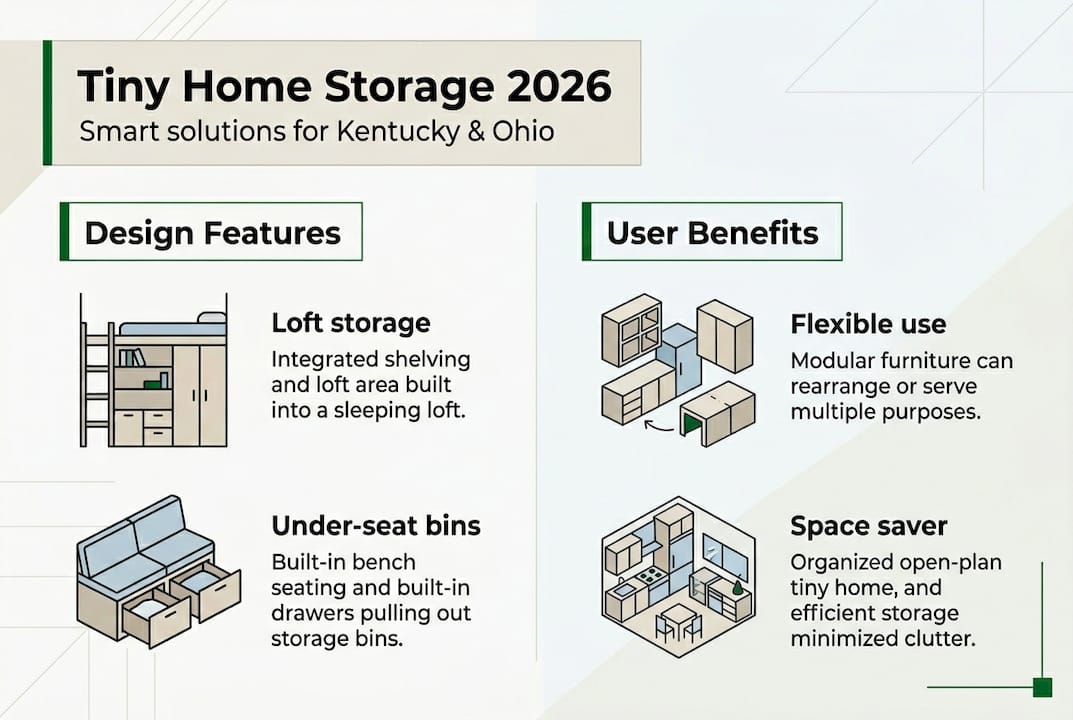
Modular construction techniques give tiny homes a significant advantage over site-built alternatives when it comes to storage efficiency. Factory-built components arrive precision-cut and ready to assemble, eliminating the material waste and measurement errors common in traditional construction. This controlled environment allows builders to incorporate modular garage advantages like integrated shelving systems, overhead storage racks, and custom cabinetry during the initial build rather than as afterthoughts.
Compare a traditional 10 by 12 shed to a similarly sized tiny home. The shed offers four walls and a door, maybe a small window. The tiny home arrives with built-in loft storage accessible via ladder or stairs, wall-mounted organization systems, under-floor storage compartments, and multipurpose furniture that hides belongings. Here's how they stack up:
| Feature | Traditional Shed | Modular Tiny Home | | --- | --- | | Usable storage volume | 60-70% of floor space | 85-95% including vertical areas | | Built-in organization | Rare, usually DIY | Standard in most models | | Climate control | Minimal insulation | Full HVAC options available | | Customization timeline | Weeks of manual work | Factory installed during build |
Multifunctional furniture transforms how you use interior space. A bench seat lifts to reveal storage bins underneath. A murphy bed folds into the wall, exposing shelving units. Kitchen islands include pullout drawers and hanging pot racks. These features come standard in many customizable cabin designs, allowing you to specify exactly which storage solutions matter most before construction begins.
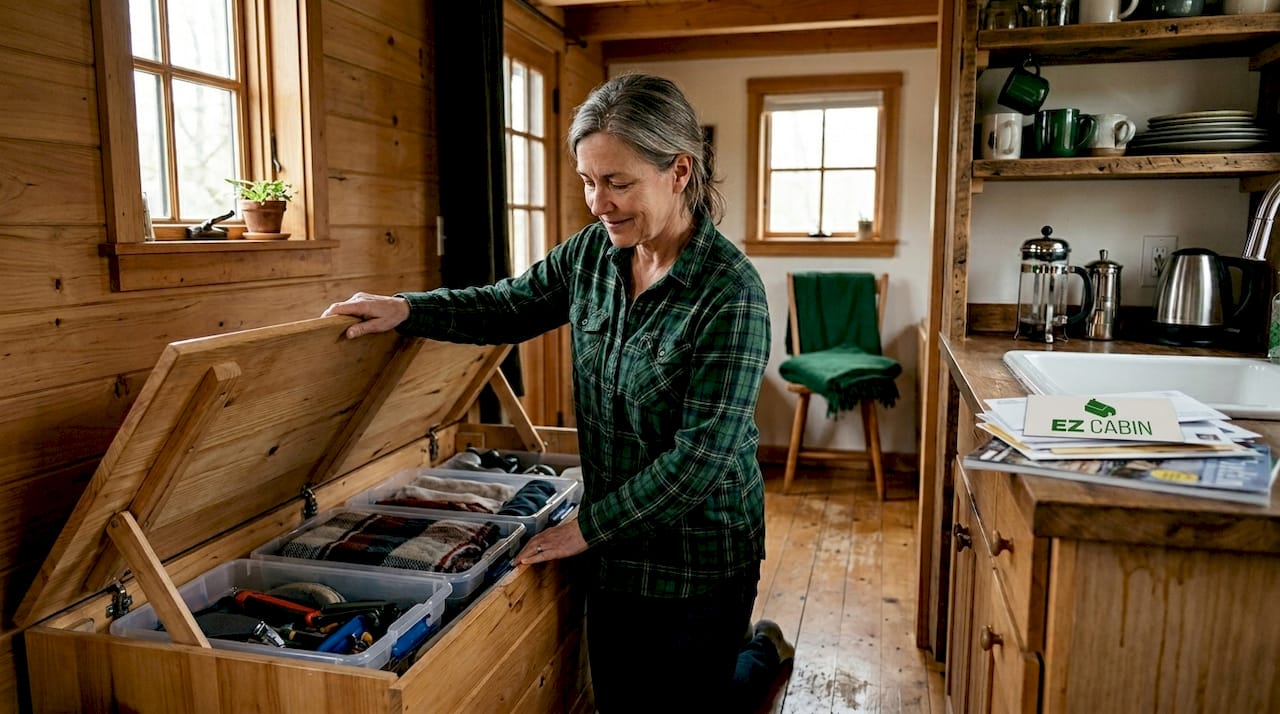
Pro Tip: Plan your tiny home layout by listing everything you need to store, then work backward to determine which vertical spaces can accommodate those items without sacrificing headroom or mobility.
Vertical space utilization separates amateur tiny home designs from professional builds. Ceiling heights of 10 to 13 feet create room for overhead storage platforms that hold seasonal items you access infrequently. Wall studs become mounting points for pegboards, magnetic strips, and adjustable shelving that adapt as your needs change. The key is designing storage zones based on access frequency. Daily items stay at waist height, weekly items go overhead, and seasonal belongings occupy loft areas.
Prefabricated construction also speeds delivery timelines dramatically. While a custom-built garage might take 8 to 12 weeks from groundbreaking to completion, a modular tiny home ships within 1 to 4 weeks after order. You skip the weather delays, contractor scheduling conflicts, and material shortages that plague traditional builds. The structure arrives mostly complete, requiring only foundation preparation and utility hookups if desired. This efficiency translates to lower labor costs and faster access to your new storage solution.
Practical uses of tiny homes for additional storage, living space, and downsizing
Kentucky and Ohio residents deploy tiny homes in surprisingly diverse ways that go far beyond simple storage. The most common applications blend storage with functional living space, creating hybrid structures that serve multiple household needs simultaneously. Understanding these tiny home use cases helps you envision how a compact structure might solve your specific challenges.
Key ways locals utilize tiny homes include:
- Overflow storage for growing families who've outgrown their main residence
- Home office that separates work from living areas while housing files and equipment
- Guest quarters that welcome visitors without cluttering your primary home
- Hobby workshop for woodworking, crafts, or automotive projects
- Rental unit generating passive income on your property
- Downsizing transition space before selling a larger home
Determining your tiny home's best role requires honest assessment of your priorities. Follow these steps:
- List your top three pain points (lack of storage, no guest space, need income, etc.)
- Measure available yard space and check local zoning for size restrictions
- Calculate your budget including delivery, foundation, and utility connections
- Decide whether you need climate control, plumbing, or electrical service
- Choose between permanent placement or portable foundation for future flexibility
Downsizing with tiny homes offers financial and lifestyle advantages that appeal to empty nesters and retirees throughout the region. A couple in Somerset might move into a 400 square foot tiny home on their property, renting out their main house for steady income. This arrangement cuts utility bills, reduces maintenance burdens, and provides financial cushion without relocating to an unfamiliar area. The tiny home stores their essential belongings while the rental income covers property taxes and insurance.
Real-world scenarios illustrate these benefits clearly. A family in London, Kentucky uses their tiny home as a combination storage unit and teenage hangout space. Lawn equipment and holiday decorations occupy the ground floor, while a loft area gives their high schooler a private study zone away from younger siblings. Total cost ran $18,000 with rent-to-own financing, far less than building a traditional addition to their home.
Another example involves a Lexington resident who converted a tiny home into a pottery studio. She stores clay, glazes, and finished pieces in custom shelving units, with a small kiln occupying one corner. The structure sits 30 feet from her main house, keeping messy projects contained while remaining easily accessible. When she eventually retires from pottery, the space converts to guest quarters or resells to recover most of her investment.
The key insight is versatility. Unlike a storage unit you rent monthly or a shed that serves one purpose, a tiny home adapts as your life changes. That adaptability makes the upfront investment far more valuable over time, especially in a region where property values continue rising and housing flexibility matters more each year.
Comparing tiny homes with other storage solutions for Kentucky and Ohio residents
Choosing between tiny homes and traditional storage options requires understanding the trade-offs in cost, functionality, and long-term value. Each solution serves different needs, but tiny homes offer unique advantages when you need more than just square footage for boxes. Let's break down how these options compare for typical Kentucky and Ohio households.
| Factor | Tiny Home | Traditional Garage | Storage Unit | | --- | --- | | Upfront cost | $15,000 to $50,000 | $8,000 to $25,000 | $0 (monthly rental) | | Monthly expense | $0 after purchase | $0 after purchase | $80 to $200 | | Living space option | Yes, fully functional | Possible with renovation | No | | Relocation ability | Yes, with proper transport | No, permanent structure | N/A | | Customization | Extensive before build | Limited, DIY after | None |
Traditional garages excel when you need pure vehicle and equipment storage without living amenities. They integrate visually with existing homes and often boost property values more than standalone structures. However, they require permanent foundations, building permits, and significant construction time. A 24 by 24 foot garage costs $20,000 to $25,000 in Kentucky, not including electrical or HVAC systems.
Storage units provide immediate access without upfront investment, making them attractive for temporary needs. You can rent a 10 by 20 unit for around $120 monthly in most Ohio cities. But over five years, that's $7,200 with zero equity to show for it. You're also driving to a separate location every time you need something, wasting time and gas. Climate control adds $30 to $50 monthly, and you have no control over security beyond the facility's basic measures.
Tiny homes split the difference by offering storage plus flexibility. You own the structure outright (or build equity through rent-to-own), gaining an asset that appreciates rather than an expense that drains your budget monthly. The ability to add plumbing, electricity, and insulation means the space serves multiple purposes. Store your belongings today, convert it to a rental unit tomorrow, use it as a guest house next year.
Pro Tip: Calculate the five-year total cost of ownership for each option, including opportunity costs like lost rental income or property value impacts, before deciding based solely on sticker price.
Environmental considerations also matter in Kentucky and Ohio, where weather extremes range from humid summers to icy winters. Tiny homes with proper insulation protect temperature-sensitive items like paint, electronics, and photographs far better than metal sheds or unheated garages. Portable building types in Kentucky and Ohio vary in insulation quality, so verify R-values before purchasing if you plan to store anything vulnerable to temperature swings.
Zoning regulations differ dramatically across counties and municipalities. Some areas restrict accessory dwelling units to certain lot sizes or require minimum distances from property lines. Others prohibit structures without permanent foundations entirely. Check with your local planning department before committing to any storage solution. Tiny homes on skids often qualify as temporary structures, sidestepping some restrictions that apply to permanent buildings.
The right choice depends on your timeline and goals. Need storage for six months while renovating? Rent a unit. Want a permanent workshop that might become a rental later? Choose a tiny home. Planning to stay in your current home for decades with no need for extra living space? A traditional garage makes sense. Match the solution to your actual situation rather than defaulting to the cheapest option that might cost more long-term.
Explore customizable tiny homes and storage buildings with EZ-Cabin
Ready to solve your storage challenges with a structure that grows with your needs? EZ-Cabin specializes in customizable tiny homes and portable buildings designed specifically for Kentucky and Ohio properties. Our AI-powered design tools let you visualize and personalize every detail before you buy, from exterior colors to interior shelving configurations. Shop all buildings to browse inventory, or custom build your own cabin tailored to your exact storage and living requirements.
We offer guaranteed financing approval with no credit check required, just your first month's payment to get started. Most structures deliver within 1 to 4 weeks, and our rent-to-own programs make ownership accessible without massive upfront costs. Visit our London or Somerset, Kentucky locations to see buildings in person, or complete your entire purchase online. Explore financing options that fit your budget and start building equity in a storage solution that actually works for your life.
Frequently asked questions about tiny homes and storage
How much storage can a typical tiny home provide?
A standard 8 by 12 foot tiny home offers roughly 96 square feet of floor space, but vertical storage and loft areas often double usable capacity to 150 to 200 cubic feet. Larger models at 12 by 24 feet provide 288 square feet with potential for 400 to 500 cubic feet when you include overhead storage, under-floor compartments, and wall-mounted systems.
Are tiny homes allowed on all properties in Kentucky and Ohio?
Zoning regulations vary significantly by county and municipality. Many areas permit tiny homes as accessory structures if they meet setback requirements and don't exceed size limits, typically 400 to 600 square feet. Some jurisdictions classify them as temporary buildings when placed on skids rather than permanent foundations. Always verify local codes before purchasing.
What customization options exist for maximizing storage?
Factory-built tiny homes can include built-in shelving units, overhead loft platforms, pull-out drawers under stairs, wall-mounted pegboards, and custom cabinetry designed around your specific items. You can specify ceiling heights up to 13 feet to create vertical storage zones, add exterior storage sheds attached to the main structure, or install murphy beds and fold-down tables that reveal hidden compartments.
Can tiny homes be moved or relocated?
Most tiny homes built on skid foundations can be transported using a flatbed truck or trailer, though moving structures larger than 10 by 20 feet may require special permits and professional hauling services. Relocation costs typically range from $500 to $2,000 depending on distance and size. Structures on permanent foundations require deconstruction and rebuilding, making them essentially immobile.
Is rent to own an option for tiny homes in this region?
Yes, EZ-Cabin and many regional dealers offer rent-to-own programs with guaranteed approval and no credit checks. You typically pay the first month upfront, then make monthly payments that build equity toward ownership. Terms usually run 36 to 60 months, with total costs comparable to outright purchase but spread over time to ease budget constraints.