
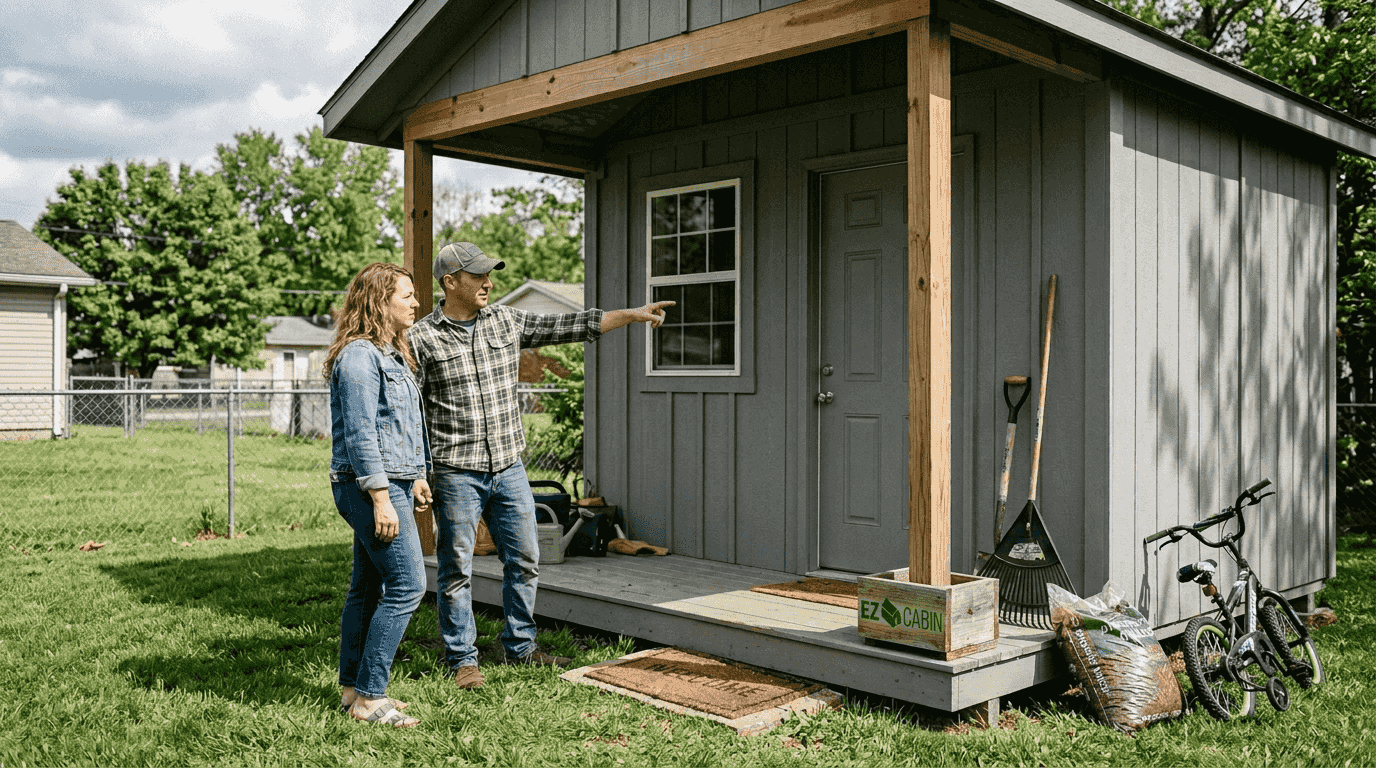
Modern sheds have evolved far beyond simple storage spaces cluttering backyards across Kentucky and Ohio. Today's homeowners are discovering these versatile structures serve as home offices, creative studios, guest quarters, and hobby workshops that enhance both property value and quality of life. With remote work reshaping how we use our homes and outdoor living spaces commanding premium prices in the real estate market, investing in a well-designed modern shed offers measurable returns alongside practical lifestyle benefits. This guide explores the financial considerations, construction options, and strategic planning needed to make a smart shed investment in 2026.
Table of Contents
- How modern sheds enhance property value and lifestyle
- Cost considerations and construction types for modern sheds
- Calculating return on investment (ROI) and maximizing benefits
- Choosing and customizing your modern shed for Kentucky and Ohio homes
- Find your ideal modern shed with EZ-Cabin
- Frequently asked questions
Key takeaways
| Point | Details |
|---|---|
| Property value boost | Modern sheds increase home values by 5-10% in Kentucky and Ohio markets |
| Functional versatility | These structures serve as offices, studios, guest rooms, or hobby spaces beyond storage |
| Construction options | Post-frame offers affordability, stick-built provides flexibility, timber-frame delivers aesthetics |
| ROI factors | Returns include property appreciation, productivity gains, cost savings, and potential tax benefits |
How modern sheds enhance property value and lifestyle
Homeowners in Kentucky and Ohio are realizing that customizable cabins affordable living investment opportunities extend to modern sheds. These structures boost curb appeal while adding valuable square footage that buyers actively seek. Unlike traditional storage sheds, modern designs incorporate architectural elements that complement your home's aesthetic, creating cohesive outdoor living environments that command attention in competitive real estate markets.
The functional flexibility of modern sheds addresses evolving family needs. You can transform these spaces into dedicated home offices that eliminate commute times and create professional work environments separate from household distractions. Creative professionals use them as studios where natural light and privacy fuel productivity. Growing families appreciate the option to convert sheds into guest quarters for visiting relatives or teenage retreats that provide independence while keeping everyone close.
Regional market data shows outdoor living enhancements carry significant weight in Kentucky and Ohio home valuations. According to property value impact studies, well-designed additions that expand usable space generate strong buyer interest. A well-designed and professionally constructed office shed adds value to your property while meeting immediate lifestyle needs. The investment pays dividends through daily use while building equity.
Remote work trends have permanently altered how Americans view their homes. The shift toward flexible work arrangements means dedicated office spaces are no longer luxury features but practical necessities. Modern sheds solve this challenge without the expense and disruption of home additions. You gain professional workspace that maintains work-life boundaries, improves focus, and potentially qualifies for home office tax deductions.
Pro Tip: Document your shed's construction quality and features with photos and receipts. This documentation supports higher valuations during appraisals and demonstrates the structure's value to potential buyers.
Consider these lifestyle benefits:
- Separation of work and home life reduces stress and improves productivity
- Dedicated creative spaces encourage hobbies and personal development
- Guest accommodations strengthen family connections without sacrificing privacy
- Specialized storage protects valuable equipment and collections
Modern sheds represent more than square footage. They create opportunities for personal growth, professional success, and family connection while building measurable home equity.
The backyard cabin benefits kentucky ohio homeowners experience extend beyond financial returns to quality of life improvements that justify the investment regardless of resale considerations.
Cost considerations and construction types for modern sheds
Understanding shed costs requires examining multiple factors that influence final investment amounts. Size represents the most obvious variable, with larger structures requiring more materials and labor. A basic 10x12 office shed costs significantly less than a 16x24 studio with premium finishes. Material choices affect both upfront costs and long-term durability. Regional requirements in Kentucky and Ohio, including foundation specifications and weather-resistant features, add location-specific expenses.
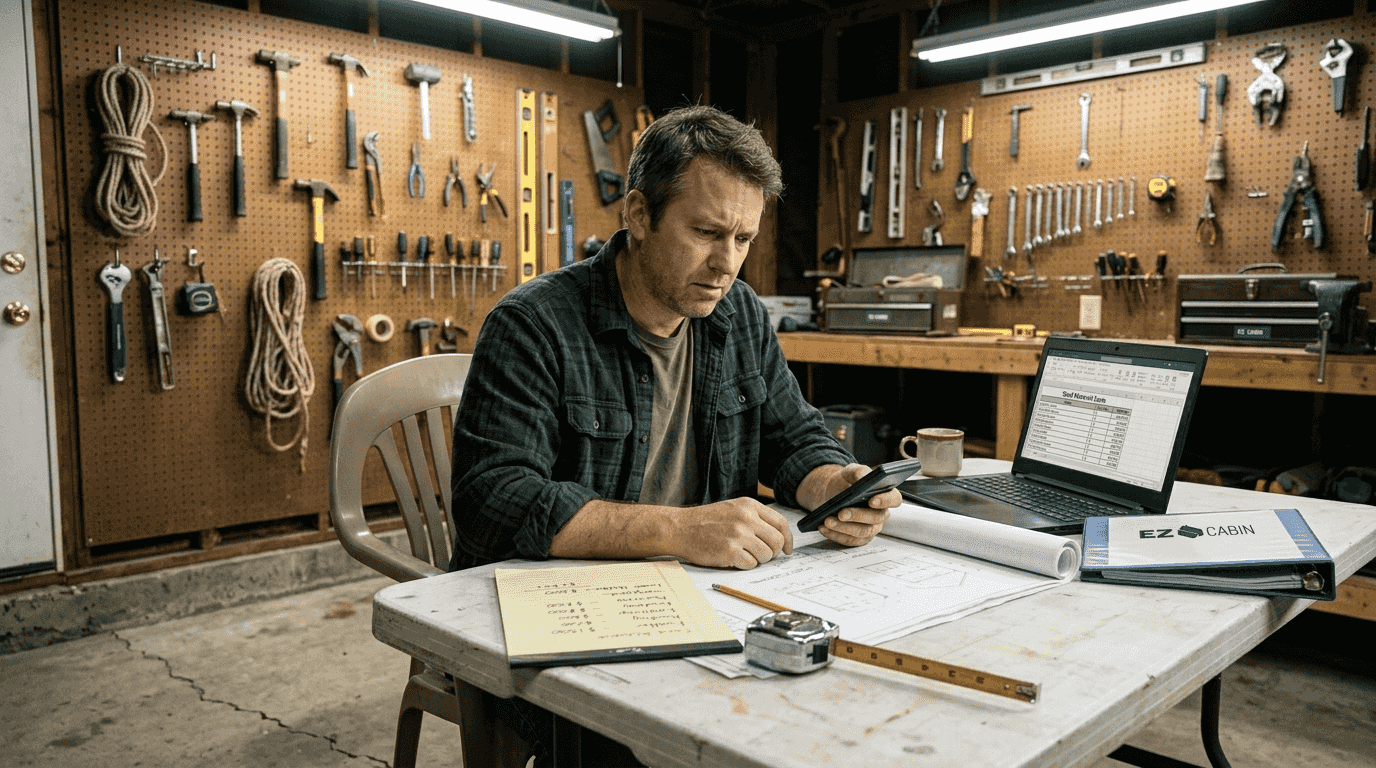
Three primary construction methods dominate the modern shed market, each offering distinct advantages. Post-frame construction is often the cheapest shell option, delivering rapid installation and cost efficiency. This method uses vertical posts embedded in the ground or concrete, with horizontal framing connecting them. The approach minimizes material waste and labor hours, making it ideal for budget-conscious homeowners seeking functional spaces quickly.
Stick-built construction mirrors traditional home framing techniques, using dimensional lumber to create walls, floors, and roof systems. This method offers maximum interior customization flexibility since walls can accommodate any layout, window placement, or door configuration. Contractors familiar with residential construction easily work with stick-built designs, simplifying the hiring process. The trade-off comes in higher material costs and longer build times compared to post-frame alternatives.
Timber-frame construction appeals to homeowners prioritizing aesthetics and architectural character. Exposed beams and joinery create stunning visual focal points while providing exceptional structural strength. These sheds become landscape features that enhance property appeal beyond functional value. Premium materials and specialized craftsmanship drive costs higher, but the distinctive appearance justifies the investment for many buyers.
Material costs fluctuate with market conditions. Lumber prices remain volatile, with a 15.3% increase year over year as of June 2025. This volatility makes timing your project strategically important. Monitoring price trends and purchasing materials during market dips can generate significant savings on larger projects.
Budget for these additional expenses:
- Building permits and inspections required by local jurisdictions
- Foundation work including concrete piers or gravel pads
- Electrical installation for lighting, outlets, and climate control
- HVAC systems for year-round comfort in Kentucky and Ohio climates
- Security features including locks, lighting, and alarm systems
- Interior finishing such as drywall, flooring, and trim
Exploring types of home office sheds helps narrow construction choices based on intended use and budget constraints. Understanding affordable portable buildings kentucky ohio options reveals cost-effective alternatives to traditional construction.
Pro Tip: Allocate 10-15% of your total budget for contingencies. Unexpected site conditions, material price increases, or design modifications commonly arise during construction. This buffer prevents project delays and financial stress.
| Construction Type | Cost Range | Build Time | Best For |
|---|---|---|---|
| Post-Frame | $8,000-$15,000 | 1-2 weeks | Budget-conscious, quick builds |
| Stick-Built | $12,000-$25,000 | 3-4 weeks | Custom layouts, traditional aesthetics |
| Timber-Frame | $20,000-$40,000 | 4-6 weeks | Premium appearance, architectural features |
Calculating return on investment (ROI) and maximizing benefits
Evaluating shed ROI requires looking beyond simple property value increases to encompass productivity improvements and cost avoidance. Shed offices can increase property value while offering ROI through productivity, cost savings, and possible tax deductions. The financial picture becomes clearer when you quantify these combined benefits against initial investment costs.
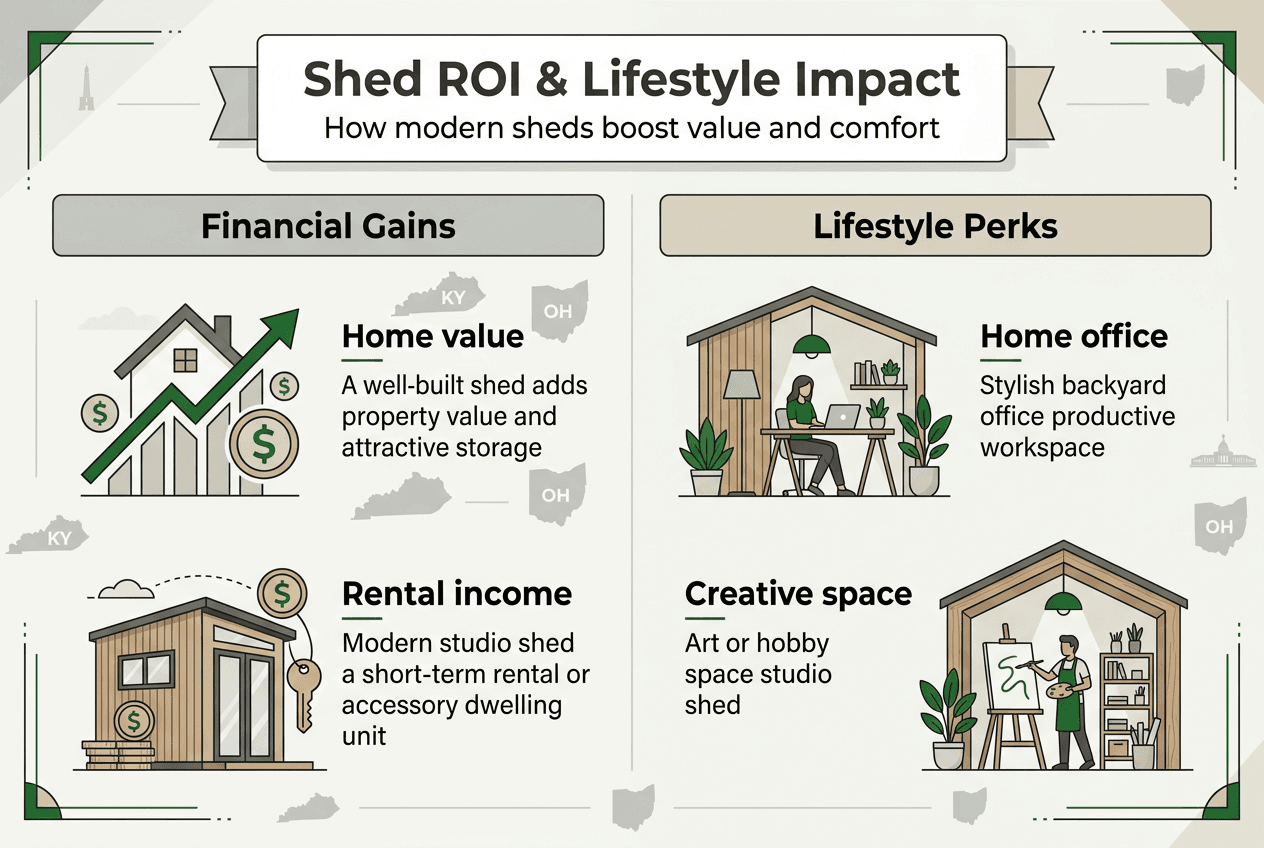
Start your ROI calculation by estimating property value appreciation. If your home is worth $250,000 and a quality shed adds 5-7% value, you gain $12,500-$17,500 in equity. Compare this against total project costs including construction, permits, utilities, and finishing. A $15,000 shed investment that generates $15,000 in value appreciation breaks even on paper but delivers ongoing use value.
Productivity gains represent harder-to-quantify but equally important returns. Remote workers who eliminate daily commutes save 200-400 hours annually plus fuel costs, vehicle wear, and stress. A dedicated office space improves focus and efficiency, potentially increasing billable hours or career advancement opportunities. Creative professionals with proper studio spaces complete more projects and develop skills that generate income.
Cost savings accumulate through avoided expenses. Homeowners who previously rented office space, storage units, or studio facilities eliminate those recurring payments. A $200 monthly storage unit costs $2,400 annually. Over five years, that totals $12,000 in avoided expenses that offset shed construction costs. Business owners may qualify for home office deductions that reduce tax liability, though you should consult tax professionals about specific eligibility.
Follow these steps to maximize your shed investment:
- Define primary and secondary uses before designing your shed to ensure the layout serves multiple purposes efficiently
- Research local building codes and permit requirements in Kentucky and Ohio counties to avoid costly compliance issues
- Obtain multiple contractor quotes and verify licenses, insurance, and references before committing to builders
- Plan utility installations during initial construction rather than retrofitting later to minimize disruption and expense
- Document all improvements and expenses for tax purposes and future sale negotiations
- Consider energy-efficient features that reduce operating costs while improving comfort and environmental impact
Careful planning is crucial for maximizing ROI by considering usage, revenue impact, and timeline. Homeowners who rush into projects without thorough planning often face cost overruns, functionality compromises, or regulatory delays that diminish returns.
Common pitfalls include underestimating site preparation requirements, neglecting climate control needs for year-round use, and choosing inadequate electrical capacity for equipment demands. Kentucky and Ohio weather patterns require proper insulation and ventilation to maintain comfortable working conditions across seasons. Skimping on these features saves money initially but creates ongoing comfort and efficiency problems.
Pro Tip: Track time saved, expenses avoided, and productivity improvements for the first year after completing your shed. This data reveals actual ROI and helps justify similar investments or upgrades.
Smart shed investments pay returns through multiple channels. Property value appreciation provides financial security, while daily use delivers lifestyle improvements that enhance wellbeing and professional success.
Exploring options like building man cave sheds kentucky ohio demonstrates how specialized designs serve specific interests while maintaining investment value.
Choosing and customizing your modern shed for Kentucky and Ohio homes
Climate considerations shape shed design decisions in Kentucky and Ohio. Both states experience hot, humid summers and cold winters with occasional heavy snow. Proper insulation becomes essential for year-round comfort, with R-19 wall insulation and R-30 roof insulation representing minimum recommendations. Ventilation systems prevent moisture buildup that damages materials and creates unhealthy conditions. Ridge vents combined with soffit vents create natural airflow, while mechanical ventilation handles extreme conditions.
Roofing choices affect durability and maintenance requirements. Metal roofing withstands severe weather better than asphalt shingles while reflecting summer heat to reduce cooling costs. The higher upfront cost pays dividends through 40-50 year lifespans compared to 20-25 years for quality shingles. Steep roof pitches shed snow effectively, preventing structural stress and ice dam formation common in regional winters.
Customization options transform basic structures into personalized spaces perfectly suited to your needs. Layout flexibility allows you to configure interior spaces for specific activities. Office sheds benefit from built-in desks, shelving, and cable management systems. Art studios need abundant natural light through strategically placed windows and skylights. Workshop sheds require robust electrical systems supporting power tools and equipment.
Finish selections impact both aesthetics and functionality. Durable flooring like luxury vinyl plank withstands heavy use while providing easy maintenance. Drywall creates finished interiors ready for paint, while exposed framing offers rustic character in hobby spaces. Exterior siding choices should complement your home's architecture, whether that means matching materials or creating intentional contrast that adds visual interest.
Electrical planning deserves careful attention during design phases. Calculate your power needs based on intended equipment and lighting requirements. Standard 15-amp circuits suffice for basic office setups, but workshops need 20-amp or dedicated 240-volt circuits for larger tools. Include more outlets than you think necessary since adding them later requires wall modifications.
HVAC systems maintain comfortable temperatures year-round. Mini-split heat pumps offer efficient heating and cooling without ductwork, making them ideal for shed installations. These systems cost $1,500-$3,000 installed but deliver superior comfort and energy efficiency compared to space heaters and window units.
Essential customization considerations:
- Window placement for natural light and views without compromising privacy
- Door size and placement for furniture movement and equipment access
- Interior height for comfortable headroom and potential loft storage
- Exterior lighting for safety and extended evening use
- Security features including quality locks and alarm system compatibility
Modern sheds with customizable features significantly increase property value in Kentucky and Ohio, where outdoor living is highly valued. Regional preferences favor structures that blend functionality with aesthetic appeal, creating outdoor rooms that extend living space naturally.
Local building codes vary by county and municipality. Some jurisdictions allow small sheds without permits, while others require approval for any permanent structure. Setback requirements determine how close you can build to property lines. Height restrictions prevent structures that block neighbors' views or sunlight. Research these regulations early to avoid expensive design changes or permit denials.
| Climate Feature | Recommended Solution | Estimated Cost |
|---|---|---|
| Winter heating | Mini-split heat pump | $1,500-$3,000 |
| Summer cooling | Same mini-split system | Included above |
| Moisture control | Ventilation system | $300-$800 |
| Snow load capacity | Engineered roof trusses | $500-$1,500 |
Integrating shed design into your property's overall aesthetic maximizes value and enjoyment. Consider sightlines from your home's main windows and outdoor living areas. Position sheds to create visual interest without blocking attractive views. Landscaping around the structure softens its presence and connects it to the broader yard design.
Exploring custom man cave sheds kentucky ohio options and reviewing small building cost insights kentucky ohio helps refine your vision while maintaining realistic budget expectations.
Find your ideal modern shed with EZ-Cabin
EZ-Cabin makes modern shed ownership accessible through flexible rent-to-own sheds and cabins programs designed for Kentucky and Ohio homeowners. Our guaranteed financing approval requires no credit check, just your first month's payment to get started. This approach eliminates traditional barriers that prevent families from accessing the functional spaces they need.
Our customizable shed designs feature AI-powered visualization tools that let you experiment with layouts, colors, windows, doors, and upgrades in real time. See exactly how your finished shed will look before committing to purchase. This technology ensures your investment perfectly matches your vision and property aesthetic.
Visit our EZ-Cabin Kentucky Ohio locations in London and Somerset to see quality construction firsthand. Our team helps you navigate options, understand costs, and plan delivery. Most buildings arrive within 1-4 weeks, letting you start enjoying your new space quickly. Whether you need a home office, creative studio, or specialized hobby space, EZ-Cabin delivers transparent, tech-driven solutions that make shed ownership simple and affordable.
Frequently asked questions
How much does a modern shed cost in Kentucky and Ohio?
Costs vary widely based on size, construction method, and features. Basic post-frame shells start around $8,000 for smaller structures, while premium timber-frame designs with full finishing can exceed $40,000. Most homeowners invest $12,000-$25,000 for quality stick-built sheds with electrical, insulation, and interior finishing. Additional expenses include permits, foundation work, and utility connections.
Do I need a permit for a backyard shed in Kentucky and Ohio?
Most counties require permits for sheds exceeding certain size thresholds or including electrical connections. Regulations vary significantly by jurisdiction, with some areas allowing small storage sheds without approval while others mandate permits for any permanent structure. One common pitfall is underestimating local building codes and permit requirements in Kentucky and Ohio. Contact your local building department early in planning to understand specific requirements and avoid costly delays.
What are the common uses for modern sheds besides storage?
Homeowners use modern sheds as dedicated home offices that separate work from family life, creative studios for art and music, guest quarters for visiting family, hobby workshops for woodworking or crafts, and fitness spaces with room for equipment. These versatile structures support work-life balance while adding functional square footage that enhances property value and daily living quality.
How long does it take to build a modern shed?
Construction timelines depend on shed complexity and construction method. Post-frame structures can be completed in 1-2 weeks, while stick-built designs typically require 3-4 weeks. Timber-frame sheds with custom features may take 4-6 weeks or longer. Weather conditions, permit approval times, and contractor availability affect actual schedules. Planning for 4-8 weeks from project start to completion provides realistic expectations for most homeowners.