
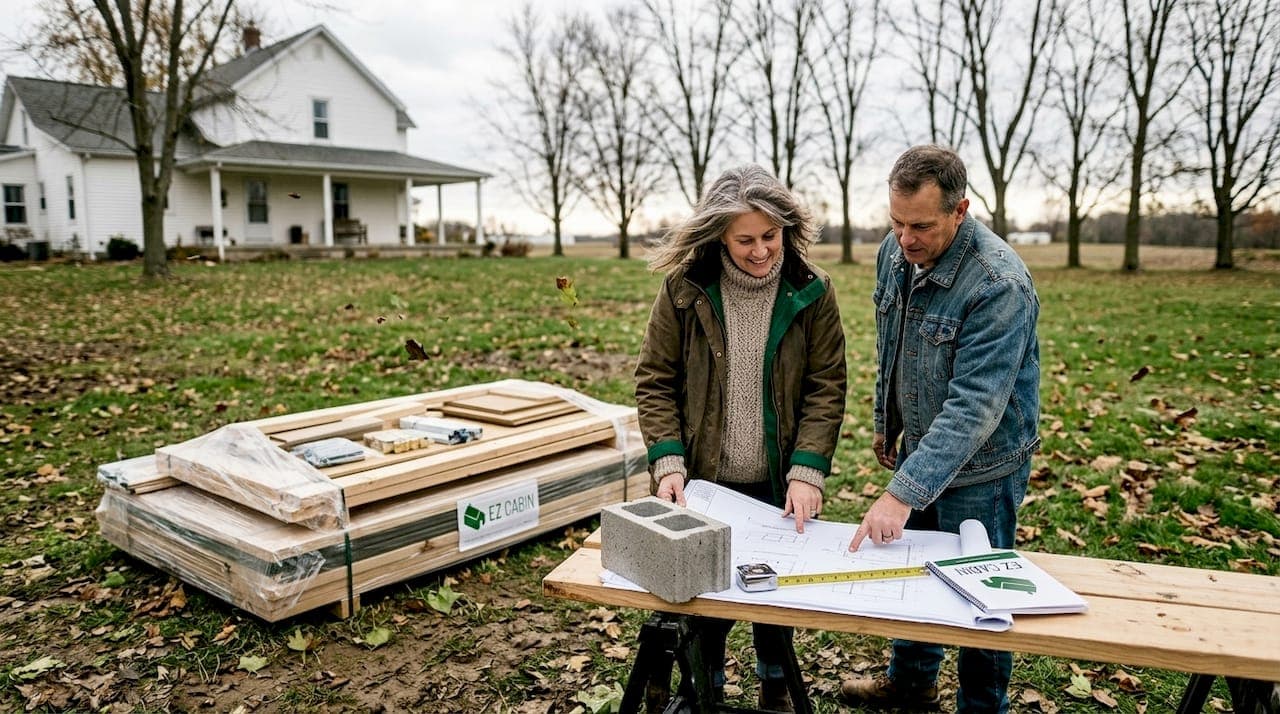
Installing a portable shed seems straightforward until you face permit confusion, foundation choices, and assembly challenges. Many Kentucky and Ohio homeowners struggle with site preparation and compliance, leading to costly mistakes like sinking foundations or permit violations. This comprehensive guide walks you through every critical step, from understanding local permit thresholds to choosing the right foundation for regional clay soils, assembling your structure properly, and maintaining it for decades of reliable use.
Table of Contents
- Understanding shed permits and site preparation in Kentucky and Ohio
- Choosing and installing the right shed foundation for your site
- Step-by-step installation process for portable sheds in Kentucky and Ohio
- Common installation challenges and maintenance tips for lasting shed performance
- Find your perfect shed with EZ-Cabin
Key takeaways
| Point | Details |
|---|---|
| Permit requirements vary | Kentucky typically requires permits for sheds over 200 square feet, while Ohio thresholds often range from 100 to 200 square feet depending on your county. |
| Foundation choice matters | Gravel pads work best for Kentucky's clay soil and cost $480 to $960 for a 10x12 shed, providing excellent drainage. |
| Installation follows sequence | Proper setup involves site prep, foundation building, floor assembly, wall and roof construction, secure anchoring, and final inspection. |
| Poor foundations cause failures | Inadequate foundation work accounts for 80% of shed problems including sinking, shifting, and structural damage over time. |
| Professional help saves time | DIY installation takes about one week for experienced builders, while professional crews complete the job in one to three days. |
Understanding shed permits and site preparation in Kentucky and Ohio
Before you order materials or break ground, verify your local permit requirements. Shed permits in Kentucky generally apply to structures exceeding 200 square feet, though some municipalities set the threshold at 120 square feet. Ohio regulations vary significantly by county and city, with most jurisdictions requiring permits for sheds over 100 to 200 square feet. Contact your local building department early to avoid costly compliance issues.
Setback requirements typically mandate 5 to 10 feet of clearance from property lines, though homeowner associations may impose stricter rules. Check for utility easements, underground lines, and drainage systems before selecting your site. Your chosen location should be level, well drained, and situated away from flood zones or low spots where water collects after storms.
Soil type dramatically affects foundation performance in Kentucky and Ohio. Clay soil, common throughout both states, expands when wet and contracts during dry periods, creating movement that can crack concrete or shift pier foundations. Test your soil by digging a small hole and observing drainage after heavy rain. If water pools for more than 24 hours, you need enhanced drainage solutions.
Proper site preparation involves these essential steps:
- Clear all vegetation, roots, and debris from the installation area plus two feet beyond the shed footprint
- Remove topsoil to reach stable subsoil, typically 4 to 6 inches deep
- Grade the site to ensure water flows away from the foundation in all directions
- Compact the subsoil using a plate compactor to prevent settling
- Install landscape fabric to suppress weed growth beneath gravel foundations
Slope presents unique challenges for shed placement. A site with more than 6 inches of elevation change across the shed footprint requires either extensive grading or a pier foundation system that accommodates uneven terrain. Consider how your shed relates to existing structures, ensuring adequate clearance for doors to swing open and allowing space for maintenance access on all sides.
Exploring types of portable buildings in KY and OH helps you understand how different structures require varying site preparations. Storage sheds need minimal site work compared to workshop buildings that require electrical service trenches or plumbing connections.
Choosing and installing the right shed foundation for your site
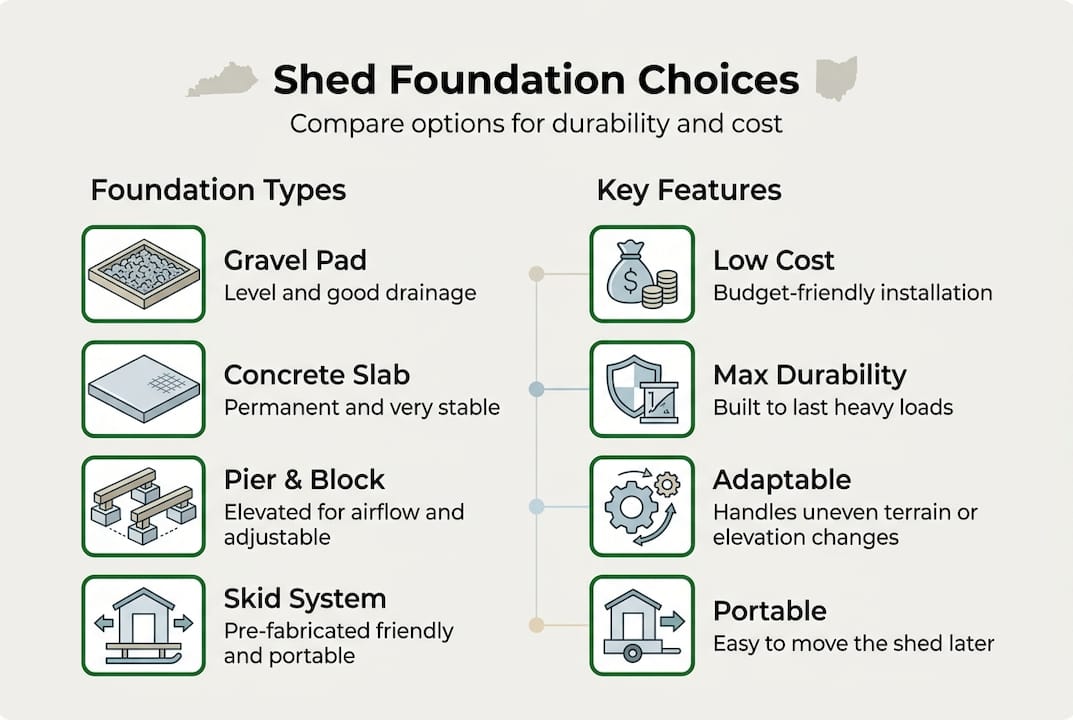
Foundation selection determines your shed's longevity and performance. Kentucky's clay soil and Ohio's freeze thaw cycles demand foundations that handle moisture and temperature fluctuations. Shed foundation types vary in cost, durability, and installation complexity, so match your choice to your budget, soil conditions, and intended shed use.
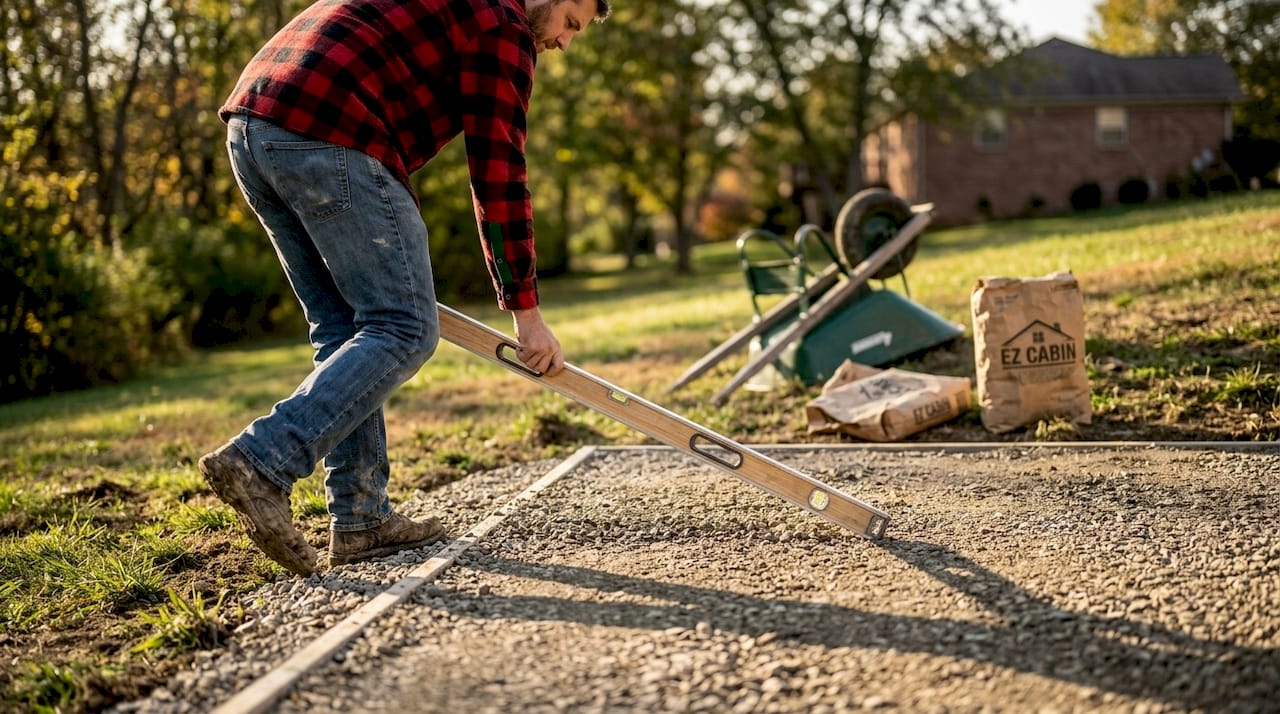
Gravel pad foundations offer the best value for most Kentucky and Ohio homeowners. A properly constructed gravel base for a 10x12 shed costs $480 to $960 including materials and labor. The gravel allows water to drain through rather than pooling around your shed, preventing the rot and mold problems common with solid bases in wet climates. Install landscape fabric first, then add 4 to 6 inches of compacted crushed stone, finishing with a 2 inch layer of smaller gravel for leveling.
Concrete slab foundations provide maximum durability and longevity, lasting 30 to 50 years with minimal maintenance. Expect to invest $1,000 to $1,800 for a 10x12 slab including excavation, gravel base, reinforcement, and finishing. Slabs work well for heavy equipment storage or workshop spaces where you want a smooth, permanent floor. The installation complexity requires professional contractors in most cases, adding time and coordination to your project.
Pier and block foundations adapt to sloped or uneven terrain without extensive grading. Concrete piers or blocks placed at regular intervals support the shed's floor frame while allowing air circulation underneath. This foundation type costs $300 to $600 for materials and suits sites with good drainage. Space piers no more than 6 feet apart to prevent floor sagging, and ensure each pier sits on solid, compacted soil or a small concrete footing.
Skid foundations consist of pressure treated timber beams that rest directly on gravel or compacted soil. This portable option allows you to relocate your shed if needed and costs just $200 to $400 for materials. However, wood contact with soil accelerates rot even with pressure treatment, limiting lifespan to 10 to 15 years. Use skids only for temporary installations or where mobility matters more than permanence.
Pro Tip: Rent a laser level for $30 per day to ensure your foundation stays perfectly level during installation. A foundation that's off by just half an inch can cause doors to bind and create gaps in siding.
Compare foundation options for your specific needs:
| Foundation Type | Cost Range | Lifespan | Best For | Installation Time |
|---|---|---|---|---|
| Gravel Pad | $480 to $960 | 15 to 25 years | Clay soil, good drainage | 1 to 2 days |
| Concrete Slab | $1,000 to $1,800 | 30 to 50 years | Heavy equipment, workshops | 3 to 5 days |
| Piers/Blocks | $300 to $600 | 20 to 30 years | Sloped terrain, ventilation | 1 day |
| Skid Foundation | $200 to $400 | 10 to 15 years | Temporary, portable needs | 4 to 6 hours |
Review shed foundation advice KY and OH for regional considerations when planning your base. Poor foundation work causes 80% of shed failures including sinking and structural shifting, so invest time in this critical step.
Step-by-step installation process for portable sheds in Kentucky and Ohio
Successful portable shed installation follows a logical sequence from delivery through final inspection. Coordinate delivery timing so your foundation is complete and cured before the shed arrives. Most suppliers require clear access for delivery trucks, typically needing 12 feet of width and adequate overhead clearance for structures on trailers.
Follow this proven installation sequence:
-
Verify foundation readiness. Confirm your base is level within 1/4 inch across the entire footprint using a long straight edge and level. Check that gravel is compacted and concrete has cured for at least seven days.
-
Assemble the floor frame first. Position treated lumber floor joists according to your shed plans, spacing them 16 inches on center for standard storage or 12 inches for heavy equipment. Secure joists to rim boards using galvanized joist hangers and 3 inch deck screws. Install plywood or OSB flooring, staggering seams and leaving 1/8 inch gaps for expansion.
-
Raise and secure wall panels. Start with the back wall, bracing it temporarily with 2x4 supports. Add side walls next, checking for plumb with a 4 foot level before fastening. Install the front wall last, ensuring door openings are square and properly sized. Connect walls using 3 inch structural screws every 12 inches.
-
Install roof trusses and sheathing. Position pre-built trusses 24 inches on center, securing each to the top plates with hurricane ties rated for your region's wind loads. Add roof sheathing perpendicular to trusses, starting at the bottom edge and working upward. Install drip edge before applying roofing felt and shingles.
-
Anchor the structure securely. Kentucky's clay soil and Ohio's wind conditions require proper anchoring to prevent movement. Use auger anchors for gravel foundations, concrete anchors for slabs, or earth anchors for pier systems. Install one anchor every 4 feet along each wall, angling them 45 degrees away from the shed for maximum holding power.
-
Add doors, windows, and trim. Hang doors using heavy duty hinges rated for exterior use, ensuring 1/8 inch clearance on all sides. Install windows with proper flashing to prevent water intrusion. Apply trim boards around openings and corners, caulking all joints with exterior grade sealant.
-
Connect utilities if planned. Hire licensed electricians for wiring and plumbers for water lines. Run electrical conduit underground in trenches at least 18 inches deep, protecting cables with schedule 40 PVC. Install GFCI outlets for all receptacles in your shed.
Pro Tip: Take photos during assembly showing how components connect. These images prove invaluable if you need to make repairs or modifications years later when you've forgotten the original configuration.
Inspect your completed installation carefully. Walk around the shed checking that all siding is secure, roofing is properly sealed, and doors operate smoothly. Verify the structure is level and plumb in all directions. Look inside for any gaps in floor or wall panels that could allow pest entry.
Consider how your shed integrates with your property by reviewing backyard cabin setup KY and OH for ideas on landscaping and access paths that enhance both function and appearance.
Common installation challenges and maintenance tips for lasting shed performance
Even experienced builders encounter obstacles during shed installation. Recognizing potential problems early prevents costly corrections later. The most frequent mistake involves inadequate site preparation, with homeowners rushing to build before properly leveling and compacting the foundation area. This shortcuts leads to settling within the first year, causing doors to stick and creating gaps in siding.
Avoid these common installation errors:
- Skipping the landscape fabric under gravel foundations allows weeds to grow through and disturb the base
- Using regular screws instead of galvanized or coated fasteners leads to rust stains and weakened connections
- Failing to anchor the shed properly results in movement during storms, especially in Ohio's high wind areas
- Ignoring manufacturer spacing requirements for floor joists causes sagging and bouncy floors
- Installing roofing in cold weather below 40 degrees prevents proper shingle adhesion
Foundation issues account for the majority of shed problems. Poor foundation preparation causes 80% of failures including sinking and shifting, with gravel pads lasting 15 to 25 years and concrete slabs enduring 30 to 50 years when properly installed. Monitor your foundation quarterly during the first year, checking for settling or erosion around the perimeter.
Maintain proper drainage around your shed to prevent water damage. Kentucky's clay soil can channel water toward your foundation during heavy rains if you don't maintain positive grading. Install gutters and downspouts to direct roof runoff at least 6 feet away from the shed. Clear leaves and debris from around the base seasonally to prevent moisture accumulation and wood rot.
Annual maintenance preserves your investment and extends shed life:
- Inspect the roof for damaged or missing shingles each spring, replacing them immediately to prevent leaks
- Check all caulking and sealant around windows, doors, and trim, reapplying where gaps appear
- Examine floor joists and rim boards for signs of rot or insect damage, treating problems promptly
- Tighten any loose screws or bolts in the structure, paying special attention to door hinges
- Clean gutters and ensure downspouts direct water away from the foundation
- Touch up paint or stain on exterior surfaces to maintain weather protection
Wood rot typically appears first at ground contact points and around door thresholds. Probe suspect areas with a screwdriver; soft, punky wood indicates rot requiring replacement. Treat minor surface rot with wood hardener and epoxy filler, but replace structural members showing significant decay.
"The foundation is everything. I've seen beautiful sheds ruined within three years because owners skipped proper site prep and drainage. Spend the time and money on your base, and the rest takes care of itself." – Master carpenter with 30 years of shed building experience in Kentucky
Anchoring systems need periodic inspection, especially after severe storms. Check that auger anchors remain tight and haven't worked loose in the soil. Replace any bent or corroded anchor straps immediately. Consider upgrading to heavier anchors if your area experiences stronger winds than originally anticipated.
Learn from prefab shed maintenance benefits to understand how quality construction and regular care combine to deliver decades of reliable service. Well maintained sheds in Kentucky and Ohio routinely last 25 to 40 years, providing excellent return on your initial investment.
Find your perfect shed with EZ-Cabin
Now that you understand proper installation techniques, explore the shed options available through EZ-Cabin's flexible rent-to-own program. Our guaranteed financing approval requires no credit check, and you can get started with just your first month's payment. Browse our complete inventory of portable buildings at shop all buildings at EZ-Cabin, where you'll find storage sheds, workshops, and cabin styles sized from compact 8x10 units to spacious 14x40 structures.

Customize your perfect shed using our AI-powered design tools at custom build your own shed. Adjust exterior colors, door placements, window configurations, and interior layouts in real time, visualizing exactly how your finished building will look on your property. Most structures deliver within one to four weeks, and our team provides guidance on site preparation to ensure your foundation is ready.
Protect your investment with Base44 smart security technology available at secure your building with Base44. This integrated system monitors your shed 24/7, alerting you to unauthorized access or environmental concerns. Visit our London or Somerset, Kentucky locations to see buildings in person and discuss installation support options with our experienced staff.
FAQ
How do I know if I need a permit for my shed in Kentucky or Ohio?
Permit requirements depend on your shed's size and local regulations. Kentucky typically requires permits for structures exceeding 200 square feet, though some cities set lower thresholds around 120 square feet. Ohio rules vary by county, with most jurisdictions requiring permits for sheds over 100 to 200 square feet. Contact your local building department before starting your project to verify specific requirements and setback rules for your property.
What foundation type is best for wet clay soil in Kentucky?
Gravel pad foundations work best for Kentucky's clay soil because they allow water to drain through rather than pooling around your shed. Install 4 to 6 inches of compacted crushed stone over landscape fabric, finishing with 2 inches of smaller gravel for leveling. This foundation costs $480 to $960 for a 10x12 shed and lasts 15 to 25 years. Concrete slabs offer more durability but cost significantly more and require professional installation.
How long does it take to install a portable shed myself?
DIY shed installation typically takes one week for builders with moderate construction experience, working part time after work and on weekends. The timeline includes one to two days for foundation preparation, two to three days for assembly, and additional time for finishing details like trim and anchoring. Professional installation crews complete the same project in one to three days. Your actual timeline depends on shed size, foundation type, weather conditions, and your skill level.
What are common mistakes to avoid during shed installation?
The most critical mistake is inadequate site preparation and foundation work, which causes 80% of shed failures including sinking and structural shifting. Other common errors include skipping proper anchoring, which compromises safety during storms, and using non-galvanized fasteners that rust and weaken over time. Many DIY builders also forget to maintain proper drainage around the shed perimeter, leading to moisture problems and wood rot. Take time to level your foundation carefully and follow manufacturer specifications for joist spacing and fastener types.