
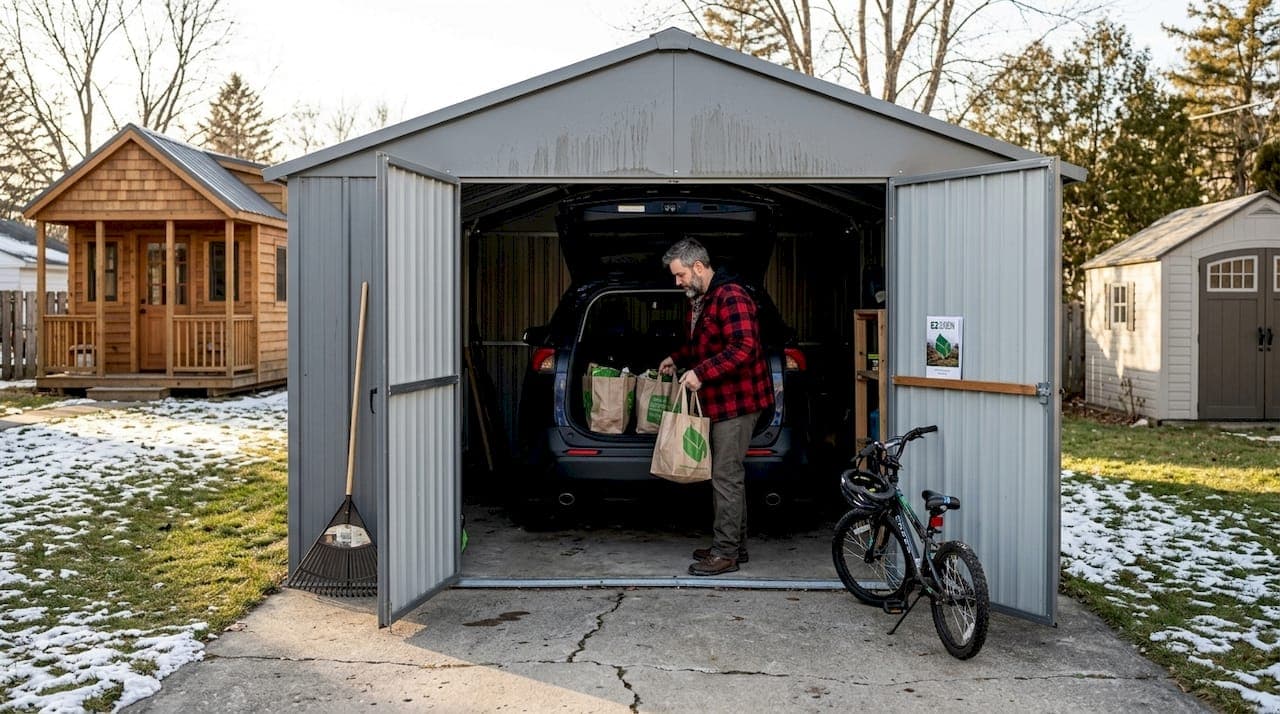
You might think portable garages are flimsy temporary tents that blow away in the first storm, but that's a costly misconception. Modern portable garages save Kentucky & Ohio homeowners 50% in 2026 compared to permanent construction while delivering serious durability and versatility. These structures provide legitimate vehicle protection, workshop space, and storage solutions without the expense, permits, or construction delays of traditional garages. Whether you need to shelter equipment from harsh Ohio winters or create a hobby space on your Kentucky property, understanding what portable garages actually offer helps you make a smart investment that fits your budget and lifestyle.
Table of Contents
- Key Takeaways
- What is a portable garage? Understanding the basics
- Materials and designs: options for portable garages
- Costs, permits, and financing for portable garages in Kentucky and Ohio
- Setting up and maintaining your portable garage
- Explore portable garage options with EZ-Cabin
- FAQ
Key Takeaways
| Point | Details |
|---|---|
| Cost savings and speed | Portable garages cost thousands less than permanent builds and install in days, enabling quicker protection of vehicles and gear. |
| Minimal permits required | Compared with traditional garages, portable options typically need simpler permits or none at all, reducing delays. |
| Material options | Metal, wood, and fabric portable garages offer different durability, insulation, and cost to fit climate and budget. |
| Versatile uses | They can shield vehicles, store equipment, serve as workshops, or convert into home offices or studios. |
| Financing access | Financing options can make ownership accessible with no credit checks. |
What is a portable garage? Understanding the basics
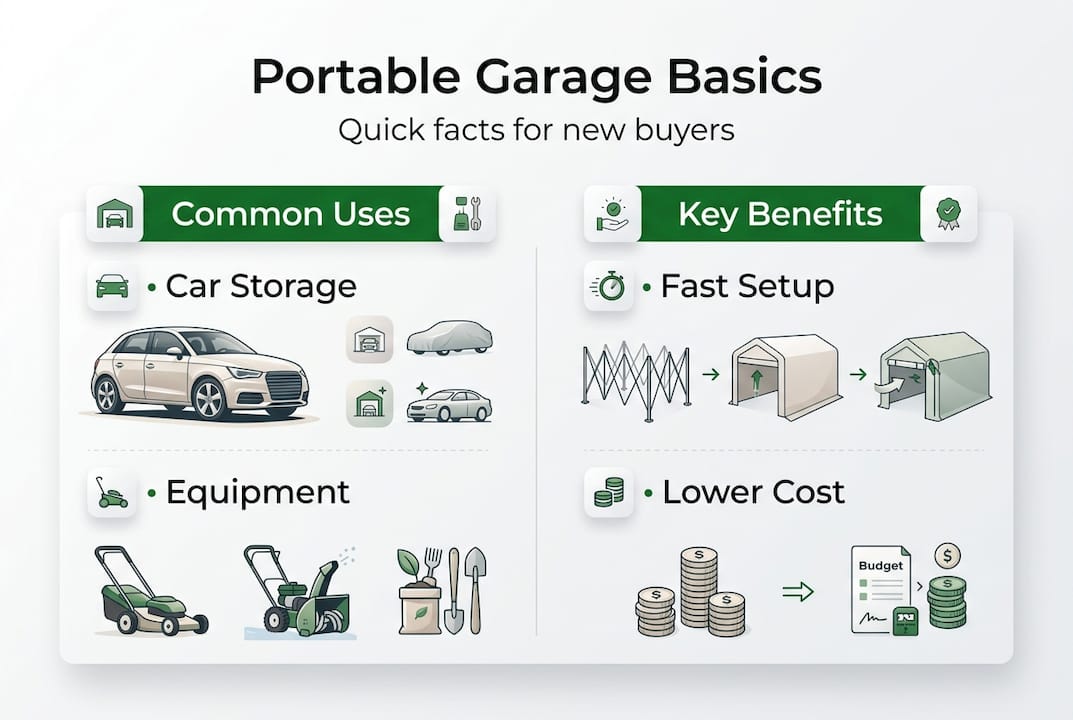
A portable garage is a movable or semi-permanent structure designed to protect vehicles, equipment, and belongings without the permanent foundation and construction of a traditional garage. Unlike conventional garages built on concrete slabs with permanent walls, these structures typically anchor to the ground with stakes or lightweight foundations and can be relocated if needed. The term "portable" doesn't mean you'll move it weekly, but rather that it's not permanently affixed to your property like traditional construction.
The difference between portable and permanent garages extends beyond mobility. Traditional garages require extensive permits, inspections, foundation work, and months of construction. Portable options install in days, often need simpler permits or none at all, and cost thousands less. For Kentucky and Ohio homeowners facing budget constraints or uncertain long-term property plans, this flexibility proves invaluable. You're not locked into a permanent structure that might not suit future needs.
Common uses span vehicle protection from snow and ice, extra storage for lawn equipment and seasonal items, workshop space for hobbies or small business operations, and even temporary housing solutions during renovations. Kentucky property owners use them for farm equipment storage, while Ohio homeowners often convert them into home offices or craft studios. The versatility matches the diverse needs of rural and suburban properties across both states.
Construction materials vary widely. Metal portable garages use galvanized steel frames with aluminum or steel panels, offering excellent durability against weather. Wood structures provide traditional aesthetics and easier customization for windows and doors. Fabric models use heavy-duty polyethylene covers over steel frames, delivering the most affordable entry point. Each material suits different priorities, from maximum weather resistance to budget-conscious temporary solutions. Exploring types of portable buildings helps you match structure type to your specific situation.
Pro Tip: Measure your vehicles and equipment before shopping. Add three feet to length and width for comfortable maneuvering space. This prevents buying too small and needing costly upgrades later.
Materials and designs: options for portable garages
Metal portable garages dominate the market for good reason. Galvanized steel frames resist rust, while metal panels shed snow and rain efficiently. These structures handle Kentucky humidity and Ohio freeze-thaw cycles without rotting or deteriorating. Maintenance involves occasional cleaning and checking fasteners, nothing more. Expect 20 to 30 years of service with proper care. The downside? Metal conducts temperature extremes, making uninsulated versions hot in summer and cold in winter. Prices range from $2,000 for basic models to $8,000 for larger insulated versions.
Wood portable garages offer superior insulation and a traditional appearance that blends with residential architecture. Cedar and treated lumber resist moisture and insects naturally. You can easily add windows, skylights, and custom doors to wood structures. The trade-off comes in maintenance. Annual staining or painting protects wood from weather damage. Kentucky's wet springs and Ohio's harsh winters demand diligent upkeep. Wood structures cost $4,000 to $12,000 depending on size and finish quality. They suit homeowners prioritizing aesthetics and planning long-term placement.
Fabric portable garages use heavy-duty polyethylene or PVC covers stretched over steel tube frames. These deliver the most affordable protection, starting around $500 for small models. Modern fabrics resist UV damage and tearing far better than older versions. However, fabric covers typically last 5 to 10 years before requiring replacement. They work well for temporary needs or seasonal vehicle storage. Wind and snow loads stress fabric more than solid materials, so proper anchoring matters tremendously in exposed locations. Understanding garage building types and warranties clarifies which materials match your durability expectations.
Design styles impact both function and weather performance. A-frame designs shed snow effectively, crucial for Ohio properties receiving heavy winter precipitation. Box-style structures maximize interior height and usable space, ideal for workshop applications. Quonset hut shapes use curved metal panels for exceptional strength and wind resistance. The arch design handles snow loads well and provides no flat surfaces for debris accumulation. Each style suits different site conditions and intended uses.
| Material | Durability | Maintenance | Starting Cost | Best For |
|---|---|---|---|---|
| Metal | 20-30 years | Low | $2,000 | Long-term vehicle storage |
| Wood | 15-25 years | Medium | $4,000 | Workshops, aesthetic match |
| Fabric | 5-10 years | Low | $500 | Seasonal or temporary needs |
Pro Tip: Choose metal or wood for locations with mature trees. Falling branches damage fabric covers easily but rarely harm solid structures. Site conditions matter as much as budget when selecting materials.
Costs, permits, and financing for portable garages in Kentucky and Ohio
Portable garage prices vary dramatically based on size, materials, and features. Small fabric models protecting a single vehicle start around $500 to $1,000. Mid-range metal structures housing two vehicles run $2,500 to $5,000. Large wood garages with insulation and custom features reach $8,000 to $15,000. These figures represent 40% to 60% savings compared to permanent garage construction, which typically costs $15,000 to $40,000 for similar square footage. The cost advantage stems from eliminated foundation work, simplified construction, and reduced labor requirements.
Permit requirements depend on structure size and local zoning regulations. Many Kentucky and Ohio jurisdictions exempt portable buildings under 200 square feet from building permits. Structures exceeding this threshold or including electrical service typically require permits. However, the permit process for portable garages proves far simpler than permanent construction. You'll usually need a site plan showing setbacks from property lines and neighboring structures. Some counties require engineered drawings for wind and snow load calculations. Total permit costs range from $50 to $300, compared to $500 to $2,000 for permanent garage permits.
Securing permits when required follows a straightforward process:
- Contact your local building department to confirm size thresholds and requirements for your specific location
- Prepare a simple site plan showing structure placement, dimensions, and distances from property lines
- Submit manufacturer specifications proving the structure meets local wind and snow load requirements
- Pay permit fees and schedule any required inspections after installation
- Keep permit documentation with your property records for future reference or resale
Financing options make portable garages accessible even for homeowners with credit challenges. Rent-to-own programs require only the first month's payment to start, typically $150 to $400 depending on structure cost. No credit checks mean approval is guaranteed regardless of credit history. You'll own the structure outright after 36 to 60 months of payments. Traditional financing through personal loans or home equity lines remains available for those preferring conventional terms. Exploring garage financing options in Kentucky and Ohio reveals how accessible ownership has become.
| Garage Type | Average Cost | Typical Permit | Construction Time | Total Investment |
|---|---|---|---|---|
| Portable metal | $3,500 | $100 | 1-2 days | $3,600 |
| Portable wood | $8,000 | $150 | 2-3 days | $8,150 |
| Permanent attached | $25,000 | $1,200 | 4-8 weeks | $26,200 |
Setting up and maintaining your portable garage
Site selection determines whether your portable garage performs well or causes constant problems. Choose level ground whenever possible. Slopes create uneven weight distribution that stresses frames and causes doors to bind. Avoid low spots where water pools after rain. Standing water undermines anchors and promotes rust on metal structures. Check for overhead utility lines and underground cables before finalizing placement. Most utility companies mark lines for free within 48 hours of requesting service.
Drainage matters more than most homeowners realize. Grade the site so water flows away from the structure in all directions. A 2% slope, about one-quarter inch per foot, provides adequate drainage without creating leveling challenges. Spread four to six inches of gravel as a base layer. This prevents mud, improves drainage, and creates a stable foundation for anchor points. Compact the gravel thoroughly before installation. Loose material allows the structure to shift during wind events.
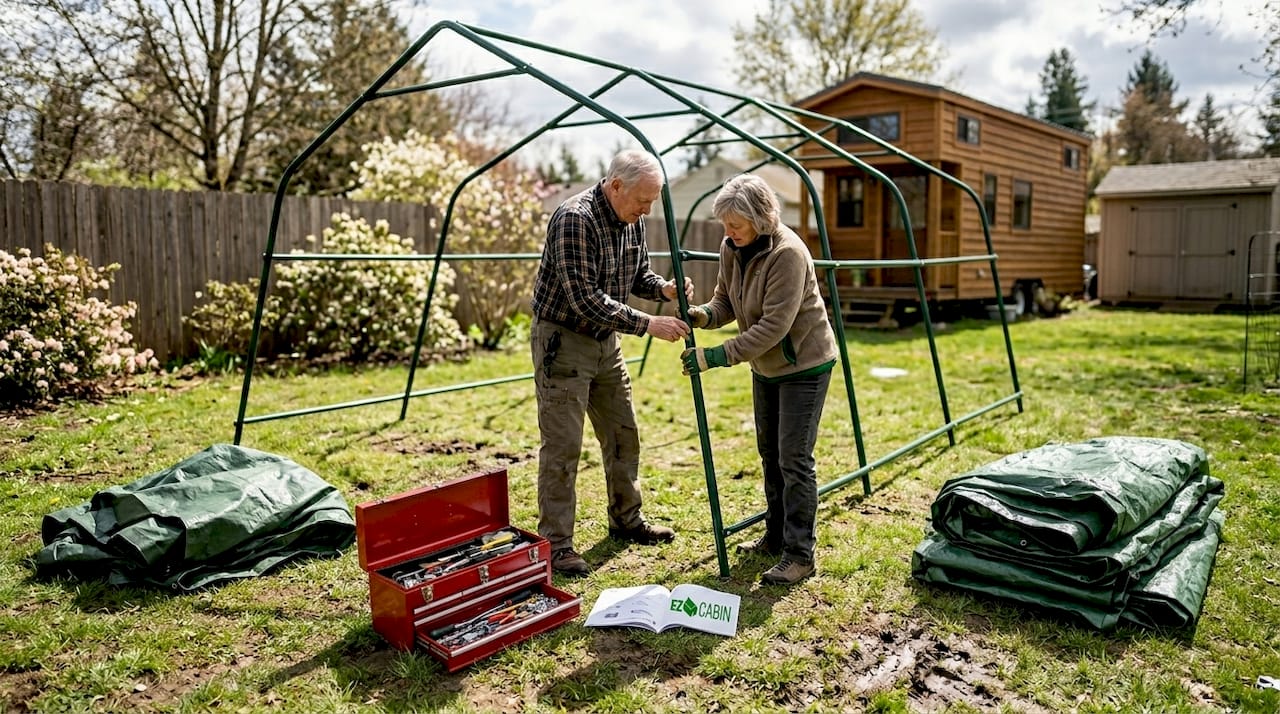
Installation follows manufacturer instructions precisely. Most portable garages use one of three anchor systems: ground stakes driven into soil, concrete anchors set in poured footings, or auger anchors twisted deep into the earth. Ground stakes work for temporary installations in soft soil. Concrete anchors provide maximum stability for permanent placement. Auger anchors balance strength and installation ease for most situations. Never skip anchoring, even for small structures. Wind generates tremendous uplift force that can destroy unanchored buildings.
Assemble the frame completely before adding panels or covers. This allows you to square the structure and ensure all connections fit properly. Use a level to verify vertical posts stand perfectly plumb. Even small deviations compound across the structure, causing alignment issues with doors and panels. Tighten all bolts to manufacturer specifications using a torque wrench. Over-tightening strips threads, while under-tightening allows movement that wears connections.
Maintenance requirements remain minimal but shouldn't be ignored:
- Inspect roof panels or fabric covers after major storms for damage or debris accumulation
- Clean gutters and ensure water drains away from the structure, not toward foundations
- Tighten bolts and fasteners annually as temperature cycles cause slight loosening
- Touch up scratched paint on metal structures to prevent rust from starting
- Trim nearby vegetation to prevent branches from rubbing against walls or roof
- Check anchor points twice yearly to confirm they remain secure and haven't shifted
Common issues include door misalignment from settling, fabric tears from sharp objects, and rust spots where protective coatings wear through. Address door problems by shimming the frame or adjusting hinges. Repair fabric tears immediately with manufacturer-approved patch kits before small holes enlarge. Treat rust spots by sanding to bare metal, applying rust converter, and repainting with matching touch-up paint. Following guidance on portable garage setup prevents most problems before they start.
Pro Tip: Apply a coat of car wax to metal panels each fall. This creates a protective barrier against road salt and moisture during winter months. The small effort extends panel life by years and keeps your structure looking new.
Explore portable garage options with EZ-Cabin
Now that you understand what portable garages offer and how to choose the right one, finding quality options locally makes the next step simple. EZ-Cabin specializes in portable garages designed specifically for Kentucky and Ohio weather conditions, from heavy snow loads to humid summers. Our structures use materials proven to last decades, not just seasons.

Browse our complete portable garage inventory to compare sizes, materials, and features that match your property needs. Every structure comes with transparent pricing and detailed specifications, so you know exactly what you're getting. Our AI-powered customization tools let you visualize different colors, door placements, and window options before purchasing.
Financing shouldn't block you from getting the storage or workspace you need. Our rent-to-own programs require no credit check and only the first month's payment to start. Guaranteed approval means you can move forward today regardless of credit history. Most structures deliver within one to four weeks, not months.
Prefer to see buildings in person before deciding? Visit our Kentucky locations in London or Somerset to walk through actual structures and discuss your specific needs with our team. We'll help you select the right size, material, and features for your situation.
FAQ
What is the warranty period for portable garages?
Warranty coverage depends heavily on materials and manufacturer. Metal and wood portable garages typically include 20 to 50 year warranties on structural components, while fabric covers usually carry 5 to 10 year guarantees. Premium manufacturers offer better coverage than budget brands. Always verify specific warranty terms before purchasing, including what's covered and any maintenance requirements that keep warranties valid. Some warranties cover only manufacturing defects, while others include weather damage and normal wear.
Do portable garages require building permits in Kentucky and Ohio?
Permit requirements vary by county and municipality across both states. Portable garages generally require fewer or simpler permits than permanent structures in Kentucky and Ohio. Many jurisdictions exempt structures under 200 square feet from permits entirely. Larger buildings or those with electrical service typically need basic permits. Contact your local building department before installation to confirm requirements for your specific location and structure size. Permit costs rarely exceed $300 when required.
Can a portable garage be used as a workspace or living area?
Portable garages adapt easily to workshop, studio, or hobby space applications with proper modifications. Add insulation, electricity, and climate control to create comfortable year-round work environments. Converting to living space requires meeting local residential building codes, which typically mandate specific insulation values, egress windows, and utility connections. Check zoning regulations before starting living space conversions, as some areas restrict residential use of accessory structures. Many homeowners successfully use portable garages as art studios, woodworking shops, home gyms, and seasonal guest spaces.
How long does a portable garage last in Kentucky and Ohio weather?
Lifespan depends primarily on material quality and maintenance consistency. Metal structures with proper rust prevention last 20 to 30 years in Kentucky and Ohio climates. Wood garages maintained with regular staining survive 15 to 25 years before requiring major repairs. Fabric covers need replacement every 5 to 10 years but frames often last much longer. Harsh weather accelerates wear, so structures in exposed locations age faster than those with natural windbreaks. Regular maintenance, especially preventing water infiltration and addressing damage promptly, significantly extends service life regardless of material.
What size portable garage do I need for my vehicles?
Vehicle dimensions plus maneuvering space determine minimum garage size. A single car requires at least 12 feet wide by 20 feet deep, while trucks and SUVs need 14 feet wide by 24 feet deep. Two vehicles side by side demand 20 to 24 feet of width. Add three feet to all dimensions for comfortable door opening and walking space around vehicles. Consider future needs too, as expanding later costs more than buying adequate size initially. If you'll store equipment, lawn mowers, or tools alongside vehicles, increase depth by four to six feet. Measure your largest vehicle before shopping to ensure proper fit.