
TL;DR:
- A man cave cabin is a purpose-built, insulated structure designed for leisure and hobbies, offering year-round comfort.
- Most small cabins under 200 sq ft in Kentucky and Ohio qualify for permit exemptions if used for non-habitable purposes with minimal electrical or plumbing work.
If you've been calling that backyard retreat idea a "shed," you're underselling it. A man cave cabin is something fundamentally different: a purpose-built, insulated, private structure designed for leisure, hobbies, and escaping the noise of everyday life without leaving your property. For homeowners in Kentucky and Ohio, where outdoor space is plentiful and the demand for year-round backyard retreats is growing fast, understanding what is a man cave cabin can mean the difference between a forgettable outbuilding and a space you actually look forward to using every day.
Table of Contents
- What is a man cave cabin: defining features and typical designs
- Local building codes and permit requirements in Kentucky and Ohio
- Building your man cave cabin: sizes, foundations, and assembly tips
- Man cave cabins versus sheds and garages: choosing the right outdoor retreat
- Why a man cave cabin is more than just a backyard shed
- Explore portable man cave cabins with EZ-Cabin: design and financing options
- Frequently asked questions
Key Takeaways
| Point | Details |
|---|---|
| Man cave cabins defined | They are insulated, often log-based backyard cabins designed for leisure and hobbies, distinct from standard sheds. |
| Permit rules vary | Kentucky and Ohio generally exempt cabins under 200 sq ft from building permits if used non-habitably without major utilities. |
| Strong foundations needed | Proper gravel, concrete, or timber bases prevent settling and extend your cabin's lifespan. |
| Year-round comfort possible | Insulation plus heating options allow use in all seasons typical to Kentucky and Ohio. |
| Design over storage | Man cave cabins prioritize privacy and personal customization unlike garages or regular sheds. |
What is a man cave cabin: defining features and typical designs
A man cave cabin is not a shed with a TV bolted to the wall. The difference runs deeper than decor. These structures are built from insulated materials, usually thick interlocking log panels or engineered wall systems, and designed from the start for human comfort rather than box storage. Think of it as a private studio that happens to sit in your backyard.
Key structural features that separate man cave cabins from standard sheds:
- Thick insulated walls, often 70mm Nordic spruce, that regulate interior temperature year-round
- Loft designs that add significant usable square footage on a compact footprint
- Interlocking pre-cut log construction that allows DIY assembly in a matter of days
- Windows and doors positioned for natural light and airflow, not just access
- Finished interior walls ready for personalization, not raw OSB or plywood
Size options are more varied than most people realize. A 321.5 sq ft main floor plus loft with 70mm thick Nordic spruce walls gives you a genuinely comfortable year-round space. On the compact end, a 100 sq ft plus 60 sq ft loft kit assembles in days using pre-cut interlocking logs, making it a realistic weekend project for a motivated homeowner.
Understanding prefab cabin benefits and costs before you commit to a size and design saves you real money and frustration later.
Common man cave cabin sizes and their best uses:
| Size | Best use | Typical features |
|---|---|---|
| 10x10 ft with loft | Gaming, reading, single hobby | Sleeping loft, desk space, one window wall |
| 12x16 ft | Workshop, bar setup, home gym | Room for multiple zones, ventilation options |
| 15x21 ft with loft | Full retreat, multi-hobby space | Separate areas for work and relaxation |
What makes a man cave work in these designs comes down to three things:
- Thermal performance: walls thick enough to keep heat in during Ohio winters and out during Kentucky summers
- Structural integrity: logs or panels that interlock without gaps, reducing drafts and moisture intrusion
- Interior finish quality: surfaces you can actually mount shelves, screens, or paneling onto without major modification
Now that we have clarified what a man cave cabin is, let's explore the local building rules that impact their presence in Kentucky and Ohio.
Local building codes and permit requirements in Kentucky and Ohio
This is where many homeowners hit an unexpected wall. You find a cabin you love, you pick your spot, and then someone mentions permits. The good news: most man cave cabins qualify for exemptions in both states.
In Kentucky, no building permit is needed for detached structures under 200 sq ft that are used for non-habitable purposes and don't include plumbing or electrical work beyond basic outlets. In Ohio, detached one-story cabins under 200 sq ft for storage or hobby use are similarly exempt, though cities like Cincinnati lower that threshold to 100 sq ft, with permit fees ranging from $50 to $500 for larger builds.
Permit triggers you need to know about:
- Adding a bathroom or full kitchen plumbing always requires a permit
- Running a dedicated electrical panel, not just an extension cord, typically triggers permit requirements
- Structures intended as sleeping quarters or habitable space cross into different regulatory territory
- Some Ohio municipalities require permits for any structure on a foundation, regardless of size
Steps to confirm your local rules before building:
- Call your county zoning office and ask specifically about "detached accessory structures"
- Get the setback requirements (usually 5 to 10 feet from property lines and neighboring structures)
- Ask whether HOA restrictions apply in addition to county or city codes
- Confirm utility connection rules if you plan to add electricity or climate control
- Request the exemption in writing if the county confirms you don't need a permit
Pro Tip: Even when a permit is not legally required, documenting your build with photos, a site plan, and material specs protects your property value and simplifies any future insurance claims or home sale disclosures.
For a deeper look at building man cave sheds in Kentucky and Ohio, local-specific guidance covers setback nuances by county that aren't always easy to find.
With the legal landscape clear, let's now examine construction basics including foundation needs and building tips.
Building your man cave cabin: sizes, foundations, and assembly tips
Picking the right size is less about square footage and more about what you actually plan to do in the space. An 8x10 ft footprint is a realistic minimum for a single-use hobby room. Anything smaller and you start bumping into walls every time you stand up.
Foundation is where most DIY man cave cabin projects succeed or fail. Experts recommend gravel pads, concrete slabs, or pressure-treated timber for any insulated cabin you plan to use year-round. Skipping the foundation work is the single most common mistake, and it's expensive to fix after the fact.
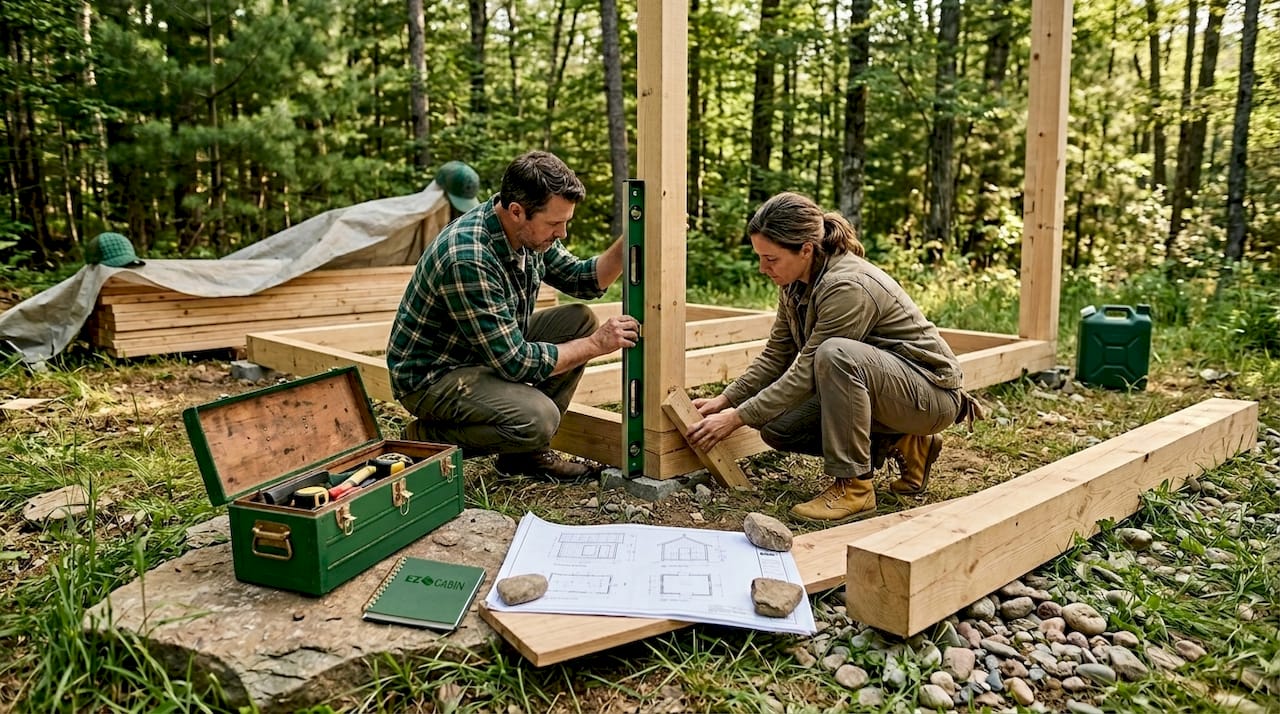
Uneven settling causes 20 to 30% of assembly failures in prefab and kit-built structures. A level, properly drained foundation isn't optional, it's the foundation for everything else working correctly.
Foundation options compared for Kentucky and Ohio climates:
| Foundation type | Cost range | Best for | Drawback |
|---|---|---|---|
| Gravel pad | $200 to $600 | Small to mid-size cabins | Requires edging to prevent spread |
| Concrete slab | $800 to $2,500 | Permanent, large cabins | More costly, harder to relocate |
| Pressure-treated timber | $300 to $900 | Portable and temporary setups | Needs periodic inspection for rot |
Assembly tips that save real time:
- Level the site before any kit arrives. Most delays come from discovering the ground isn't flat on delivery day.
- Inventory every piece against the packing list before starting. Missing a single log course mid-assembly means a full stop.
- Use two people minimum for any wall panel over 8 feet tall.
- Apply sealant to log joints before they're fully pressed, not after.
For heating and cooling in Kentucky and Ohio climates, mini-split HVAC systems are the practical choice for man cave cabins under 300 sq ft. They're quiet, efficient, and don't require ductwork. A small wood stove works well too, but it requires proper chimney placement and local fire code clearance.
The DIY shed setup guide for KY and OH walks through site prep in detail, and if you're weighing how to finance the project, prefab building financing options lays out approaches that work for most budgets.
Having explored construction essentials, we will now compare man cave cabins with other outdoor structures to help you decide the best fit for your needs.
Man cave cabins versus sheds and garages: choosing the right outdoor retreat
Most homeowners start this search thinking they want a shed and end up realizing what they actually want is a cabin. The distinction matters for both budget and satisfaction.
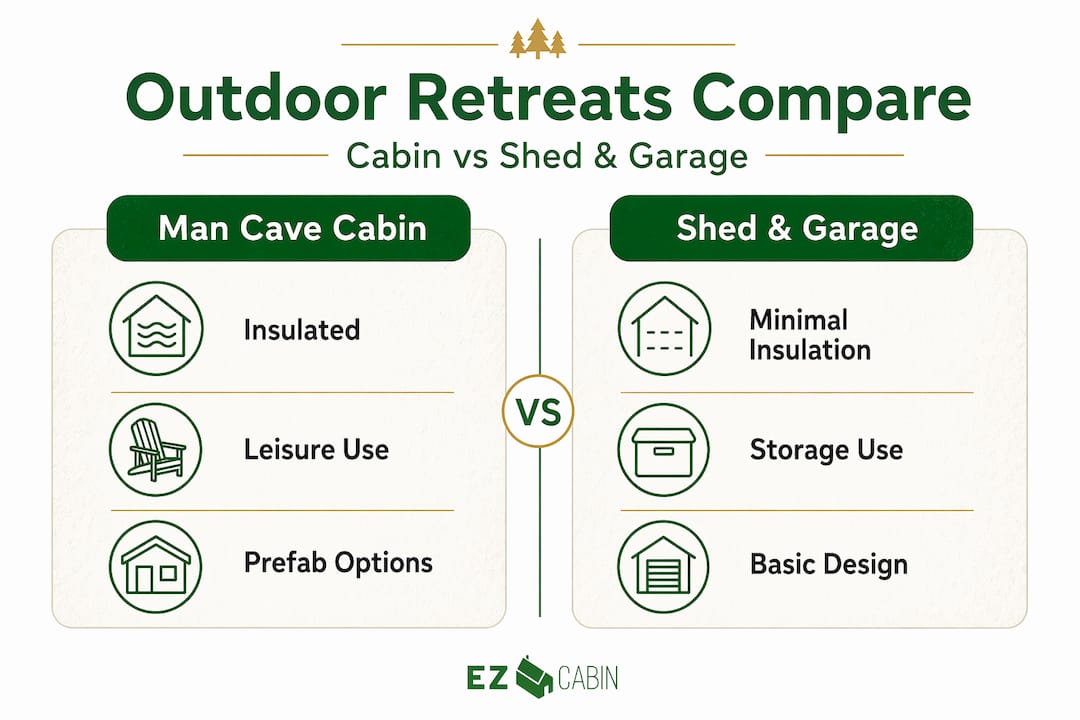
Side-by-side comparison:
| Feature | Man cave cabin | Standard shed | Garage |
|---|---|---|---|
| Insulation | Yes, built-in | Rarely | Sometimes |
| Interior finish | Yes | Raw walls | Varies |
| Design flexibility | High | Low | Low |
| Typical cost | $2,500 to $8,000 | $1,500 to $6,000 | $10,000 and up |
| Year-round comfort | Yes, with heating | No | Possible |
| Permitting complexity | Low to moderate | Low | Moderate to high |
Man cave cabin kits range from roughly $2,500 to $8,000, which puts them in the same ballpark as a quality shed while delivering meaningfully better insulation, aesthetics, and interior livability.
Where each structure wins:
- Standard shed: pure storage, yard equipment, seasonal items you want out of the garage
- Garage: vehicle storage, heavy workshop tools, large equipment that needs drive-in access
- Man cave cabin: leisure, hobbies, gaming, music, home office, gym, or just somewhere quiet to think
For a thorough breakdown, the shed vs cabin comparison covers cost, permit, and use differences in detail, and the shed vs garage breakdown for KY and OH addresses the specific tradeoffs Ohio and Kentucky homeowners face.
Why a man cave cabin is more than just a backyard shed
Here's what most articles won't tell you: the value of a man cave cabin isn't primarily structural. It's psychological.
Having a dedicated space that is entirely yours, designed around your interests, and physically separate from the main house changes how you use your free time. You stop postponing hobbies. You actually unwind instead of half-relaxing while still mentally managing household noise. That separation of space is something a basement corner or garage workbench never fully delivers.
What we see consistently across Kentucky and Ohio homeowners is that the ones who invest in proper insulation and a solid foundation get decades of use. The ones who cut corners on those two things end up with a structure they stop using within two years because it's too cold in January and too hot in August to be comfortable.
The other thing people routinely underestimate is the zoning and permit research phase. It feels tedious, but one conversation with your county zoning office before you buy saves you from the most expensive mistake in cabin ownership: placing a structure that has to be relocated. In some Ohio municipalities, non-compliant structures must be moved at the owner's expense within 30 days of a violation notice.
The growing interest in man cave cabin getaways across the region also reflects something real about how people want to live. Flexible, personalized, low-overhead spaces that support the life you actually want are worth more than the square footage suggests. The backyard cabin benefits extend well beyond recreation, touching property value, mental wellness, and the practical utility of having dedicated space for what matters to you.
Designing a man cave isn't just about throwing a leather couch in a box. It's about intentionally building a space that earns regular use.
Explore portable man cave cabins with EZ-Cabin: design and financing options
Ready to move from planning to owning? EZ-Cabin makes the process straightforward for Kentucky and Ohio homeowners.

Use the custom man cave cabin builder to personalize your layout, exterior color, windows, and functional upgrades in real time before you commit. No guessing, no surprises at delivery. Financing is available with guaranteed approval and no credit check required, so upfront cost doesn't have to be the reason your cabin stays on the drawing board. EZ-Cabin also helps you secure your man cave cabin against theft and weather with proven protection options. With delivery in 1 to 4 weeks and physical showrooms in London, KY and Somerset, KY, you can see what you're getting before you buy.
Frequently asked questions
What exactly defines a man cave cabin compared to a regular shed?
A man cave cabin is a well-insulated, semi-permanent outdoor structure built for leisure and hobbies, often using pre-cut interlocking logs offering livable insulation and finished space, unlike basic sheds designed purely for storage with no insulation or interior finish.
Do I need a building permit to install a man cave cabin in Kentucky or Ohio?
In both states, small detached man cave cabins under 200 sq ft typically do not require a building permit for hobby or non-habitable use without major plumbing or electrical work. Kentucky exempts structures under 200 sq ft for hobby storage without plumbing or electrical, and Ohio allows similar exemptions though some cities set lower thresholds, so always verify with your local zoning office.
What foundation types are recommended for man cave cabins to prevent settling issues?
Gravel pads, concrete slabs, and pressure-treated timber bases are the three most reliable options, and using one of these foundations prevents the 20 to 30% of assembly failures caused by uneven settling under prefab cabin structures.
Can I use my man cave cabin year-round in Kentucky and Ohio?
Yes. With proper insulation and a heat source like a mini-split HVAC or wood stove, year-round comfort is very achievable. Thick Nordic spruce walls and proper insulation support year-round use, and adding a dedicated heat source extends comfortable use through Kentucky and Ohio winters with minimal modification.