
TL;DR:
- Choosing a shed requires considering local weather, usage needs, and local regulations.
- Prefab sheds offer quick, affordable solutions with moderate customization; custom sheds allow full personalization.
- Rent-to-own programs and local contractors can make shed ownership accessible regardless of credit.
Finding the right shed in Kentucky or Ohio sounds simple until you factor in unpredictable weather, zoning rules, tight budgets, and the frustrating reality that most financing options require solid credit. Whether you need extra storage, a quiet home office, or a weekend hobby room, the wrong shed choice costs you time and money. This guide cuts through the noise with a criteria-driven look at the best affordable, customizable shed solutions available right now for homeowners across both states. We'll walk you through what to evaluate, which options stand out, and how to get started without a credit check holding you back.
Table of Contents
- What to consider before buying a shed
- Best prefab shed kits: Fast, affordable, and customizable
- Custom sheds for unique needs: Home offices, hobby rooms, and more
- Head-to-head comparison: Prefab kits vs. custom sheds
- An expert's perspective: Balancing cost, creativity, and practicality
- Take the next step: Affordable, flexible shed solutions in Kentucky & Ohio
- Frequently asked questions
Key Takeaways
| Point | Details |
|---|---|
| Choose sheds wisely | Consider your region's weather, space, and lifestyle before investing in a shed. |
| Prefab vs. custom | Prefab kits are quick and affordable; custom sheds offer more flexibility and features. |
| No-credit financing available | Rent-to-own financing lets you access sheds and cabins without traditional credit checks. |
| Shed versatility | Sheds can easily be adapted for storage, offices, or recreation with the right setup. |
What to consider before buying a shed
Buying a shed is not like buying a piece of furniture. It's a long-term investment that sits on your property, faces every storm Kentucky and Ohio can throw at it, and needs to actually work for your life. Before you browse a single model, get clear on these key factors.
Location and local weather
Kentucky and Ohio both experience real seasonal extremes. Winters bring snow loads and freeze-thaw cycles that crack cheap materials. Summers bring humidity that warps untreated wood. Weather and climate impact shed materials and your overall investment, so matching your shed's construction to your local conditions is not optional. A vinyl shed that works fine in a mild climate may buckle under a heavy Ohio snowfall.
Material durability
Your three main material choices are wood, metal, and vinyl. Wood offers the best customization potential and natural insulation but requires the most maintenance. Metal is durable and fire-resistant but can rust and conduct heat. Vinyl is low-maintenance and weather-resistant but harder to modify. Understanding the prefab shed benefits tied to each material helps you make a smarter call.
How you plan to use it
Storage sheds, home offices, and hobby rooms have very different requirements. A storage shed needs good ventilation and a solid floor. A home office needs insulation, electrical access, and natural light. Know your use case before you lock in a model.
Financing and credit barriers
Traditional financing often requires a credit check, which locks out a lot of homeowners. Look specifically for rent-to-own programs or no-credit-check options. These programs typically require only the first month's payment to get started, making shed ownership accessible regardless of your credit history.
Permits and local ordinances
Many Kentucky and Ohio municipalities require permits for sheds above a certain square footage. Always check with your local zoning office before you purchase. Knowing the shed terminology guide also helps when reading permit applications or contractor quotes.
Key questions to ask yourself before buying:
- What is the primary use: storage, office, or recreation?
- What's the maximum size allowed without a permit in your area?
- Do you need insulation, electrical, or plumbing?
- What's your realistic budget, including delivery and setup?
- Do you prefer DIY assembly or professional installation?
Pro Tip: Measure your available yard space and check your property's setback requirements before you fall in love with a specific model. Many homeowners skip this step and end up with a shed that technically fits but creates drainage or access problems.
Best prefab shed kits: Fast, affordable, and customizable
Prefab sheds offer quick setup and real cost savings compared to fully custom builds. For most Kentucky and Ohio homeowners, a prefab kit hits the sweet spot between price, speed, and flexibility. Here are three strong options worth considering.
1. The classic wood storage shed (10x12 to 12x16)
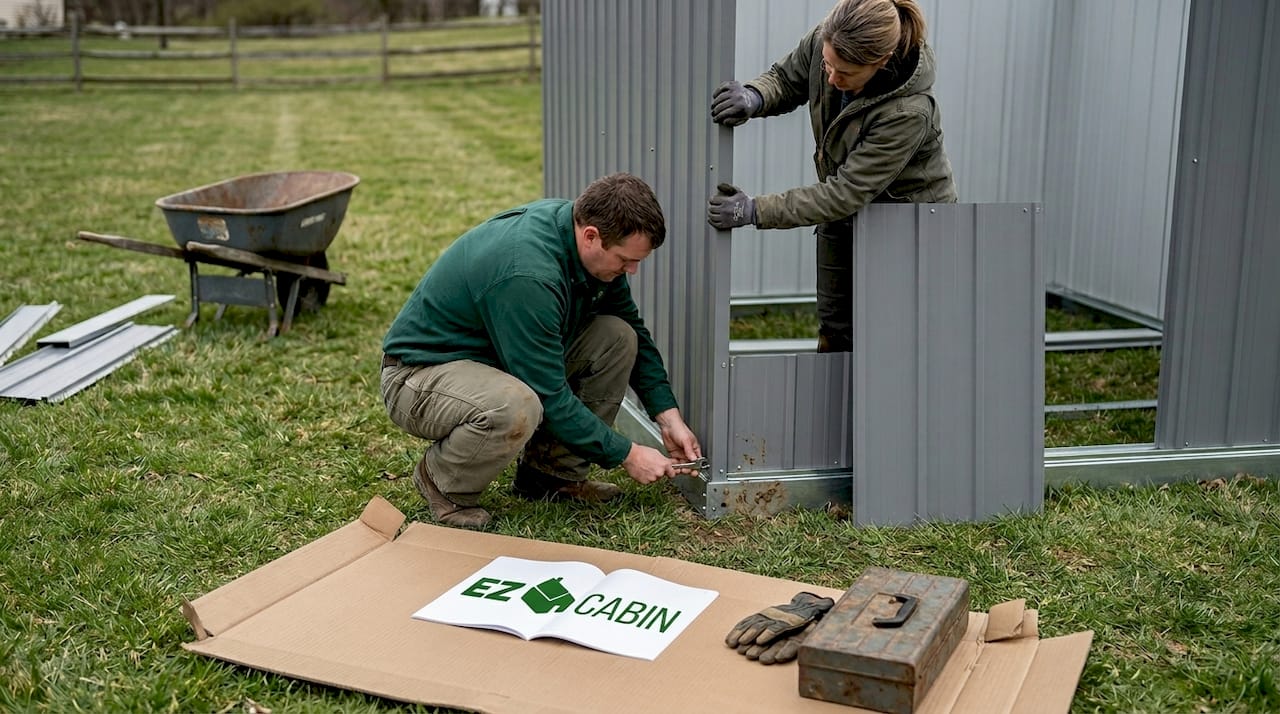
This is the workhorse of the prefab world. Pre-cut wood panels arrive ready to assemble, and most homeowners with basic tools can complete shed setup steps over a weekend. Price range: $1,800 to $4,500 depending on size and upgrades. You can add shelving, lofts, and extra windows without needing a contractor.
2. Metal utility shed (8x10 to 10x14)
Metal kits are the most affordable entry point, often starting under $1,200. They're rust-treated, easy to assemble, and nearly maintenance-free. The trade-off is limited customization and poor insulation, making them less ideal for office or hobby use.
3. Portable cabin-style prefab (12x20 to 14x40)
This is where prefab gets exciting. These larger structures bridge the gap between a shed and a prefab cabin guide, offering real room-like interiors. They're delivered fully assembled and can include windows, doors, and optional electrical packages. Price range: $5,000 to $18,000.
| Model type | Price range | Assembly | Best use |
|---|---|---|---|
| Wood storage shed | $1,800 to $4,500 | DIY weekend | Storage, basic workspace |
| Metal utility shed | $900 to $2,500 | DIY half-day | Pure storage |
| Cabin-style prefab | $5,000 to $18,000 | Delivered assembled | Office, studio, living space |
Prefab pros:
- Faster delivery (often 1 to 4 weeks)
- Lower upfront cost
- No contractor required for basic models
- Easier to finance with rent-to-own programs
Prefab cons:
- Limited structural customization after delivery
- Standard layouts may not fit every yard
- Cheaper kits may need upgrades for harsh winters
Pro Tip: If you're buying a prefab kit for office use, order the insulation package upfront. Adding insulation after assembly costs significantly more and often requires partial disassembly.
Custom sheds for unique needs: Home offices, hobby rooms, and more
Prefab sheds work for most people, but what if your needs are more unique? Home office sheds are increasingly popular for remote workers who need a real workspace separate from the house. A custom shed lets you design exactly that.
What custom sheds can include
Unlike standard kits, custom builds can incorporate nearly any feature you want:
- Extra windows for natural light and ventilation
- Full insulation for year-round comfort
- Mini-split HVAC systems for heating and cooling
- Electrical panels and dedicated outlets
- Custom door placement and sizing
- Interior wall finishes, flooring, and built-in storage
For homeowners considering a shed to tiny home conversion, custom builds are the only realistic path. The structural requirements for habitable space go beyond what most prefab kits offer.
Budget estimates for Kentucky and Ohio
| Custom shed type | Estimated cost | Timeline |
|---|---|---|
| Basic custom storage | $3,500 to $6,000 | 2 to 6 weeks |
| Home office conversion | $8,000 to $20,000 | 4 to 10 weeks |
| Hobby or rec room | $6,000 to $15,000 | 3 to 8 weeks |
| Tiny home grade build | $20,000 to $45,000 | 8 to 16 weeks |
Local contractors vs. DIY
Hiring a local Kentucky or Ohio contractor gives you code compliance and warranty protection. DIY custom builds save money but require real construction knowledge. A hybrid approach works well for many homeowners: buy a quality prefab base and hire a local electrician or insulator for the upgrades.
If you're dreaming of a man cave shed, the custom route gives you the freedom to add a bar setup, entertainment wiring, or a garage-style door that no standard kit will offer.
Pro Tip: Always get three quotes from local contractors and ask specifically about their experience with shed-to-office conversions. General contractors often charge more and know less about this niche than shed specialists.
Head-to-head comparison: Prefab kits vs. custom sheds
After seeing both prefab and custom options, here's a side-by-side comparison to simplify your decision. Custom sheds offer unique features at higher price points; prefab sheds provide convenience and affordability — but the right choice depends on your specific situation.
| Factor | Prefab kit | Custom shed |
|---|---|---|
| Starting price | $900 | $3,500 |
| Customization | Moderate | High |
| Installation time | Days to 1 week | Weeks to months |
| Credit requirements | Often none (rent-to-own) | May require financing |
| Durability | Good to very good | Excellent |
| Permit complexity | Usually low | Varies by design |
Choose prefab if you:
- Need storage or a basic workspace quickly
- Have a limited budget or credit concerns
- Prefer a low-maintenance, delivered solution
- Want to explore a shed vs. garage comparison before committing to a larger structure
Choose custom if you:
- Need year-round habitable space
- Have specific layout or feature requirements
- Are planning a modern shed investment that adds real property value
- Are converting the space for office, studio, or living use
Hidden costs to watch for
Both options carry costs that don't show up in the base price. Prefab kits often need a gravel or concrete pad, which runs $500 to $2,000. Custom builds may require engineering reviews or additional permits. Always budget 15 to 20 percent above the quoted price for surprises.
Delivery fees vary widely across Kentucky and Ohio. Rural properties with limited access or soft ground may face additional charges. Ask about delivery specifics before you sign anything.
An expert's perspective: Balancing cost, creativity, and practicality
Most shed buying guides focus entirely on specs and prices. What they miss is the mindset shift that separates a good purchase from a great one.
Here's what we've seen over and over: homeowners who treat their shed as a creative project rather than a utility purchase end up far more satisfied. They think about natural light before they think about square footage. They plan for the next use, not just the current one. A shed you build for storage today can become an office in three years if you rough in the electrical from the start.
Budget limitations are not the obstacle most people think they are. Rent-to-own programs make it possible to get into a quality structure with no credit check and a single month's payment. That's a better deal than most people realize. The expert shed setup tips that matter most are not about tools — they're about planning ahead.
Local sourcing for materials and labor also pays off in ways that national chains can't match. A Kentucky or Ohio contractor who knows your county's permit office can save you weeks of back-and-forth. That's real value.
Take the next step: Affordable, flexible shed solutions in Kentucky & Ohio
You now have a clear picture of what separates a smart shed purchase from an expensive mistake. At EZ-Cabin, we've built our entire process around making this easy for Kentucky and Ohio homeowners.
You can shop rent-to-own sheds with no credit check required, use our AI-powered customization tool to design your space in real time, and schedule delivery in one simple workflow. Most buildings arrive within 1 to 4 weeks. If you're ready to move forward, secure your building today with just the first month's payment. Need to explore payment options first? Check out our no credit shed financing page for full details on rent-to-own terms that work for any budget.
Frequently asked questions
Do I need a permit to install a shed in Kentucky or Ohio?
Most towns require a permit for sheds above a certain size, so check with your local zoning office before you buy or build anything.
What's the difference between prefab shed kits and custom sheds?
Prefab kits require less installation time and cost less upfront, while custom sheds offer higher personalization at a greater cost and longer build time.
Can sheds really be used as home offices or hobby spaces?
Yes — home office sheds are increasingly popular for remote workers, and both prefab and custom models can be upgraded with insulation, windows, and electrical for year-round use.
Are there affordable financing options for sheds without a credit check?
Yes, rent-to-own programs in Kentucky and Ohio let you get started with no credit check and only the first month's payment required, making shed ownership accessible to nearly everyone.