
TL;DR:
- Buying a tiny home in 2026 requires thorough research of zoning laws, permits, and foundation classifications before purchase.
- Legal and zoning considerations, especially for THOWs, are crucial to ensure proper placement, financing, and long-term livability.
- Careful front-end patience with permits and legal requirements is essential for a successful, hassle-free tiny home ownership experience.
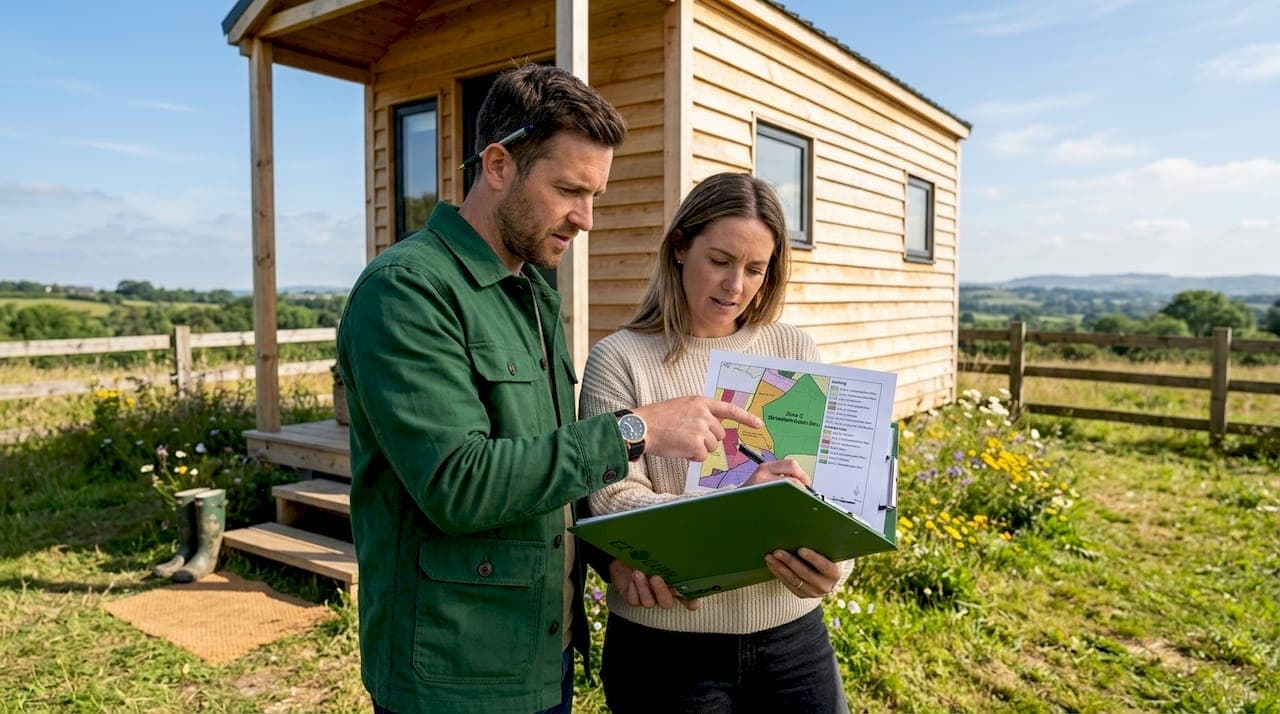
Most people assume buying a tiny home in 2026 is straightforward. Pick a design, secure financing, move in. The reality is messier, and skipping even one step can leave you with a structure you legally cannot live in. This tiny home ownership guide 2026 covers exactly what the Instagram posts leave out: zoning laws, foundation choices, realistic costs, financing options that actually work, and what daily life looks like once you're in. Whether you're eyeing a tiny house on wheels or a permanent structure on private land, the decisions you make early determine everything that follows.
Table of Contents
- Key Takeaways
- Your tiny home ownership guide 2026: legal and zoning requirements
- Choosing and designing your tiny home
- Cost and financing strategies for 2026
- Building or buying: a practical step-by-step approach
- What tiny home life actually looks like
- My honest take on tiny home ownership in 2026
- How Ez-cabin makes tiny home ownership more accessible
- FAQ
Key Takeaways
| Point | Details |
|---|---|
| Zoning first, always | Confirm permits and zoning in writing before purchasing land or starting any construction. |
| Foundation type shapes everything | Your choice between wheels, skids, or permanent foundation affects legal classification, financing, and where you can park. |
| Budget a 15–20% buffer | Unexpected costs hit nearly every project; a contingency budget keeps your build from stalling. |
| THOWs face dual compliance | Tiny homes on wheels must satisfy both vehicle and structural codes, which affects financing and legal placement. |
| Community living simplifies logistics | Tiny house communities offer established utilities and clearer legal placement compared to private land. |
Your tiny home ownership guide 2026: legal and zoning requirements
Zoning law is where most tiny home dreams collide with reality. Before you spend a dollar on materials or a deposit, you need to understand exactly what you're allowed to build, where you're allowed to build it, and what classification your home will carry.
The foundation question changes your legal path
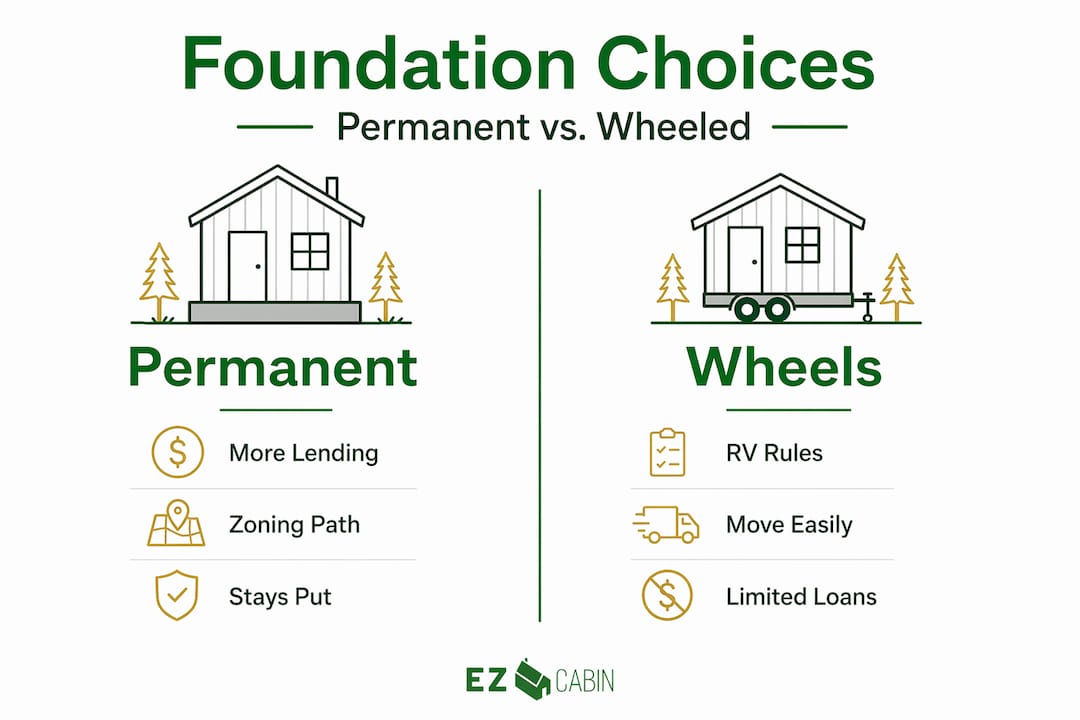
Tiny homes split into two broad categories with very different legal consequences. A tiny home on a permanent foundation is typically classified as a residential structure and falls under local building codes. A Tiny House on Wheels (THOW) is where things get complicated. THOWs are simultaneously vehicles and structures, requiring dual compliance with motor vehicle safety codes and housing codes. Failing to satisfy both creates legal and financing problems that can be extremely expensive to fix after the fact.
Wheeled units are often regulated as RVs, and many jurisdictions restrict long-term occupation of RV-classified structures. That means you might build a beautiful THOW and then discover you cannot legally live in it year-round on the lot you had in mind.
ADUs and Appendix Q: two pathways worth knowing
Accessory Dwelling Units (ADUs) offer one of the most practical legal pathways for tiny home placement. They allow you to place a small dwelling on a property that already has a primary residence. The tradeoff is real: ADUs come with size limits, setback requirements, parking rules, and fire separation standards that vary significantly by municipality.
Appendix Q is a section of the International Residential Code that relaxes certain standards specifically for small homes, including allowances for loft sleeping areas and compact stairways. The problem is that Appendix Q is optional and only applies if your local jurisdiction has formally adopted it. Never assume it applies to your county or city without confirmed written documentation.
Here is a checklist of steps to take before you sign anything:
- Contact your county planning and zoning office directly (not just the website)
- Ask specifically whether tiny homes on permanent foundations or THOWs are permitted
- Request written confirmation of any zoning variance or approval
- Check whether your area has adopted Appendix Q or any ADU-friendly ordinances
- Verify that building, electrical, and plumbing permits are obtainable for your structure type
- Understand the classification your home will receive and how it affects resale and financing
Pro Tip: Get every zoning confirmation in writing and dated. Verbal approvals from planning staff carry no legal weight if the county challenges your build later.
Choosing and designing your tiny home
Once you know what's legally possible in your location, you can make smart choices about structure type, size, and layout. These decisions interact in ways that catch buyers off guard.
Foundation options compared
| Foundation Type | Mobility | Financing Access | Average Cost Impact | Best For |
|---|---|---|---|---|
| Permanent foundation | Fixed | Easier (mortgage eligible) | Higher site prep | Long-term single location |
| Skids | Limited | Moderate (personal loan) | Lower | Semi-permanent rural use |
| Wheels (THOW) | High | Harder (RV or personal loan) | Variable | Flexibility, land-free living |
Most buyers underestimate the importance of floor plan design relative to square footage. A 200-square-foot space with a smart layout feels more livable than a 300-square-foot box with wasted corners. Prioritize ceiling height, natural light, and traffic flow before obsessing over square footage alone.
Practical design elements to prioritize:
- Storage under stairs and lofts. These dead zones become the most used spaces in a tiny home when designed well.
- Multi-function furniture. Murphy beds, fold-down tables, and built-in benches with storage dramatically increase usability.
- Insulation ratings. A well-insulated tiny home costs significantly less to heat and cool. For walls, aim for R-13 minimum; for roofs, R-30 or better.
- Window placement. Cross-ventilation and natural light reduce reliance on mechanical systems and make small spaces feel larger.
- Exterior siding durability. In climates with freeze-thaw cycles like Kentucky and Ohio, material choices for roofing and siding directly affect long-term maintenance costs.
Exploring prefab construction options is worth your time if budget and speed matter. Prefab units often arrive closer to move-in ready and come with manufacturer specifications that simplify the permitting process.
Cost and financing strategies for 2026
Numbers matter more than aesthetics at this stage. Tiny homes are affordable relative to traditional housing, but the word "affordable" still covers a wide range.
DIY builds typically cost $35,000 to $60,000 and take 3 to 18 months depending on how many hours per week you invest. Professional builds run $80,000 to $150,000 and arrive faster, often with warranties and code certifications already in place. Neither number includes land, utility hookups, or permit fees, which can add $5,000 to $20,000 depending on location.
A 15 to 20% contingency buffer is not optional. It's the difference between finishing your project and stopping mid-build with an unusable structure sitting in someone's driveway.
Financing pathways that actually work
Traditional mortgage financing is largely off the table for THOWs and many tiny structures, because most lenders require a permanent foundation and a minimum square footage that tiny homes don't meet. Lenders favor proper classification and credentialing early in the process. If you want the widest range of financing options, get your structure legally classified and documented before you approach lenders.
Your realistic financing options in 2026 include:
- Personal loans: Accessible, fast, and do not require real property status. Rates are higher than mortgages.
- RV loans: Apply to THOW units that carry RVIA certification, typically at better rates than unsecured personal loans.
- Rent-to-own programs: Ideal for buyers without strong credit or who want low entry costs. Look for no credit check financing as an entry point.
- Construction loans: Available for permanent foundation tiny homes through some regional banks and credit unions.
Pro Tip: Before applying for any loan, determine your home's legal classification (RV, ADU, or residential structure). That classification will determine which loan products you can actually qualify for.
Monthly ongoing costs are another category buyers underestimate. In Florida, lot rent runs $800 to $1,800 monthly depending on location and community amenities, with utilities adding $50 to $200 on top. Kentucky and Ohio averages vary, but the principle holds: lot rent often rivals or exceeds utility costs, so factor it into your monthly budget from day one.
For a closer look at regional cost realities, the small building cost guide for Kentucky and Ohio breaks down what buyers in this region are actually spending in 2026.
Building or buying: a practical step-by-step approach
The single most common mistake in tiny home projects is starting construction before confirming permits and zoning. Mis-sequencing your steps can render a structurally sound home legally unusable. Here is the order that protects you:
- Confirm zoning and land use. Before purchasing land or signing contracts, verify in writing that your intended structure and use are permitted.
- Secure permits. Obtain building, electrical, and plumbing permits before breaking ground or delivery.
- Choose your structure type and builder. With permits in hand, you know exactly what specifications to build or buy to.
- Complete foundation and utility prep. Site work, water, sewer or septic, and electrical hookups before the structure arrives or walls go up.
- Frame, insulate, and systems install. For DIY builds, framing and roofing set the timeline. Insulation and mechanical systems come next.
- Inspections and certificate of occupancy. Schedule these in advance. Delays here are the most common cause of move-in postponement.
For THOW owners, the regulatory picture is more complex. Starting September 1, 2026, RVIA enforcement aligns with NFPA 1192 and the 2026 NEC, which tightens electrical and safety standards for wheels-based tiny homes classified as RVs. If you are buying or building a THOW, confirm that your unit meets these updated standards before finalizing any purchase.
Pro Tip: Part-time DIY builders typically take 12 to 18 months to complete a tiny home. Plan your temporary housing accordingly. Running out of runway is as common as running out of money.
What tiny home life actually looks like
Living in a tiny home in 2026 is a genuine lifestyle shift, not just a housing swap. The people who thrive in tiny spaces share a few common traits: they own less by choice, they spend more time outside, and they've thought through their daily routines before moving in.
The financial case is real. Monthly costs in tiny house communities include lot rent and utilities but typically exclude mortgage payments that would be two to three times higher on a conventional home. That financial margin is where the real tiny home ownership benefits show up, in the form of freed-up income, reduced debt load, and more flexibility about where and how you live.
The community vs. private land decision comes down to your priorities:
- Tiny house communities offer established utilities, legal placement certainty, shared amenities, and built-in social connection. The tradeoff is less privacy and ongoing lot rent. Communities like Tiny Town Orlando demonstrate how community living simplifies logistics compared to setting up privately.
- Private land gives you control over your environment and eliminates lot rent if you own the land. The tradeoff is that you handle all utility setup, zoning navigation, and neighbor relations independently.
The sustainability appeal is growing alongside the financial one. Smaller spaces consume less energy, generate less waste, and often push residents toward more deliberate consumption. That's not an accident. It's a feature for the people choosing this path.
My honest take on tiny home ownership in 2026
I've seen the same pattern play out repeatedly. A buyer falls in love with the aesthetic, the financial freedom, the idea of simplicity. Then they start building or sign a purchase contract before they've confirmed a single zoning detail. Three months later, they're living in a storage unit because their THOW isn't legally parked anywhere.
In my view, the legal and zoning groundwork is not the boring administrative part of tiny home ownership. It IS the project. Everything else, the design choices, the layout decisions, the Instagram-worthy details, follows from whether you have a legal place to put the thing.
What I've found separates successful tiny home owners from frustrated ones is patience at the front end. The buyers who spend two months confirming zoning, getting permits, and understanding their financing classification finish their projects. The buyers who rush that phase spend those same two months in legal limbo.
I also think the THOW dual-compliance challenge is genuinely underestimated in most buyer guides. The vehicle and structure classification conflict isn't a bureaucratic technicality. It directly affects what loans you qualify for and what land you can legally occupy. Understanding it early protects your financial investment more than any design upgrade ever will.
My advice: be patient, be thorough with the legal steps, and find a community of tiny home owners in your region before you start. Their hard-won experience is worth more than any online guide, including this one.
— Team
How Ez-cabin makes tiny home ownership more accessible
Ez-cabin serves buyers across Kentucky and Ohio who are ready to move from research to ownership without the dealership runaround. The inventory includes customizable cabins and portable buildings you can browse, configure, and finance entirely online, or visit in person at locations in London, KY and Somerset, KY to see structures before committing.
What sets Ez-cabin apart for buyers navigating the financing hurdle is guaranteed approval with no credit check required. You only need the first month's payment to get started, and most buildings ship within one to four weeks. The rent-to-own financing options are built for buyers who want a real path to ownership without traditional credit barriers.
If you're ready to explore your options, browse available buildings to see current inventory and use Ez-cabin's AI customization tools to visualize your space before you buy. When you're ready to move forward, secure your building and get a delivery timeline that actually fits your schedule.
FAQ
What is the biggest legal mistake tiny home buyers make in 2026?
Starting construction or purchasing a tiny home before confirming zoning approval is the most costly mistake. Permits and zoning variances must be secured before any building begins, or you risk owning a structure you cannot legally place or occupy.
Can you get a mortgage for a tiny home in 2026?
Traditional mortgages are generally unavailable for tiny homes on wheels or those below minimum size thresholds. Most buyers use personal loans, RV loans, or rent-to-own financing depending on their home's legal classification.
What does Appendix Q mean for tiny home buyers?
Appendix Q is a section of the International Residential Code that allows for smaller stairways and loft sleeping areas in tiny homes, but it only applies where locally adopted. Confirm with your county whether it applies before designing around it.
How much does it actually cost to live in a tiny home monthly?
Monthly costs depend heavily on location and whether you rent a lot or own land. In many communities, lot rent plus utilities runs $850 to $2,000 per month, which is typically far below comparable traditional housing costs in the same area.
What is the difference between a THOW and a tiny home on a foundation?
A Tiny House on Wheels is classified partly as a vehicle and partly as a structure, requiring dual code compliance with both motor vehicle and housing standards. A tiny home on a permanent foundation is treated as a residential structure under local building codes, which typically opens more financing options.