
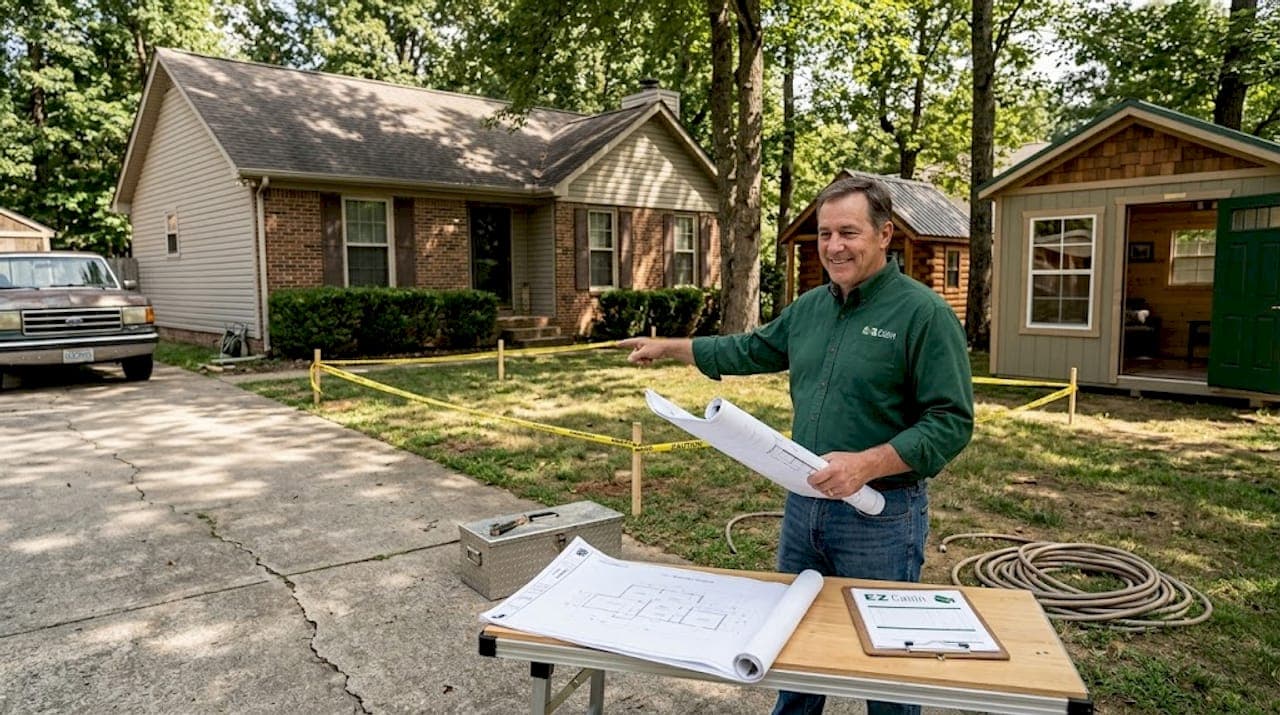
TL;DR:
- Homeowners in Kentucky and Ohio face permit complexities and zoning rules that impact garage construction costs.
- Proper planning, local code understanding, and communication with local authorities are key to a smooth, budget-friendly project.
Running out of space for your vehicles, tools, or outdoor gear is one of the most frustrating problems homeowners face in Kentucky and Ohio. Adding a garage solves that problem permanently, but many homeowners stall out before breaking ground because the permitting process feels confusing, the costs feel unpredictable, and the construction sequence feels overwhelming. This guide cuts through all of that. We walk you through every step, from your first call to city hall all the way to your final inspection, with specific details for both Kentucky and Ohio homeowners who want to get this done right and on budget.
Table of Contents
- What you need to check before starting: Planning, permits, and zoning
- Essential tools, materials, and planning for your garage addition
- Step-by-step garage build process: From foundation to final inspection
- Common mistakes and how to avoid them
- The real key to a stress-free, budget-friendly garage addition
- Ready to start your garage addition? Tools for every step
- Frequently asked questions
Key Takeaways
| Point | Details |
|---|---|
| Local permitting is critical | Always confirm local zoning and building permit requirements before beginning any garage project. |
| Plan for all costs | Budget for permits, materials, labor, and potential utility hookups from the outset to avoid surprises. |
| Follow each step | Building in the right order—from site prep to inspection—helps prevent delays and expensive mistakes. |
| Avoid common missteps | Double-check zoning and setbacks, especially when designing detached garages with more site constraints. |
| Use local expertise | Contact local officials, use regional resources, and consider climate-specific requirements for the best results. |
What you need to check before starting: Planning, permits, and zoning
Before you pick a design or pour a single bag of concrete, you need to understand the rules that govern your property. Skipping this phase is the single most expensive mistake homeowners make. A garage that violates local zoning setbacks can be forced into redesign, moved, or even demolished at your expense.
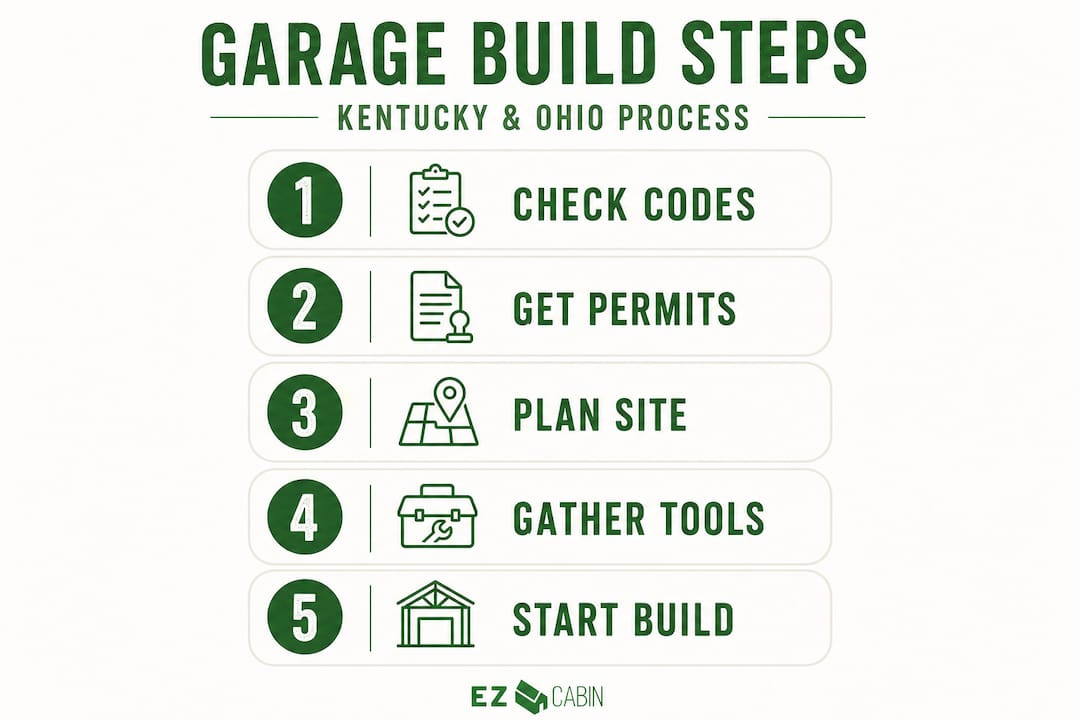
The good news is that the preparation process follows a clear sequence. A practical garage build runs in this order: plan and site sketch, obtain permits and zoning clearance, prepare the site and utilities, pour the foundation or slab, frame, build the roof, add sheathing and siding and windows and doors, rough in electrical and plumbing if needed, then insulate and finish before completing final inspections. Jumping ahead in this sequence almost always creates rework.
Kentucky versus Ohio: What the rules actually say
The two states handle residential construction codes differently, and knowing which system applies to you saves a lot of frustration.
In Kentucky, statewide residential code is the 2015 International Residential Code with 2018 Kentucky amendments governing one and two family dwellings. However, whether you actually need a building permit, inspection, or certificate of occupancy depends on your local jurisdiction, not the state. Your county or city controls that piece.
In Ohio, local building departments handle permits and reviews for garages entirely. Most cities and counties require a building permit for both attached and detached garages, and you will need to submit a site plan showing your garage footprint relative to your property lines. Setback requirements vary widely by municipality, so calling your county building department before you finalize your design is non-negotiable.
Key pre-construction steps to complete
Before any work starts, work through this list completely:
- Confirm your zoning classification and whether garages are a permitted use on your lot
- Check setback requirements from property lines, easements, and existing structures
- Verify HOA rules if your neighborhood has a homeowners association with its own design standards
- Request a site sketch review from your local building or zoning office
- Budget for permit fees, which commonly range from $150 to $2,000 depending on your jurisdiction
- Ask about utility requirements, including whether a separate electrical service panel is required
"Always verify with your local authority having jurisdiction (AHJ) before committing to a garage design. A single setback misread can cost you thousands in redesign fees and delays."
Pro Tip: Visit your city hall or county building office in person if possible. Staff can flag issues on your site sketch before you pay for engineered drawings, which saves both time and money.
Pairing this with a solid shed setup checklist gives you a useful reference for the early logistics. If you're exploring a portable structure, our portable garage permit steps guide covers the specifics for that path.
Essential tools, materials, and planning for your garage addition
With permits and approvals lined up, it's time to organize your resources and ensure you're equipped from day one. Walking into any construction phase without the right tools or a material list wastes money and causes costly delays.
Attached vs. detached: Know the difference before you build
These two garage types have different planning demands, cost structures, and permitting considerations. Here's a comparison to help you choose:
| Factor | Attached garage | Detached garage |
|---|---|---|
| Average cost range | Lower (shares one wall) | $19,200 to $33,600 |
| Permit complexity | Tied to main structure | Independent permit |
| Utility routing | Simpler (connected structure) | Additional planning needed |
| Setback requirements | Fewer conflicts typically | Full setback envelope applies |
| Foundation needs | Shared or connected | Fully independent slab or footing |
| Access/driveway impact | Usually existing | May require new driveway extension |
Detached garage costs average around $26,400, with permit fees from $150 to $2,000 on top of that. Budget separately for electrical wiring and plumbing if you plan to run utilities to the structure.
Detached garages also come with more planning complexity. Access, utility routing, driveway placement, drainage, and setback positioning all become independent design decisions rather than extensions of your existing home's systems. This is not a reason to avoid detached garages. It's simply a reason to plan more carefully from the start.
Tools and materials you'll actually need
Here's a practical breakdown of what goes into a standard garage addition:
Tools:
- Tape measure, level, and square
- Circular saw and reciprocating saw
- Framing nailer and air compressor
- Post hole digger or rented auger
- Concrete mixer or ready-mix delivery
- Safety gear: gloves, eye protection, steel-toed boots
Materials by phase:
- Foundation: concrete, rebar, formwork lumber
- Framing: dimensional lumber (typically 2x4 or 2x6), header beams, anchor bolts
- Roof: rafters or trusses, OSB sheathing, roofing felt, shingles
- Exterior: siding, windows, entry door, garage door
- Electrical: conduit, wire, outlets, panel if needed
- Insulation: batt or rigid board depending on climate requirements
Pro Tip: Plan your driveway access and utility connections before framing begins. Running electrical conduit through a finished wall later is expensive and disruptive. Rough in everything before the walls close.
For layout ideas that maximize every square foot, our guide on maximizing garage space gives you proven configurations for Kentucky and Ohio garages. And if you're comparing garage building types, that resource breaks down your options with warranty considerations included.
Step-by-step garage build process: From foundation to final inspection
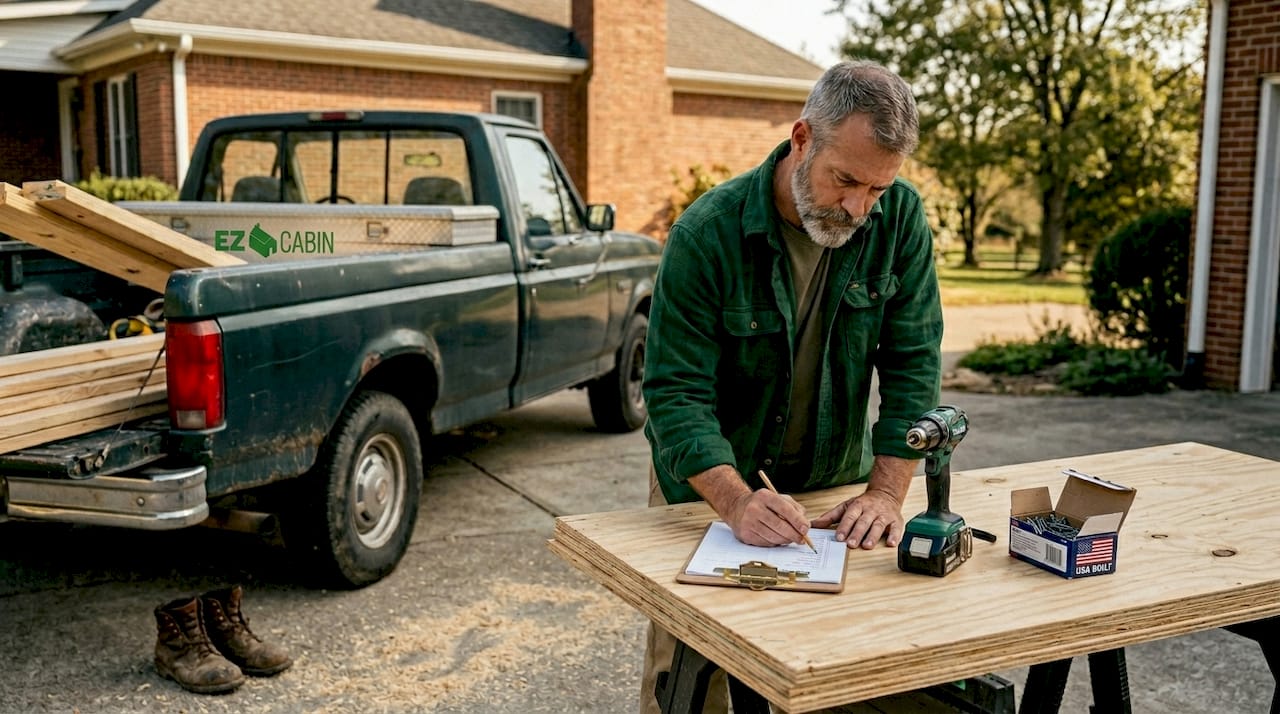
Now that you've organized your resources, let's guide you through every critical construction step so no detail gets missed. The sequence matters here. Each phase builds on the last, and skipping ahead almost always means going backward.
$19,200 to $33,600 is the typical range for a detached garage build, but staying in budget depends on executing each phase correctly the first time.
The complete build sequence
-
Site preparation: Clear vegetation, grade for drainage away from the structure, and mark your footprint precisely based on your approved site plan.
-
Stake and excavate: Dig to your required footing depth. In Kentucky and Ohio, frost depth requirements dictate how deep your footings must go. Conventional footings extend below the local frost line, and some jurisdictions allow frost-protected shallow foundation approaches as an alternative. Check with your local building department for the approved depth in your county.
-
Pour footings and slab: Set forms, place rebar, and pour. Allow proper cure time before framing. Rushing this step causes cracking and structural problems later.
-
Frame the walls: Use your approved drawings as your guide. Frame walls flat on the slab, then raise and brace them in position. Check for plumb and square before fastening.
-
Install roof structure: Prefabricated trusses are faster and structurally consistent. Rafters work well for custom or complex roof lines. Either way, install hurricane ties at every connection point.
-
Add sheathing and roofing: Apply OSB sheathing to the roof deck, then underlayment, then your chosen shingles or metal roofing. Seal all penetrations immediately.
-
Install siding, windows, and doors: Complete the exterior envelope. Garage doors require proper header framing and a level, square opening. Measure twice before framing.
-
Rough in electrical (and plumbing if needed): Run conduit, pull wire, and install boxes before insulating. If you're adding a utility sink or floor drain, rough in plumbing now.
-
Schedule your rough-in inspection: Most jurisdictions require this before you close walls. This is one of the most commonly skipped steps, and it creates serious problems at final inspection.
-
Insulate and finish: Batt insulation between studs and rigid board under the slab if required. Drywall if desired. Paint.
-
Final inspection: Walk through with your local inspector. Have your permit, approved plans, and any rough-in sign-off documents ready.
"Skipping the rough-in inspection is the single most common cause of project delays at final inspection. You may be required to open finished walls at your own expense."
Pro Tip: Schedule your inspections proactively. Inspectors in rural Kentucky and Ohio counties can have wait times of one to two weeks, so plan accordingly and don't frame ahead of approvals.
For a deeper look at the expansion planning process, we've covered that in detail. You can also reference our shed installation steps guide if a prefab or portable structure fits your needs better.
Common mistakes and how to avoid them
Understanding the construction sequence is only half the battle. Avoiding pitfalls is just as important for keeping your project on track and on budget.
Here are the mistakes we see most often from Kentucky and Ohio homeowners:
-
Skipping the zoning setback check before finalizing a design. Starting without a zoning check leads to redesign costs and delays when your garage footprint conflicts with setback rules. This mistake alone can cost weeks and thousands of dollars.
-
Underestimating frost depth requirements. Ohio and Kentucky have meaningful frost penetration in winter. Shallow footings that don't account for local frost depth crack and shift, requiring expensive foundation repairs.
-
Choosing the lowest bid over durability and warranty. The cheapest framing or roofing materials often cost more over time in maintenance and replacement. Look at cost per year of useful life, not just upfront price.
-
Delaying utility planning until walls are framed. Electrical and plumbing rough-ins need to happen before walls are closed. Adding them later means tearing open finished surfaces.
-
Not documenting each phase. Photographs of each stage, especially foundation work and rough-in electrical, give your inspector confidence and help you resolve disputes quickly if questions arise.
"Every dollar saved by skipping documentation can cost ten dollars in rework when an inspector has a question you can't answer with evidence."
Pro Tip: Create a simple project folder (physical or digital) that holds your permit, approved plans, inspection sign-offs, and photos from each phase. This single habit prevents most inspection surprises.
If budget is a primary concern, our guide on portable garage savings shows how Kentucky and Ohio homeowners are cutting costs significantly. And for those thinking ahead about future needs, our 2026 garage trends guide covers what's working right now in this region.
The real key to a stress-free, budget-friendly garage addition
Here's the insight most articles skip. The step-by-step checklist matters, but the homeowners who have the smoothest projects are not necessarily the most skilled builders. They're the most prepared communicators.
What does that mean in practice? It means knowing your local AHJ permit requirements before you're standing in a building department line with the wrong paperwork. It means calling your county zoning office two weeks before you need an answer, not two days. It means introducing yourself to the inspector assigned to your project, understanding what they care about, and scheduling around their calendar instead of yours.
Most project overruns we hear about from Kentucky and Ohio homeowners don't come from technical failures. They come from assumption failures. The homeowner assumed a permit wasn't required. They assumed their setback was fine based on a neighbor's garage. They assumed the inspector would be flexible on a missed rough-in sign-off.
Region-specific prep removes those assumptions. A homeowner in Laurel County, Kentucky faces different rules than one in Hamilton County, Ohio. Treating your project as a local project, not a generic construction project, is what keeps the budget intact. Build a real working relationship with your local building department staff. Ask them what trips up most applicants. They'll tell you. And that conversation is worth more than any checklist.
For homeowners exploring the workspace side of an outdoor structure, our backyard office tips guide walks through the same preparation mindset applied to a different use case.
Ready to start your garage addition? Tools for every step
Adding a garage is a serious investment, and you deserve resources that match that commitment. At EZ-Cabin, we specialize in helping Kentucky and Ohio homeowners move from planning to building without unnecessary friction.

Whether you want to design your own structure from scratch or explore financing options that fit a real budget, we've built our process around your needs. Our Build Your Own garage tool lets you customize layouts, exterior colors, doors, and windows in real time so you know exactly what you're getting before you commit. And with our garage financing options, you only need your first month's payment to get started. No credit check required. Most structures are delivered within one to four weeks, so your project doesn't stall while you wait. Visit us in London or Somerset, KY, or complete everything online.
Frequently asked questions
Do I always need a permit for a garage addition in Kentucky or Ohio?
Most cities and counties in both states require permits for garage builds, but Kentucky local jurisdictions control whether permits apply, and Ohio municipalities each set their own rules, so always verify with your local building department before starting.
How deep does my garage foundation need to be in Kentucky or Ohio?
Footings must typically extend below the local frost depth, which varies by county, so confirm the required footing depth with your local building department before excavating.
What's the average cost to add a detached garage in this region?
Detached garages typically cost between $19,200 and $33,600, with permit fees ranging from $150 to $2,000 and additional costs for electrical or plumbing if you run utilities to the structure.
Do I have to build my garage exactly to the plan I get permitted?
Yes. Deviating from an approved plan can require new approvals, additional inspections, or a zoning variance process, so always get written authorization before making any changes to your permitted design.
Is insulating my garage required or optional in Kentucky and Ohio?
Insulation is generally required if your garage is heated or finished as conditioned space, but many unconditioned detached garages are exempt. Check your local energy code to confirm what applies to your specific project.