
TL;DR:
- Portable sheds are mainly used for storage, while cabins provide comfort for recreation or living.
- Costs range from $5,000-$20,000 for sheds and $15,000-$75,000+ for cabins, depending on features.
- Legal requirements vary by location; permits and zoning rules must be carefully checked beforehand.
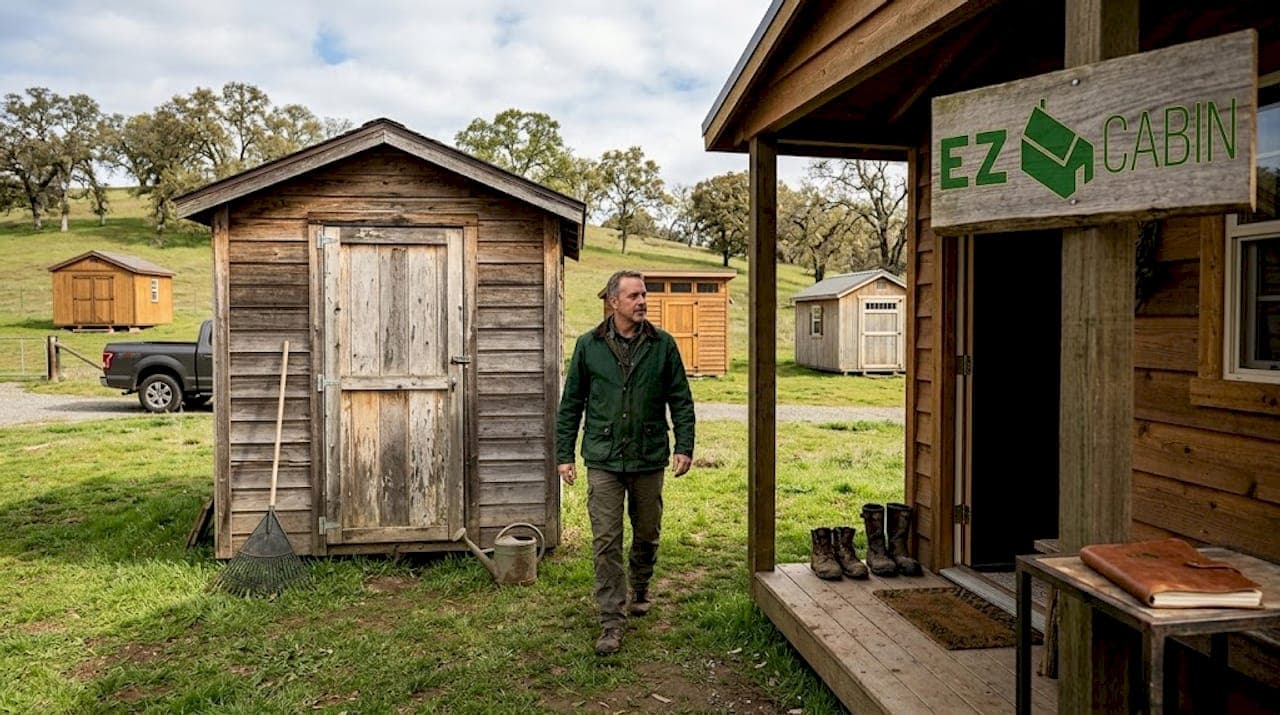
A portable building can show up on your property in as little as a week, ready to use straight off the delivery truck. That kind of speed and convenience is great, until you realize you ordered the wrong structure, missed a permit requirement, or bought a storage shed when you actually needed a livable retreat. In Kentucky and Ohio, where outdoor recreation, sprawling rural properties, and backyard projects are a way of life, portable sheds and cabins are more popular than ever. But too many buyers treat them as interchangeable. They are not. This guide breaks down exactly what separates a shed from a cabin, what each one costs, what the law says, and how to make the right call for your situation.
Table of Contents
- Understanding portable buildings: Sheds and cabins defined
- Key differences between sheds and cabins
- Legality and compliance: What you must know before buying
- Choosing the best fit: Practical scenarios for Kentucky and Ohio
- Why most people underestimate portable buildings
- Ready for your next shed or cabin?
- Frequently asked questions
Key Takeaways
| Point | Details |
|---|---|
| Portable sheds are affordable | Sheds offer low-cost storage and easy installation in Kentucky and Ohio. |
| Cabins suit living and recreation | Portable cabins are built for comfort and versatility but require strict compliance and higher investment. |
| Legal compliance is essential | Every buyer should verify zoning rules and permits before installing or converting any portable building. |
| Use scenarios guide your choice | Consider how you plan to use your space to determine whether a shed or cabin is the best fit. |
Understanding portable buildings: Sheds and cabins defined
Now that we have set the stage for why portable buildings matter, let us clarify what actually counts as a shed or cabin and why these labels matter more than most buyers realize.
The term "portable building" covers any factory-built structure that can be moved from one location to another, usually because it sits on wooden skids rather than a poured concrete foundation. This distinction is significant. Portable buildings on skids are movable, factory-built for consistent quality control, and typically available through rent-to-own programs, making them far cheaper to access than permanent stick-built structures. In Kentucky and Ohio, you will find dozens of dealers offering everything from basic utility sheds to fully finished cabin shells delivered right to your land.
A shed is primarily a utility structure. It is designed for storage, workshops, or hobby spaces. The build quality focuses on weather resistance and structural integrity rather than comfort. Most sheds come with basic framing, exterior siding, a simple roof, and a set of double doors. They are not built to house people full time, and their insulation levels (if any exist at all) reflect that.
A cabin, by contrast, is built with human comfort in mind. It typically includes better framing, higher-grade insulation, finished interior walls, and more detailed exterior work. Cabins are designed for recreation, weekend getaways, guest accommodations, or even primary living situations when properly equipped. You can explore the full range of portable building options to see how varied these structures can be.
Here is a quick breakdown of how each type is typically used across Kentucky and Ohio properties:
Common uses for portable sheds:
- Lawn and garden equipment storage
- Woodworking or mechanical workshops
- Backyard craft or hobby studios
- Farm tool and supply storage
- Hunting gear organization
Common uses for portable cabins:
- Weekend hunting or fishing retreats
- Guest quarters on rural properties
- Vacation rentals on private land
- Home office or creative studios
- Transitional or supplemental living spaces
"The biggest mistake buyers make is assuming a shed can become a cabin with a little elbow grease. The gap between the two, in terms of construction standards, is far wider than it looks from the outside."
Factory-built quality control is one of the strongest arguments for going portable over custom-built on site. When a structure is built in a controlled environment, weather delays and inconsistent labor are removed from the equation. Every wall panel, roof truss, and floor joist gets assembled under the same conditions, day after day. For buyers in Kentucky and Ohio who deal with humid summers, cold winters, and unpredictable spring weather, that consistency matters.
Key differences between sheds and cabins
With a clear definition in mind, it is time to compare these buildings side by side so you can see how their features, costs, and legal hurdles actually stack up.
The most practical way to understand the difference is to look at what you are actually paying for and what you are legally allowed to do with each structure.
| Feature | Portable shed | Portable cabin |
|---|---|---|
| Typical price range | $5,000 to $20,000 | $15,000 to $75,000+ |
| Insulation | Minimal or none | Standard to heavy-duty |
| Interior finish | Unfinished | Partially or fully finished |
| Electrical/plumbing | Rarely included | Often available as upgrade |
| Intended use | Storage and utility | Recreation and habitation |
| Permit requirements | Usually minimal | Often required |
| Maintenance cost | Lower | Higher but more durable |
| Movability | Easy to relocate | Possible but more complex |
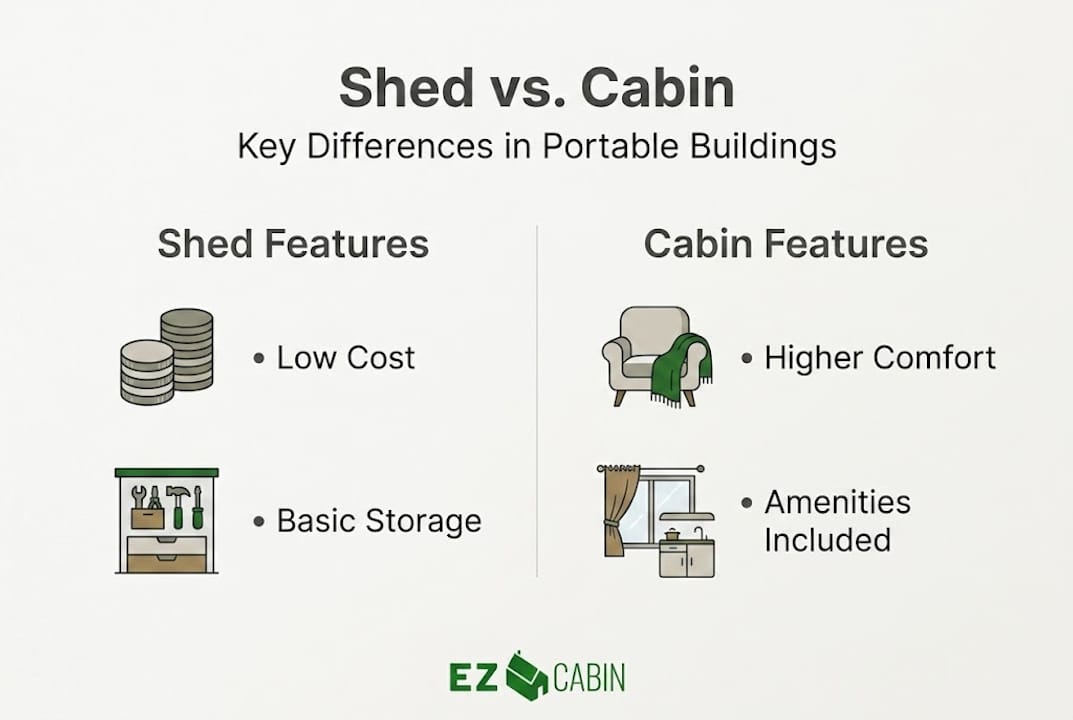
As the table shows, shed and cabin costs spread across a wide range. Portable sheds typically run between $5,000 and $20,000 for a basic shell, while portable cabins start around $15,000 and can reach $75,000 or more depending on size and finish level. Modular ADU-style cabins can push costs toward $350,000 when full living amenities are included.
Durability is another key separation point. Sheds are built to store things and protect them from the elements. Cabins are built to protect people from the elements. That means cabin framing is generally heavier, the roofing is more robust, and the exterior cladding is designed to last decades with proper care. You can dig into the specifics of cabin benefits or review prefab shed benefits to compare them on your own terms.
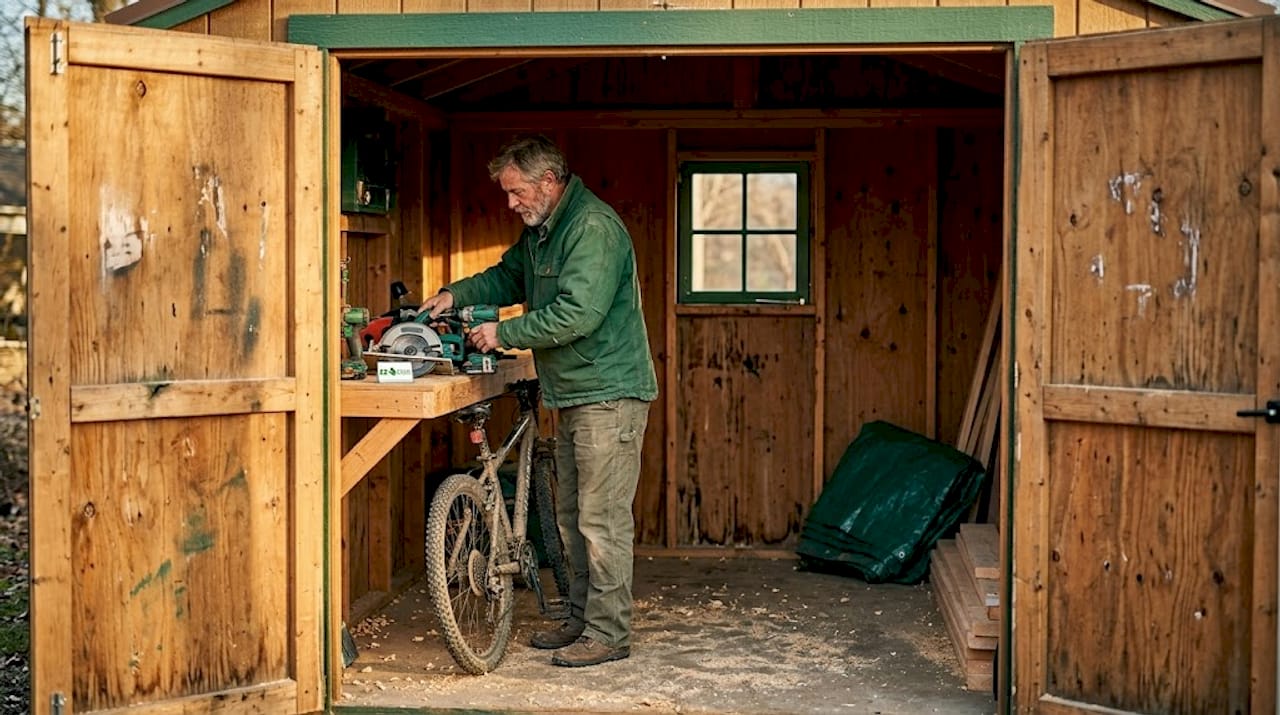
Amenities are where sheds and cabins diverge most dramatically. A standard shed shell has no insulation, no wiring, and no plumbing. A cabin, especially at the upper end, can include spray foam insulation, a pre-wired electrical panel, a mini-split HVAC system, and roughed-in plumbing for a bathroom and kitchenette. Those upgrades are not cosmetic. They are what make a structure legally and practically livable.
Pro Tip: Do not let a salesperson describe a basic shed shell as a "starter cabin." If a building lacks proper insulation and framing designed for occupancy, adding those features later will cost far more than buying a purpose-built cabin from the start.
Legality and compliance: What you must know before buying
Beyond cost and comfort, legality is the real make-or-break for your portable building. Here is what every buyer should know before signing on the dotted line.
Zoning laws in Kentucky and Ohio vary dramatically by county, township, and even neighborhood. A rural property in Laurel County, Kentucky operates under different rules than a suburban lot in Columbus, Ohio. Before you purchase any portable building, you need to answer three questions: What is my property zoned for? Does this structure require a permit? And if I want to live in it, does the law allow that?
Here is a step-by-step approach to staying compliant:
- Contact your county zoning office before buying. Ask specifically whether portable buildings require permits and whether they can be used as living quarters.
- Check setback requirements. Most counties require structures to sit a certain distance from property lines, roads, and other buildings.
- Verify utility connection rules. Connecting electricity or running water to a shed or cabin often triggers additional permit requirements.
- Ask about size thresholds. Some counties exempt structures under a certain square footage from permitting, but that threshold varies widely.
- Get everything in writing. Verbal confirmation from a zoning clerk is not protection. Request written documentation of what is and is not allowed.
Converting a shed to a habitable space is possible, but it requires major upgrades including proper insulation, permitted electrical work, and code-compliant plumbing. Skipping those steps does not just risk fines; it can result in a forced removal of the structure entirely.
"Illegal shed conversions are one of the most common calls we hear about from buyers who thought they were saving money. By the time they pay the fines and bring the structure up to code, they have spent more than a purpose-built cabin would have cost."
For buyers who want to explore the technical side of setup, reviewing shed installation steps before you start the process is a smart move. If you are seriously considering a conversion, the shed-to-home conversion guide and livable shed guide both lay out what is realistically required under current standards.
The bottom line on legality: sheds are easy to place with minimal red tape. Cabins intended for occupancy carry more regulatory weight. Knowing which category you are buying into protects your investment and keeps you out of trouble with local authorities.
Choosing the best fit: Practical scenarios for Kentucky and Ohio
Once the legal and practical bases are covered, let us show how real buyers and enthusiasts actually choose, and what works best across the Bluegrass State and Ohio.
The right portable building is not the most expensive one or the one with the most features. It is the one that matches your actual use case without creating compliance headaches. Here are four common scenarios that apply directly to Kentucky and Ohio buyers.
Scenario 1: The rural storage solution. You own a few acres outside of Somerset and need somewhere to store your riding mower, ATV, and gardening tools. A 12x24 portable shed hits the sweet spot. Low cost, minimal permitting in most rural counties, and durable enough for Kentucky seasons. Total investment: under $10,000 in most cases.
Scenario 2: The weekend hunting retreat. You have 40 acres in eastern Kentucky and want a comfortable place to sleep during deer season. A 16x32 lofted cabin with basic insulation, a mini-split, and a small bathroom roughed in is your answer. Budget for $30,000 to $50,000 depending on finish level, and check your county's rules on occupancy.
Scenario 3: The backyard home office. You work remotely and your house is full of kids. A 10x16 insulated shed converted into a dedicated office space solves that problem cleanly. Many Ohio and Kentucky counties allow small outbuildings like this with limited permitting, especially if no plumbing is involved.
Scenario 4: The income property. You want to place a cabin on your rural Ohio property and rent it out on a short-term rental platform. This requires a fully finished customizable cabin with utilities and potentially a septic connection. Zoning approval and a short-term rental permit from your township are likely required.
Regional buyers across KY and OH consistently find that sheds work best for storage and workshops where low cost and easy permitting matter most, while cabins serve living and recreation needs where comfort and durability take priority. The key is always verifying local zoning before purchase.
Here is a quick reference table for matching your needs to the right structure:
| Your primary need | Best option | Key consideration |
|---|---|---|
| Equipment and tool storage | Portable shed | Minimal permits, lower cost |
| Weekend getaway or hunting camp | Portable cabin | Check occupancy zoning |
| Remote home office | Insulated shed or small cabin | No plumbing = simpler permits |
| Guest quarters | Cabin with full utilities | May require permanent permit |
| Short-term rental property | Finished cabin | Local STR permit required |
Final decision checklist:
- Confirm your county's zoning classification for your property
- Identify your primary use: storage, recreation, work, or living
- Set a realistic budget including delivery and site prep
- Ask your dealer about rent-to-own options if upfront cost is a barrier
- Get your permit questions answered before choosing a size or style
Climate is also worth factoring in. Kentucky and Ohio both experience temperature swings from below freezing in winter to high humidity in summer. A cabin with proper insulation and a climate control system will handle those extremes far better than a shed with thin wall panels.
Why most people underestimate portable buildings
After weighing features and compliance, here is something most articles will not tell you directly: the portable building market has changed faster than buyer expectations have kept up.
Ten years ago, a portable shed was a basic box on skids. Today, you can order a fully insulated, climate-controlled cabin with a loft bedroom, a kitchenette, and custom exterior colors, all factory-built and delivered within weeks. The quality gap between a portable cabin and a site-built structure has shrunk considerably, but many buyers still shop with outdated assumptions. They expect to pay too little, expect too few features, and assume these buildings are temporary by nature.
What we hear consistently from buyers across Kentucky and Ohio is that the ones who did the most research before buying are the happiest. Not because they spent more, but because they matched the right product to the right use. The buyers who struggled are the ones who started with a shed and tried to retrofit it into something it was never designed to be. Check out portable building insights for a broader look at how these structures are reshaping the way people use their land.
Prefab innovation is also moving fast. AI-based design tools, modular utility systems, and improved framing materials are raising the bar every year. The buyers who treat portable buildings as a serious long-term investment rather than a quick fix are the ones who come out ahead financially and practically.
Ready for your next shed or cabin?
You now have a clear picture of the differences between portable sheds and cabins, what they cost, how local laws apply, and which one fits your situation in Kentucky or Ohio. The next step is finding the right structure and making it yours.
At EZ-Cabin, you can build your own cabin using our AI-powered design tool, adjusting layouts, colors, windows, and upgrades in real time before you commit. If budget is a concern, our rent-to-own financing requires no credit check and only the first month's payment to get started. You can also explore options to secure your building with upgrades that protect your investment from day one. Whether you shop online or visit our locations in London or Somerset, Kentucky, we make the entire process straightforward and fast, with most buildings delivered within one to four weeks.
Frequently asked questions
Can I legally live in a shed in Kentucky or Ohio?
Living in a shed requires major upgrades including proper insulation, permitted electrical work, and code-compliant plumbing, and skipping those permits can result in fines or a forced removal of the structure.
What is the typical cost difference between a portable shed and a cabin?
Portable sheds range from $5,000 to $20,000 for a basic shell, while portable cabins start around $15,000 and can exceed $75,000 depending on size, finish level, and included amenities.
Do portable cabins require special permits?
Yes, most cabins intended for occupancy or utility connections require permits, and local zoning rules vary significantly between Kentucky and Ohio counties, so always verify before you buy.
What are the advantages of factory-built portable buildings?
Factory-built portable buildings offer consistent construction quality, straightforward delivery, and rent-to-own financing options that make them far more accessible and affordable than traditional site-built structures.