
TL;DR:
- Site preparation and obstacle removal are crucial for smooth shed delivery in Kentucky and Ohio.
- Delivery timelines vary from one to four weeks, depending on stock and customization.
- Amish-built sheds offer high durability and craftsmanship, justifying their higher price.
Getting a shed delivered to your Kentucky or Ohio property sounds simple until you start asking questions. How long does it take? What if my yard has a slope? Do I need a permit? These concerns stop a lot of buyers before they even get started. The good news is that modern shed delivery has changed dramatically. Today, you can browse inventory online, lock in financing without a credit check, customize your building in real time, and schedule delivery in a single workflow. This guide walks you through everything: site readiness, delivery options, financing, build quality, and the practical tips that separate a smooth delivery from a stressful one.
Table of Contents
- Understanding shed delivery: What buyers need to know
- Comparing delivery options: Fast, finance-friendly shed solutions
- Customization and build quality: Amish-made sheds in KY & OH
- Practical delivery and installation tips for KY & OH buyers
- What most buyers miss about shed delivery in Kentucky and Ohio
- Find your perfect shed: Fast delivery, flexible financing, local expertise
- Frequently asked questions
Key Takeaways
| Point | Details |
|---|---|
| Site inspection matters | Checking your yard before delivery prevents costly delays and surprises. |
| Compare financing options | Rent-to-own is convenient but checking total costs ensures you choose the best value. |
| Amish-built quality | Locally built sheds, especially Amish-made, are known for durability and lasting satisfaction. |
| Preparation leads to success | Proper site readiness and planning result in smoother and faster shed delivery. |
Understanding shed delivery: What buyers need to know
Shed delivery is not just a truck pulling up to your house and dropping off a box. It is a coordinated process that involves site assessment, routing logistics, placement, and sometimes on-site assembly. Understanding each step removes the anxiety and helps you prepare correctly.
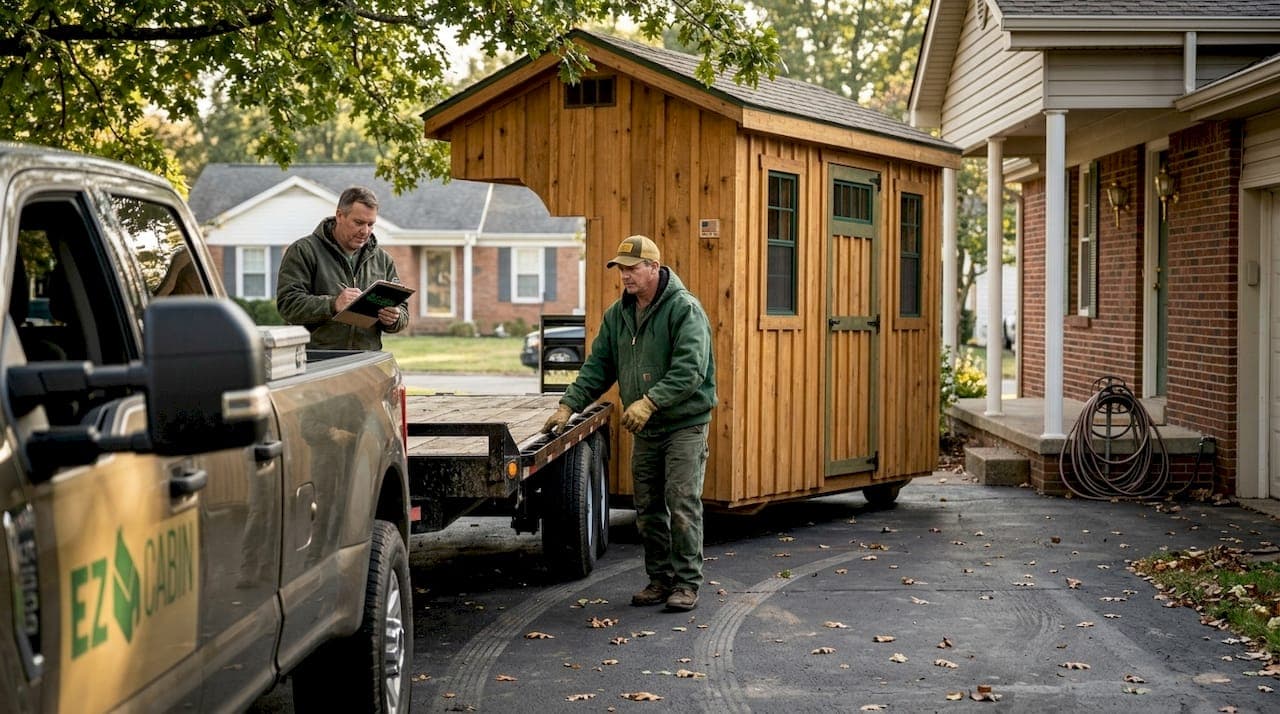
When you order a portable building in Kentucky or Ohio, the delivery crew typically uses a specialized trailer with a hydraulic system that can slide the shed off and position it on your property. This equipment is designed to handle most residential lots, but it does require a clear path. The truck needs adequate clearance, usually at least ten feet of width and overhead clearance free of low-hanging branches or power lines.
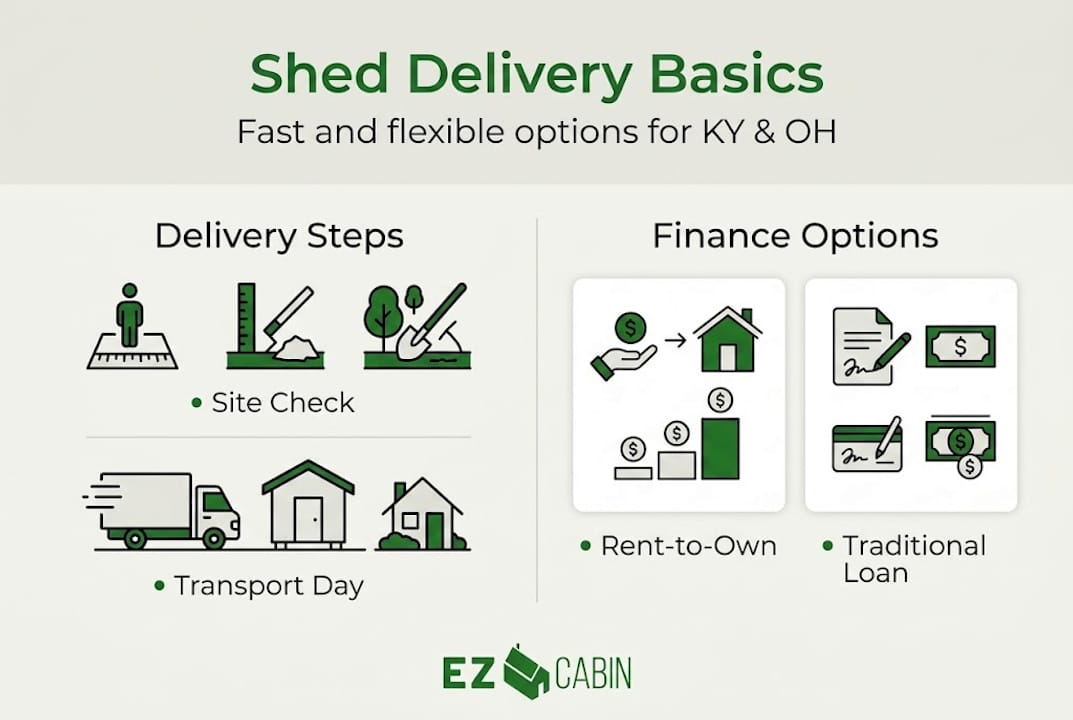
Site access is the single biggest variable in shed delivery. Before your delivery date, walk your property and look for obstacles: fences with narrow gates, soft or muddy ground, steep slopes, or tight corners. Delivery crews are experienced, but they cannot work miracles with a 14-foot-wide trailer on a 10-foot path. Identifying these issues early gives you time to solve them, whether that means temporarily removing a fence panel or grading a small section of ground.
Here is what most buyers should evaluate before scheduling delivery:
- Driveway and gate width: Measure the narrowest point on the path from the road to your placement spot.
- Ground condition: Soft, wet, or freshly tilled soil can cause the trailer to sink or the shed to shift during placement.
- Overhead clearance: Trees, power lines, and roof overhangs all need to be accounted for.
- Slope and levelness: A slope greater than a few inches across the shed's footprint will require a leveled foundation or concrete blocks.
- Local regulations: Some Kentucky and Ohio counties require a permit for structures above a certain square footage. Check with your local zoning office before ordering.
As Skyline Portable Buildings notes, prioritizing a site inspection for tight or uneven yards is essential to avoiding delays on delivery day.
Typical delivery timelines in Kentucky and Ohio range from one to four weeks depending on inventory availability and the complexity of your order. Standard in-stock models move faster. Custom builds take longer because they require production time before the delivery window opens. If you want to understand what happens after the truck leaves, reviewing the full shed installation steps will help you prepare for what comes next.
One concern many buyers have is what happens with uneven or tight yards. The short answer is that most situations are solvable with the right preparation. A gravel pad, a few concrete blocks, or a small retaining wall can handle most slope issues. The key is knowing about the problem before delivery day, not discovering it when the truck arrives.
Comparing delivery options: Fast, finance-friendly shed solutions
Once you understand how delivery works, the next question is which option fits your timeline and budget. Buyers in Kentucky and Ohio generally have two delivery speed choices and several financing paths.
Standard delivery is the most common option. It works well for buyers who are not in a rush and want to keep costs predictable. Most providers schedule standard delivery within two to four weeks of purchase. Expedited delivery moves faster, often within one week, but may carry an additional fee depending on the provider and your location.
On the financing side, two main paths dominate the market: rent-to-own (RTO) and traditional financing.
Rent-to-own lets you start with just the first month's payment and take delivery immediately. You make monthly payments over a set term, and at the end, you own the shed outright. There is typically no credit check involved, which makes it accessible to buyers who have been turned away by banks. The tradeoff is that total cost over the full RTO term is almost always higher than paying cash or using a traditional loan.
Traditional financing works more like a personal loan. You apply, get approved for a set amount, and pay it off over time with interest. Rates vary, but for buyers with decent credit, this path often results in a lower total cost than RTO.
Here is a side-by-side comparison to help you decide:
| Option | Typical delivery time | Upfront cost | Credit check | Total cost |
|---|---|---|---|---|
| Cash purchase | 1 to 2 weeks | Full price | None | Lowest |
| Traditional financing | 1 to 2 weeks | Varies by lender | Yes | Moderate |
| Rent-to-own | 1 to 2 weeks | First month only | No | Higher overall |
| Expedited delivery | Under 1 week | Standard plus fee | Depends on payment method | Varies |
Key benefits of RTO for Kentucky and Ohio buyers include:
- No credit check required in most cases
- Low barrier to entry with just one month's payment upfront
- Flexible terms that can be paid off early in many programs
- Immediate access to your building without waiting for loan approval
Pro Tip: Before signing any RTO agreement, calculate the total amount you will pay over the full term. Multiply your monthly payment by the number of months in the contract. That number can sometimes be 1.5 to 2 times the cash price of the shed. As industry reviewers have noted, RTO is ideal for affordability of entry but always compare total cost before choosing.
For a deeper look at how financing works across different shed types and price points, the guide on shed financing options breaks it down clearly. If you are still comparing providers, the roundup of affordable shed solutions in Kentucky and Ohio is worth reviewing before you commit.
Customization and build quality: Amish-made sheds in KY & OH
Delivery speed and financing matter, but what you are actually getting delivered matters just as much. Build quality and customization options vary widely across the shed market, and buyers in Kentucky and Ohio have access to some genuinely excellent options, including Amish-built structures that stand out for their craftsmanship.
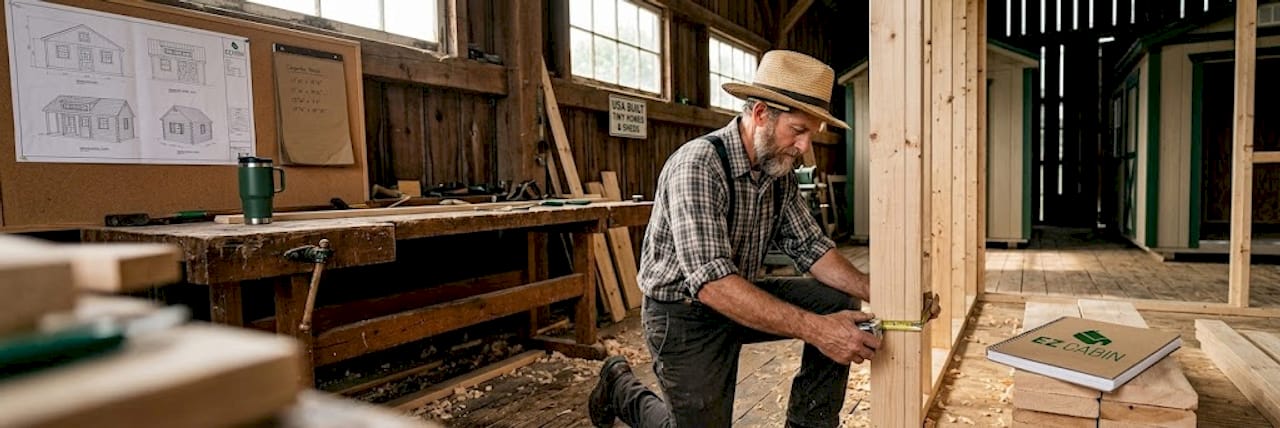
Amish-built sheds are constructed by skilled craftsmen using traditional woodworking techniques combined with modern materials. The result is a structure that tends to be denser, better jointed, and more weather-resistant than many factory-produced alternatives. Reviewers across Kentucky and Ohio consistently praise Amish-built sheds for their quality and durability, especially in regions that see hard winters and humid summers.
What makes local craftsmanship different from a factory-built shed? A few things stand out:
- Framing quality: Locally built sheds often use thicker framing lumber and closer stud spacing, which means better structural integrity.
- Roofing: Amish builders frequently use 30-year architectural shingles as a standard, not an upgrade.
- Siding options: You can typically choose from T1-11, LP SmartSide, or vinyl siding depending on your budget and aesthetic preference.
- Floor systems: Heavy-duty pressure-treated floor joists resist moisture and rot, which matters a lot in Ohio and Kentucky's climate.
Customization is where modern shed buying has really evolved. Today's buyers are not limited to a few standard sizes and colors. Here is a look at how common customization choices affect the final price:
| Customization option | Impact on price | Notes |
|---|---|---|
| Size upgrade (e.g., 10x12 to 12x16) | Moderate increase | Most popular upgrade |
| Insulation package | Moderate increase | Essential for year-round use |
| Extra windows or doors | Small to moderate increase | Improves light and access |
| Loft addition | Moderate increase | Doubles usable storage space |
| Electrical package | Larger increase | Requires licensed electrician on-site |
| Premium siding (LP SmartSide) | Small increase | Better durability, cleaner look |
For buyers who want to understand the full range of what a prefab structure can offer, the article on prefab shed benefits covers the advantages in detail. If you want to get into the technical side of how these buildings are put together, the guide on shed construction basics explains the terminology without the jargon.
One practical note: if you plan to use your shed as a workspace, studio, or seasonal living space, insulation and electrical upgrades are worth pricing out upfront. Adding them after delivery is significantly more expensive than including them in the original build.
Practical delivery and installation tips for KY & OH buyers
Knowing what you want is one thing. Getting it delivered without a hitch is another. These steps will help you move from order confirmation to a fully placed, ready-to-use shed without unnecessary stress.
Before delivery day, work through this checklist:
- Confirm the delivery path is clear and measure the narrowest point.
- Mark your desired placement spot with stakes or spray paint.
- Check local permit requirements and have approvals in hand.
- Prepare the foundation, whether gravel, concrete blocks, or a concrete pad.
- Remove any temporary obstacles like patio furniture, garden hoses, or vehicles.
- Confirm the delivery window with your provider and make sure someone is home.
- Inspect the shed thoroughly before the crew leaves.
On delivery day itself, stay available and communicative. Walk the path with the delivery crew before they begin maneuvering the trailer. Point out any obstacles you noticed during your own inspection. If the ground is wet from recent rain, flag that immediately. Most experienced crews have seen every scenario, but they need your input to make good decisions quickly.
Pro Tip: If your yard has a tight entry or a significant slope, call your provider before delivery day and describe the situation in detail. Some companies will send a crew member to do a pre-delivery site check at no charge. This one conversation can prevent a same-day cancellation and a rescheduling fee.
Industry experience confirms that prioritizing site inspection for tight or uneven yards is the most effective way to avoid delays and complications during delivery.
Troubleshooting common problems:
- Soft ground: Lay down temporary plywood sheets or steel plates along the delivery path to distribute weight and prevent sinking.
- Low-hanging branches: Trim them before delivery day, not during. Rushing this step causes damage to both the tree and the shed.
- Unexpected rain: Most deliveries proceed in light rain, but heavy rain or flooded ground may require rescheduling. Build a one-day buffer into your plans if weather is uncertain.
- Placement adjustment: Once the shed is off the trailer, small adjustments are possible but large repositioning is not. Be precise with your placement marker.
For a full walkthrough of what happens after the shed is placed, the shed setup guidance covers the DIY finishing steps clearly. And if you are thinking about this purchase as a long-term property investment, the piece on modern shed investment makes a strong case for why quality matters.
What most buyers miss about shed delivery in Kentucky and Ohio
Here is the honest truth that most shed guides skip over: the buyers who end up disappointed are almost never disappointed by the shed itself. They are disappointed by surprises they could have avoided.
Site inspection gets skipped more than any other step in the process. Buyers assume their yard is fine, schedule delivery, and then discover on the day of that the truck cannot reach the placement spot. That leads to rescheduled delivery, lost time, and sometimes additional fees. A 30-minute walk around your property before you order eliminates this entirely.
The total cost of ownership is another area where buyers get caught off guard. The shed price is just the starting point. Add delivery fees, foundation costs, permit fees, and any installation extras, and the real number can be 20 to 30 percent higher than the sticker price. This is especially true with RTO agreements, where the total paid over the contract term can be substantially higher than the cash price.
Amish-built quality is genuinely worth the price difference, and we say that from watching buyers compare options over time. A cheaper factory-built shed that starts showing wear in three years is not a bargain. A well-built Amish structure that holds up for 20 years with minimal maintenance is. As local reviewers consistently note, Amish craftsmanship in Kentucky and Ohio earns its reputation.
The buyers who have the fewest regrets are the ones who planned ahead, asked the hard questions early, and chose quality over the lowest upfront number. That pattern holds up every time.
Find your perfect shed: Fast delivery, flexible financing, local expertise
If this guide has helped you see that shed delivery does not have to be complicated or expensive, the next step is finding a provider who makes the process as smooth as the plan.
At EZ-Cabin, we serve buyers across Kentucky and Ohio with fast delivery, flexible financing, and real customization tools that let you design your building before you buy it. No credit check. No hidden fees. Just a straightforward process from selection to delivery. You can secure your shed online in minutes, explore fast shed financing that works for your budget, or use our AI-powered design tool to build your own shed exactly the way you want it. Visit us in London or Somerset, KY, or do everything from your phone. Either way, we make it easy.
Frequently asked questions
How soon can my shed be delivered in Kentucky or Ohio?
Most sheds are delivered within one to two weeks, but factors like site accessibility and customization may extend that timeline. Standard in-stock models move the fastest.
Is rent-to-own financing really cheaper than traditional financing?
Rent-to-own offers easy access with no credit check, but the total amount paid over the full term is often higher than traditional financing. Always compare the overall cost before choosing.
Do I need to prepare my yard or site before shed delivery?
Yes, site inspection and prep are essential, particularly for uneven or tight yards. Skipping this step is the most common cause of delivery delays in Kentucky and Ohio.
Are Amish-built sheds worth the price premium?
Amish-built sheds are consistently praised for their durability and craftsmanship, making them a strong long-term value for buyers in Kentucky and Ohio who want a structure that lasts.