
You're ready to build or buy a shed, but the terminology feels like a foreign language. Portal frames, purlins, roof pitch ratios, permit triggers — suddenly a simple storage project sounds overwhelming. Understanding these terms isn't just about sounding knowledgeable. It's about making informed decisions that save you money, ensure your shed withstands Kentucky and Ohio winters, and help you communicate clearly with builders and suppliers. This guide breaks down essential shed construction terminology into plain language, giving you the confidence to plan your project from foundation to roofline.
Table of Contents
- Key Takeaways
- Understanding basic shed construction terms
- How roof pitch influences your shed's durability and usage
- Navigating permit requirements and regulations in Kentucky and Ohio
- Material choices and floor construction considerations for your shed
- Explore portable sheds and building options with EZ-Cabin
- What is a portal frame in shed construction?
- How steep should my shed roof be for heavy snow areas?
- Do I need a permit to build a shed in Kentucky or Ohio?
- What's the difference between purlins and girts?
Key Takeaways
| Point | Details |
|---|---|
| Shed terminology breakdown | Understanding terms like portal frames purlins and girts helps you evaluate builders and make informed decisions. |
| Steel versus wood terms | Steel sheds use pre engineered components bolted together while wood sheds rely on on site cutting and nailing. |
| Roof pitch impact | Steeper roof pitches shed snow and rain more quickly, improving durability in snow prone regions like Kentucky and Ohio. |
| Permits vary locally | Local permit requirements affect shed planning and total project cost. |
Understanding basic shed construction terms
When you're exploring shed options, the structural terminology can feel technical. Let's break down the fundamental components that make up a quality shed, especially the steel sheds popular across Kentucky and Ohio.
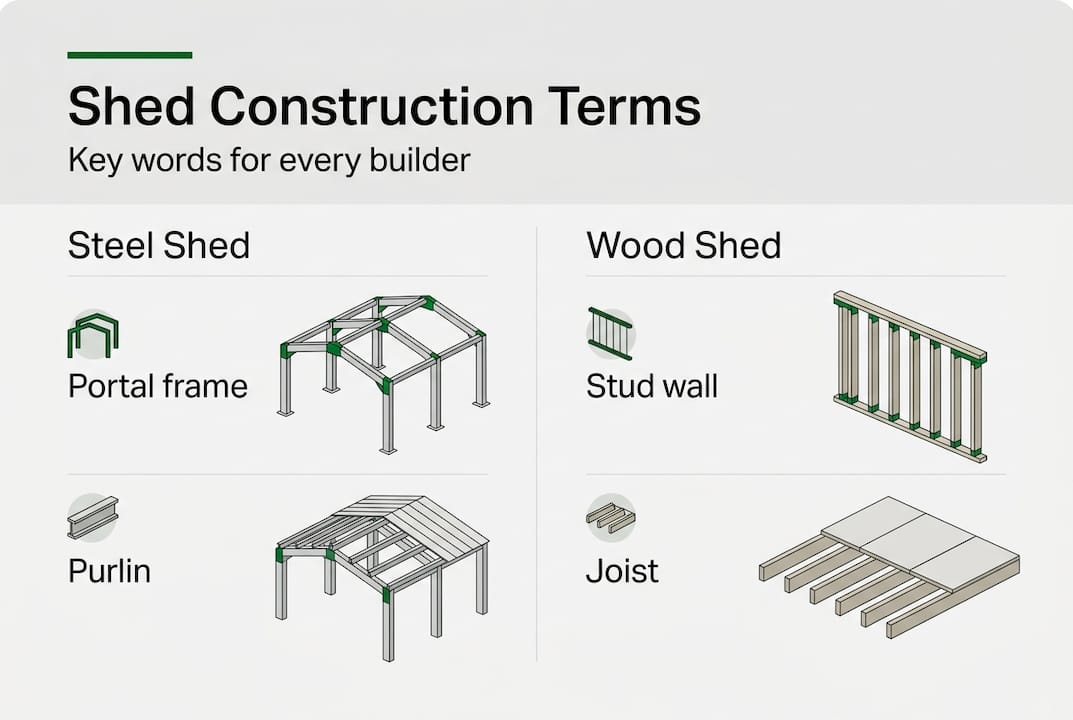
A portal frame is the rigid structural skeleton of steel sheds, connecting vertical columns to angled rafters at the knee (where wall meets roof) and apex (roof peak). This framework distributes weight evenly and provides exceptional stability against wind and snow loads. Think of it as the shed's spine, everything else attaches to this core structure.
Purlins and girts are the horizontal support members that complete the frame. Purlins run across the roof, supporting the roofing material and transferring loads to the portal frame. Girts span horizontally along the walls, providing attachment points for siding and adding lateral strength. Both typically use C-section or Z-section steel profiles, named for their cross-sectional shapes.
Steel sections come in different profiles for specific purposes:
- C-sections: shaped like the letter C, commonly used for purlins and girts where straightforward attachment is needed
- Z-sections: shaped like the letter Z, offering better load distribution and often used in longer spans
- RHS (rectangular hollow sections): box-shaped steel used for main frame members requiring maximum strength
Wood sheds use different terminology. Instead of portal frames, they rely on stud walls (vertical 2x4 or 2x6 lumber) and roof trusses (pre-fabricated triangular frames). Rafters in wood construction serve a similar purpose to purlins in steel, supporting the roof covering. The fundamental difference lies in assembly: wood sheds often involve on-site cutting and nailing, while steel sheds arrive with pre-engineered components that bolt together.
Pro Tip: Steel sheds require less maintenance in humid Kentucky and Ohio climates since they resist rot and pest damage, but wood sheds offer easier customization if you plan to add windows or modify the structure later.
Understanding these basic terms helps you evaluate home office shed types and ask informed questions when shopping. Whether you're comparing quotes or planning a DIY build, knowing the difference between a purlin and a girt gives you confidence in your decisions.
How roof pitch influences your shed's durability and usage
Roof pitch determines how well your shed handles rain and snow, directly impacting its longevity. This measurement describes the steepness of your roof using a ratio of vertical rise to horizontal run.
Roof pitch is expressed as rise over run, typically in a 12-inch horizontal measurement. A 4:12 pitch means the roof rises 4 inches for every 12 inches of horizontal distance. A 6:12 pitch rises 6 inches over the same span, creating a steeper angle. The minimum pitch for asphalt shingles is 2:12, but this barely allows water runoff and isn't recommended for areas with significant precipitation.
For Kentucky and Ohio sheds, steeper pitches perform better. Winter snow accumulation and spring rains demand roofs that shed moisture quickly. Here's how different pitches affect performance:
| Roof Pitch | Angle (Degrees) | Best For | Snow Performance |
|---|---|---|---|
| 2:12 | 9.5° | Minimal snow areas only | Poor, snow accumulates |
| 3:12 | 14° | Light precipitation regions | Fair, some snow shedding |
| 4:12 | 18.5° | Standard residential | Good, handles moderate snow |
| 5:12 | 22.5° | Heavy snow regions | Very good, quick runoff |
| 6:12 | 26.5° | Maximum durability | Excellent, minimal accumulation |
Common pitch ratios and their applications:
- 2:12 to 3:12: acceptable for metal roofing in mild climates, but risky for shingle roofs in snow-prone areas
- 4:12 to 5:12: ideal for most Kentucky and Ohio sheds, balancing material costs with weather performance
- 6:12 and steeper: recommended for heavy storage or when matching home architecture, provides attic storage space
Steeper pitches require more roofing material and taller walls, increasing costs. However, they deliver significant benefits. Snow slides off naturally instead of creating dangerous loads. Rain drains faster, reducing leak potential. Interior headroom increases, making the shed more usable for workshops or shed roof pitch options like studios.
For regions experiencing heavy snow, a minimum 4:12 pitch with 2x6 or larger rafters ensures structural integrity and prevents costly roof damage.
Pro Tip: Before finalizing your shed design, check your property's snow load zone and verify your chosen pitch meets local building codes, many Kentucky and Ohio counties require engineered plans for pitches below 3:12.
The pitch also affects your material choices. Steeper roofs work well with architectural shingles that showcase texture. Lower pitches often pair with metal roofing that channels water efficiently despite the shallow angle. Consider how the roof will look from your home's windows and whether it complements your property's existing structures.
Navigating permit requirements and regulations in Kentucky and Ohio
Permit rules for sheds vary dramatically across Kentucky and Ohio, and understanding local requirements prevents project delays and fines. What's allowed without permits in one city might trigger inspections and fees in the next county.
Most jurisdictions use size thresholds to determine permit needs. Sheds under 100 to 200 square feet often qualify as accessory structures exempt from permits, but this isn't universal. Eaton OH requires permits for residential sheds exceeding 200 square feet, with a $35 application fee. The structure must comply with the International Residential Code, including foundation requirements, minimum roof pitch, and setback distances from property lines.
Permit triggers typically include:
- Shed size exceeding local square footage limits (commonly 120, 160, or 200 sq ft)
- Permanent foundations or concrete slabs
- Electrical wiring or plumbing installations
- Structures used for habitation or business purposes
- Sheds placed within setback zones (usually 3 to 10 feet from property lines)
Kentucky and Ohio shed permit comparison:
| Factor | Kentucky (General) | Ohio (General) | Notes |
|---|---|---|---|
| Typical size exemption | 100-200 sq ft | 120-200 sq ft | Varies by county and city |
| Average permit fee | $25-$75 | $35-$100 | Increases with structure size |
| Setback requirements | 5-10 ft from property lines | 3-10 ft from property lines | Check local zoning codes |
| Foundation rules | Often requires frost footings | Varies, some allow skids | Climate-dependent regulations |
| Inspection requirements | Usually 1-2 inspections | Foundation and final common | Depends on jurisdiction |
Steps to verify your local requirements:
- Contact your city or county building department directly, online resources may be outdated
- Ask specifically about accessory structure rules, not just general building permits
- Inquire about HOA restrictions if applicable, these often exceed municipal codes
- Request information on setback distances, height limits, and lot coverage percentages
- Confirm whether your shed's intended use (storage vs. workshop vs. office) affects permitting
Some areas offer expedited permits for prefab shed benefits since these structures meet pre-approved engineering standards. Portable buildings on skids rather than permanent foundations sometimes avoid permits entirely, though you should verify this locally.
Failing to obtain required permits creates problems beyond fines. Unpermitted structures complicate property sales, may be excluded from insurance coverage, and can trigger forced removal orders. Investment in a $50 permit protects a $5,000 shed investment. When in doubt, apply for the permit. The peace of mind and legal protection far outweigh the modest cost and paperwork.
Material choices and floor construction considerations for your shed
Choosing between wood and steel sheds involves weighing upfront costs against long-term maintenance, while floor construction determines whether your shed handles light storage or heavy equipment.
Wood sheds offer customization flexibility and DIY-friendly construction. You can easily add windows, modify wall heights, or attach shelving anywhere. Material costs run lower initially, and repairs require basic carpentry skills. However, wood sheds need maintenance including regular painting or staining, pest inspections, and rot prevention in Kentucky and Ohio's humid summers. Pressure-treated lumber for ground contact and proper ventilation extend lifespan significantly.
Steel sheds with portal frame construction cost more upfront but deliver decades of low-maintenance service. The rigid frame resists warping, doesn't attract termites, and handles snow loads without sagging. Installation typically requires professional help since components are heavy and precision matters for proper alignment. Customization is more limited, you're working with pre-engineered panels rather than raw lumber you can cut to size.
Material comparison:
| Feature | Wood Sheds | Steel Sheds |
|---|---|---|
| Initial cost | Lower ($2,000-$5,000) | Higher ($4,000-$10,000) |
| Maintenance | Regular painting, rot checks | Minimal, occasional touch-ups |
| Customization | Highly flexible | Limited to design options |
| Lifespan | 10-20 years with care | 20-40+ years |
| DIY-friendly | Yes, basic carpentry skills | No, requires professional install |
| Pest resistance | Requires treatment | Naturally resistant |
Floor construction deserves careful planning based on your storage needs. Standard shed floors use 2x6 joists spaced 16 inches on center, adequate for lawn equipment, tools, and seasonal items. This spacing supports typical floor loads without excessive deflection.
Vehicle storage or heavy equipment demands stronger floors. Heavy snow requires 12-inch on-center joist spacing with 2x8 or larger lumber to handle concentrated wheel loads from ATVs, motorcycles, or riding mowers. The tighter spacing prevents floor bounce and extends structural life. Some builders use 3/4-inch tongue-and-groove plywood over these joists for maximum stiffness.
Floor construction tips:
- Elevate the floor at least 6 inches above grade to prevent moisture wicking and improve air circulation
- Use pressure-treated lumber rated for ground contact on any members within 18 inches of soil
- Install a vapor barrier (6-mil plastic sheeting) under the entire floor system to block ground moisture
- Slope the ground away from the shed perimeter to direct water runoff
- Consider a gravel base 4-6 inches deep for drainage and stability
- Add metal flashing where wood siding meets the floor to prevent water infiltration
Pro Tip: In areas with freeze-thaw cycles common across Kentucky and Ohio, place concrete pier blocks below frost line (typically 30-36 inches deep) to support floor joists and prevent seasonal heaving that can crack floors or misalign doors.
Your material choice should match your skills and timeline. Wood sheds suit DIY builders comfortable with weekend projects and ongoing maintenance. Steel sheds fit buyers wanting turnkey solutions with minimal future attention. For garage floor construction tips and portable building materials, consider how you'll use the space over the next decade, not just immediate needs.
Floor design also impacts resale value. A properly constructed floor rated for vehicles expands the shed's utility and appeals to more buyers. Spending an extra $200-$300 on upgraded joists and decking often returns double that in property value and buyer interest.
Explore portable sheds and building options with EZ-Cabin
Now that you understand shed terminology and construction essentials, you're ready to explore solutions that fit your Kentucky or Ohio property. EZ-Cabin specializes in portable buildings designed for the region's climate, with options ranging from basic storage sheds to fully customized workshops and studios.
Our shop portable buildings inventory includes structures engineered for local weather conditions, with roof pitches and materials that handle snow loads and humidity. You can build your own shed using our AI-powered customization tools, adjusting dimensions, colors, door placements, and window configurations in real time to visualize your finished structure before purchase.
Financing shouldn't block your project. EZ-Cabin offers shed financing options with guaranteed approval and no credit checks, requiring only your first month's payment to start. Most buildings deliver within 1-4 weeks, and our team handles the complexity of permits and site preparation, letting you focus on how you'll use your new space.
What is a portal frame in shed construction?
A portal frame is the primary structural system in steel sheds, consisting of vertical columns rigidly connected to angled rafters at the knee joint and roof apex. This creates a strong, self-supporting framework that distributes loads efficiently without requiring interior support posts. The rigid connections allow the frame to resist lateral forces from wind and handle vertical loads from snow, making it ideal for wide-span structures. Portal frames reduce material needs compared to traditional post-and-beam construction while providing superior strength and stability.
How steep should my shed roof be for heavy snow areas?
For Kentucky and Ohio regions experiencing significant snowfall, a minimum 4:12 pitch is recommended to ensure snow slides off naturally rather than accumulating dangerous weight. Steeper pitches like 5:12 or 6:12 provide even better performance, shedding snow quickly and reducing structural stress. The pitch should pair with appropriately sized rafters, typically 2x6 or larger lumber spaced 16-24 inches on center, to handle both the roof weight and potential snow loads. Local building codes often specify minimum pitch requirements based on your area's snow load zone, so verify these standards before finalizing your design.
Do I need a permit to build a shed in Kentucky or Ohio?
Permit requirements vary significantly by municipality, with most jurisdictions requiring permits for sheds exceeding 100-200 square feet or those with permanent foundations. In Eaton OH, permits cost $35 for residential sheds larger than 200 square feet and must comply with International Residential Code standards. Kentucky cities have similar thresholds but specific rules differ by county. Always contact your local building department before construction to verify size limits, setback requirements, and whether your shed's foundation type or intended use triggers permitting. Skipping required permits can result in fines, forced removal, or complications when selling your property.
What's the difference between purlins and girts?
Purlins and girts are both horizontal structural members in steel sheds, but they serve different locations and purposes. Purlins run horizontally across the roof, spanning between portal frames to support roofing material and transfer loads downward to the main frame. Girts span horizontally along the walls, providing attachment points for siding panels and adding lateral bracing to resist wind pressure. Both typically use C-section or Z-section steel profiles, chosen based on span length and load requirements. Understanding this distinction helps when reviewing shed specifications or discussing modifications with builders, since adding windows or doors affects girt placement while roof vents or skylights involve purlin considerations.