
TL;DR:
- Rent-to-own offers a simplified, credit-free path to owning portable buildings in Kentucky and Ohio.
- Permitting and zoning vary locally; homeowners must research regulations before installation.
- RTO is ideal for storage or workspace needs but not for full-time living or building equity.
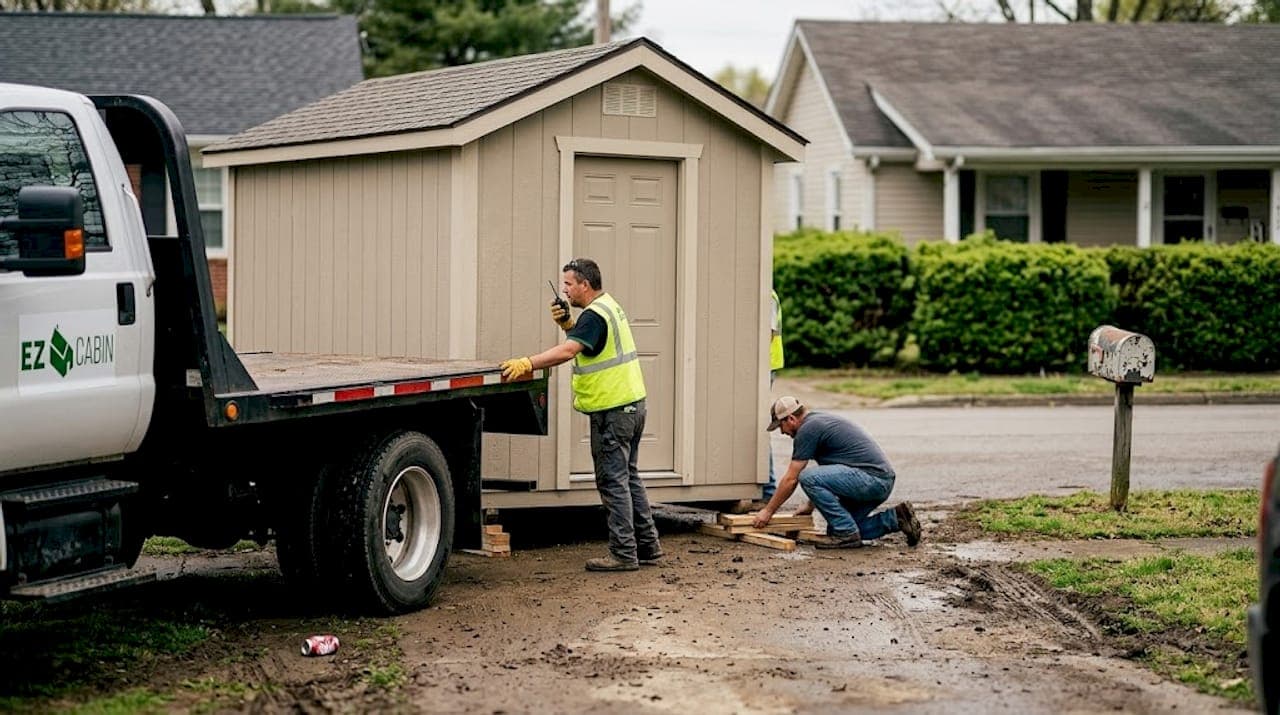
Rent-to-own, or RTO, for portable buildings is one of the most misunderstood buying options available to homeowners and renters in Kentucky and Ohio today. It is not a lease, and it is not a mortgage. It is a flexible, structured path to ownership that skips credit checks, requires almost no upfront cost, and gets a cabin, office, or storage shed on your property in a matter of weeks. Many people assume the process is complicated or risky. In reality, it is often simpler than financing a used car. This guide walks you through exactly how RTO works, what the law requires, who qualifies, and how to pick the right building for your situation.
Table of Contents
- How RTO works for portable buildings in Kentucky and Ohio
- Permitting and zoning rules: What homeowners and renters must know
- Who qualifies? Homeowner, renter, and building use scenarios
- Choosing the right RTO building: Features, upgrades, and future value
- The real opportunity (and limits) with RTO portable buildings-with-rto-portable-buildings)
- Ready to get started with an RTO building?
- Frequently asked questions
Key Takeaways
| Point | Details |
|---|---|
| Flexible financing | RTO agreements let you get a portable building with low monthly payments and no credit check. |
| Know your local rules | Permits and zoning can vary widely—always check with city or county officials before buying. |
| No instant ownership | You must finish paying your RTO contract before you own the building, with no equity built until the end. |
| Best used for storage or office | Most RTO buildings can’t be used legally as homes, but are perfect for extra space or work needs. |
| Get proper approvals | Always get permission from your landlord, HOA, or local authorities to avoid costly mistakes. |
How RTO works for portable buildings in Kentucky and Ohio
An RTO agreement is a contract where you make monthly payments on a portable building and take full ownership once the final payment clears. Unlike a bank loan, there is no lender, no interest rate negotiation, and no multi-week approval process. Unlike a traditional rental, you are working toward ownership from day one. The building sits on your property, and you use it immediately while payments are in progress.
Monthly payments are set at the start of the contract and stay fixed. Terms typically run 24 to 60 months depending on the building size and price. One important thing to understand: you do not build equity during the payment period. Ownership transfers only after the final payment is made. Until then, the building legally belongs to the RTO company. If payments stop, the company can repossess the building. There are generally no further financial penalties beyond losing what you have already paid, but you do lose the structure.
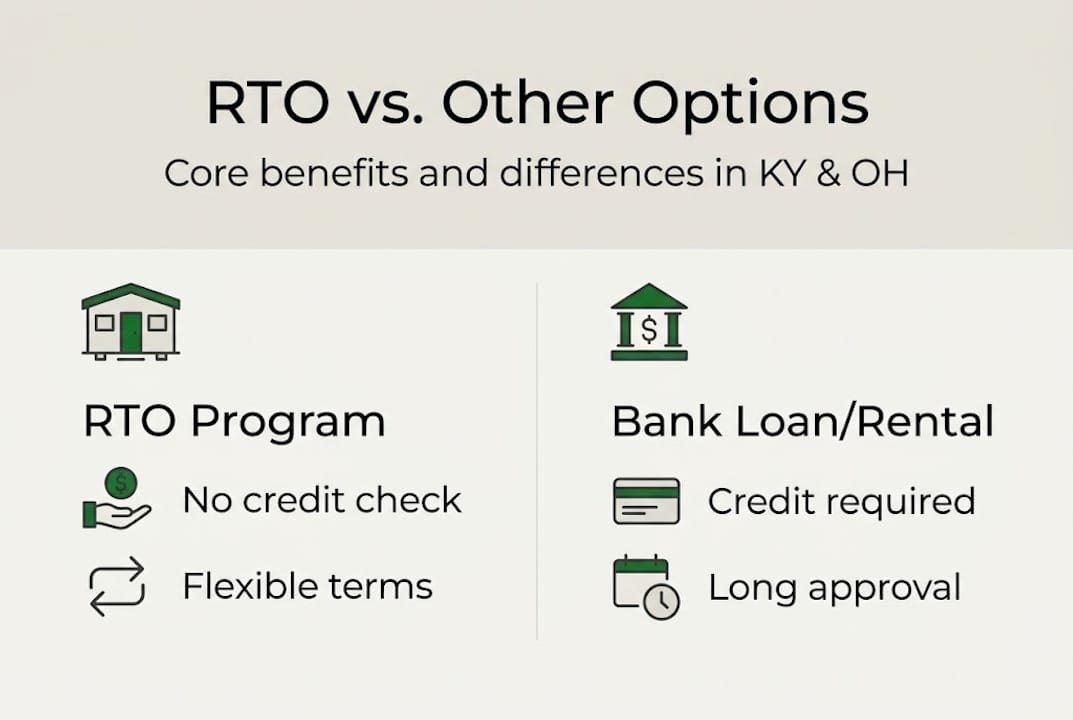
Approval is much easier than a traditional loan. Most RTO programs require no credit check at all. With portable building financing through providers like EZ-Cabin, only the first month's payment is needed to get started. That removes a major barrier for people who have been turned down by banks or who simply want to avoid the credit inquiry process.
Pro Tip: Many RTO programs offer early purchase discounts. If you come into extra cash mid-contract, ask about buying out the remaining balance at a reduced price. It can save you real money.
Here is a quick comparison of your main options:
| Feature | RTO | Bank loan | Traditional rental |
|---|---|---|---|
| Credit check required | No | Yes | Sometimes |
| Upfront cost | 1 month's payment | Down payment | Deposit |
| You own it at end | Yes | Yes | No |
| Repossession risk | Yes | Yes | N/A |
| Approval speed | Fast (same day) | Days to weeks | Varies |
Buildings eligible for RTO include storage sheds, home offices, garages, and small cabins. As noted by portable classification rules, portable structures face fewer regulatory hurdles compared to permanent buildings, which is a significant advantage for buyers who want flexibility without a construction project.
Key RTO terms to know before you sign:
- Monthly payment: Fixed for the entire contract term
- Contract length: Usually 24, 36, 48, or 60 months
- Early buyout: Often available at a discount
- Ownership transfer: Happens only after the last payment
- Repossession clause: Building is returned if payments lapse
Permitting and zoning rules: What homeowners and renters must know
Once you have a handle on financing, the next hurdle is making sure your portable building is entirely legal and compliant. The rules vary more than most people expect, and getting this wrong can mean fines or being forced to relocate the building at your own expense.
In Kentucky, most portable structures under 200 square feet do not require a building permit. Some jurisdictions draw the line at 120 square feet instead. According to Louisville's shed rules, setbacks of 3 to 5 feet from property lines and fences apply even for exempt structures. You still need to place the building correctly even if you never pull a permit.
In Ohio, there is no statewide tiny home or accessory dwelling unit law. Local zoning rules vary widely, and sheds are often exempt if they are small enough, but your specific township or municipality may have stricter standards than you expect. Always check locally before delivery day.
Check with your local planning office before signing any contract. Exact requirements vary widely by city and county, and what applies in one neighborhood may not apply next door.
Electrical work almost always requires a permit regardless of the building's size or classification. If you plan to add power to your office or studio, budget time and money for that permit separately.
HOA rules and landlord agreements can be stricter than local law. A city may allow your shed with no permit, but your HOA may prohibit structures over a certain height or require pre-approval of exterior colors. Do not skip this step.
For buildings used as affordable building types like studios or offices, also review fire code rules in Ohio if you plan to add heating or electrical systems.
Step-by-step checklist to stay compliant:
- Look up your county or township zoning ordinance online
- Measure your lot and identify required setbacks
- Check your HOA or lease agreement for additional restrictions
- Confirm whether electrical work requires a separate permit
- Call your local planning office to verify exemptions for your building size
- Get written confirmation of any approvals before signing your RTO contract
If you are considering a shed to tiny home conversion, the permitting requirements jump significantly and deserve their own research process.
Who qualifies? Homeowner, renter, and building use scenarios
Understanding who is eligible and what you can really do with an RTO building is critical, so let's clarify the rules for homeowners and renters.
Homeowners have the most straightforward path. You control the land, so zoning compliance, foundation choices, and electrical decisions are yours to manage. Follow local setback rules, get permits where needed, and you are generally good to go.
Renters face more complexity. You must get written permission from your landlord before an RTO building is placed on the property. If you move before the RTO contract ends, the building has to come with you. That means paying for relocation, finding a new property that can accommodate it, and potentially dealing with new zoning rules. These costs add up fast, so renters should think carefully about their housing stability before committing to a multi-year RTO term.
One of the most common misunderstandings is habitation. Most local zoning standards only allow portable buildings to be used for storage, home offices, and studios. Full-time living in a portable building requires meeting accessory dwelling unit or tiny home permit requirements, which are a completely different process. Skipping this step is a costly mistake.
EZ-Cabin reports a 73% approval rate for RTO applications with no credit check, which means most applicants who apply do get approved. The process is faster and more inclusive than a traditional lending product. Explore rental unit options if you want to compare structures suited for renters.
Pro Tip: Get every approval in writing before you sign your RTO contract. That means landlord permission, HOA approval, and any city pre-authorization. Verbal agreements create problems. Written records protect you.
Key scenarios at a glance:
- Homeowner, storage shed: Easiest path, fewest hurdles
- Homeowner, home office: Add electrical permit, confirm setbacks
- Renter, storage unit: Requires landlord approval in writing
- Renter, home office: Same as above, plus lease review
- Anyone, full-time living: Requires ADU or tiny home permit, not standard RTO approval
Choosing the right RTO building: Features, upgrades, and future value
Selecting the right portable structure up front will save you hassle and maximize your investment. The cheapest option is rarely the best value once you factor in comfort, durability, and how the building holds up in Kentucky and Ohio winters.
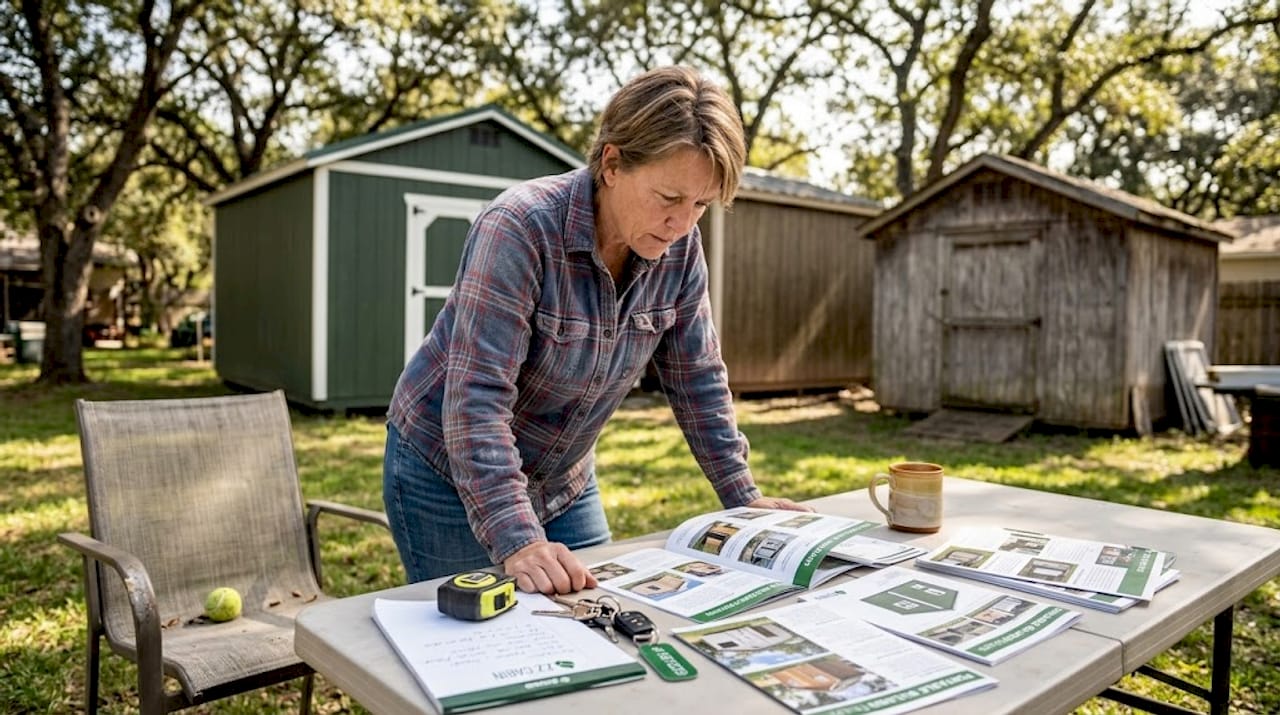
Start with size. A 10x12 shed works for basic storage, but if you plan to use the space as a home office or craft studio, a 12x16 or larger gives you room to work comfortably. Think about window placement too. Natural light improves any workspace and reduces the need for electrical lighting during the day.
Delivery access matters more than most buyers realize. Large buildings need a clear path from the road to your installation site. Measure gate widths, check for low-hanging branches, and confirm there is room to maneuver. A building that cannot be delivered creates delays and added fees.
As covered in backyard cabin insights, keeping your building classified as non-habitable (storage or office use) keeps you out of the more complex ADU regulatory territory. Plan your upgrades with that boundary in mind.
For help picking customizable cabin features that fit your budget and climate, EZ-Cabin's AI-powered tool lets you adjust layouts, colors, and functional upgrades in real time before you commit.
Features worth prioritizing for Kentucky and Ohio climates:
- Insulation: Keeps the space usable year-round and protects stored items
- Metal roofing: Handles heavy rain and ice better than standard shingles
- Double-pane windows: Reduces condensation and drafts in winter
- Finished interior walls: Required if you plan a workspace, not just storage
- Exterior security door: Protects tools, equipment, and electronics
- Vapor barrier flooring: Prevents moisture damage from Ohio and Kentucky humidity
The real opportunity (and limits) with RTO portable buildings
RTO is genuinely one of the better tools available for people who need a structure now but are not in a position to take on traditional debt. The no-credit-check structure opens doors that banks close. The fixed monthly payments make budgeting simple. And the flexibility to stop payments (even if you lose the building) reduces the long-term risk compared to a loan.
But here is what most guides gloss over: you build zero equity until the contract is done. If you are renting the land beneath the building, your position is even more fragile. A lease ending or a landlord decision could force a costly move mid-contract. That is a real scenario, not a rare one.
Most people who run into problems with RTO buildings made one of two mistakes. They did not research local zoning before delivery, or they chose a building that was too small for what they actually needed. Neither mistake is hard to avoid, but both are expensive to fix after the fact.
Portable buildings are a smart, practical solution for tiny home storage needs and workspace creation. They are not a legal replacement for a permitted dwelling unless you do the work to make them one. Use them for what they do best, and RTO becomes one of the most accessible ownership paths in the market today.
Ready to get started with an RTO building?
If you are ready to put what you have learned into action, here are the easiest ways to start your RTO journey. EZ-Cabin makes the process straightforward: browse, customize, finance, and schedule delivery all in one place, no credit check required and no dealership runaround.
Start by browsing the full lineup at see available RTO buildings to compare sizes, styles, and price points. When you find a building you like, review the flexible RTO financing options to see payment terms that fit your budget. Want something tailored to your space? Use the online tool to customize your building before you commit. Most buildings are delivered within 1 to 4 weeks, so you could have your new space set up faster than you think.
Frequently asked questions
Can I live full-time in an RTO portable building?
No. Most local rules in Kentucky and Ohio only allow RTO portable buildings for non-habitable uses like storage, offices, or studios. Full-time living requires a separate ADU or tiny home permit.
Do I need a permit for my portable shed in Kentucky?
Usually not if your unit is under 200 square feet, but you still need to follow setback rules and check with your HOA or local planning office for any local exceptions.
What happens if I stop making payments on my RTO building?
The building is repossessed by the provider and you lose all rights to it. There are generally no additional financial penalties beyond losing the payments already made.
Who is responsible for permits, me or the RTO company?
You are. Permit and zoning compliance is always the customer's responsibility, not the RTO provider's. Confirm all approvals before your delivery date.