
TL;DR:
- Prefab in-law suites offer faster installation timelines of 3-6 months compared to traditional construction.
- They provide customizable, high-quality structures with fixed costs and minimal weather delays.
- These suites enhance multigenerational living, rental income, and property value with flexible design options.
Most homeowners assume adding an in-law suite means months of construction chaos, surprise costs, and contractor headaches. That assumption stops a lot of families from acting, and it's mostly wrong. Prefab timelines run 3-6 months total compared to 6-12 or more for site-built construction, and modern prefab suites can be fully customized before a single panel is installed. If you're in Kentucky or Ohio and thinking about housing an aging parent, creating a rental unit, or giving an adult child their own space, prefab in-law suites deserve a much closer look than they typically get.
Table of Contents
- What makes prefab in-law suites a smart choice?
- Prefab vs. traditional: Speed, cost, and hassle
- Key features you can customize in your prefab in-law suite
- What to consider before choosing a prefab in-law suite
- Why prefab in-law suites are changing the game for homeowners
- Ready to explore prefab in-law suite options?
- Frequently asked questions
Key Takeaways
| Point | Details |
|---|---|
| Faster build times | Prefab in-law suites can be ready in half the time or less compared to traditional buildings. |
| Lower, predictable costs | Homeowners save on construction and avoid surprise expenses with prefab solutions. |
| Flexible customization | Modern prefabs let you design for family needs, accessibility, or rental income. |
| Simple process | Prefab suites make adding living space straightforward, from permits to installation. |
| Fits Kentucky and Ohio | Prefab options are especially suitable for local regulations and climate in Kentucky and Ohio. |
What makes prefab in-law suites a smart choice?
Prefab in-law suites, sometimes called accessory dwelling units (ADUs) or granny flats, are structures built mostly off-site in a factory setting, then transported and installed on your property. Unlike traditional construction where everything happens in your backyard from scratch, prefab units arrive largely complete. That means less on-site labor, tighter quality control, and faster move-in times.
Here's what most people don't realize: prefab doesn't mean plain or cheap-looking. The category covers a wide range of structure types, including:
- Detached suites: Standalone units placed in your backyard or side yard
- Attached prefab additions: Units designed to connect to your existing home
- Garage conversions with prefab kits: Using prefab panels or modules to create finished living space above or beside a garage
- Tiny home-style suites: Compact but fully functional units with kitchens, bathrooms, and dedicated sleeping areas
Knowing more about prefab cabin basics can help you understand which structure type fits your property and goals. The same advantages that make prefab shed advantages so attractive for Kentucky and Ohio homeowners apply directly to in-law suites: factory precision, weather-resistant materials, and predictable pricing.
"Multigenerational living is on the rise across the U.S., and prefab construction is helping families respond faster and more affordably than traditional building methods allow."
What's driving the growth? Families want flexibility. Parents are living longer and preferring to stay close to family rather than moving into facilities. Adult children are returning home to save money or support aging relatives. Rental income from a backyard suite can offset mortgage costs or supplement retirement income. All of these realities are making prefab in-law suites one of the most practical property improvements a homeowner can make right now.
The prefab market share sits at 10-15% of U.S. single-family home construction, and that number is growing. For Kentucky and Ohio homeowners, the economics are especially compelling because land costs in these states are lower than coastal markets, meaning your investment in a prefab suite goes further.
Prefab vs. traditional: Speed, cost, and hassle
Now that you understand what prefab in-law suites are, let's see how they really stack up against traditional construction. Side by side, the differences are significant.
| Factor | Prefab in-law suite | Traditional site-built |
|---|---|---|
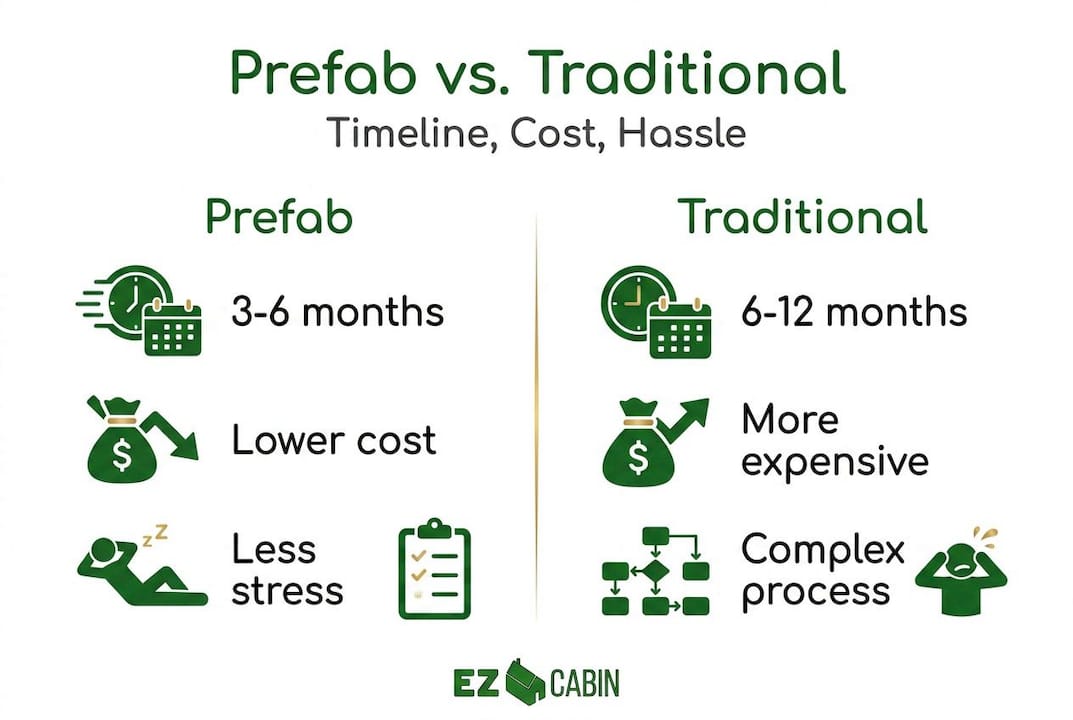
| Construction timeline | 3-6 months total | 6-12+ months |
| Cost predictability | Fixed quote upfront | Frequent change orders |
| Weather delays | Minimal (built indoors) | Common and costly |
| Labor coordination | Managed by manufacturer | Your responsibility |
| Customization | Yes, before production | Yes, but changes cost more |
| Quality control | Factory standards | Varies by contractor |
| Financing | Flexible, often no credit check | Traditional mortgage/loan required |
The timeline gap alone is striking. When you build traditionally, you're managing a sequence of subcontractors, each dependent on the previous trade finishing on time. Electricians wait on framing. Inspectors delay drywall. Weather pushes everything back. With prefab, construction happens in 3-6 months because the unit is built in a controlled environment while your site is being prepared simultaneously.
Cost control is the other major win. Traditional builds carry real financial risk because material prices shift, labor rates change, and scope creep is almost inevitable. Your $90,000 plan easily becomes a $115,000 project. With prefab, you get a locked-in price before production starts, and there's no room for the contractor surprises that eat through budgets.
Here are the four most common pitfalls of traditional construction that prefab avoids entirely:
- Unexpected subcontractor delays: Prefab manufacturers handle their own labor scheduling in-house
- Material cost spikes mid-project: Your quote is based on current pricing and locked in at order
- Weather shutdowns: Factory construction isn't affected by Kentucky winters or Ohio spring rain
- Inspection bottlenecks: Many prefab units are pre-inspected at the factory, simplifying local approvals
The advantages around speed and customization make prefab a smart fit for homeowners who want results without managing a mini construction company.
Pro Tip: Before committing to any prefab supplier in Kentucky or Ohio, ask three specific questions: What's included in the base price? Who handles permit coordination? And what does the delivery and installation process look like step by step? Clear answers to those three questions will tell you a lot about how organized and trustworthy the supplier is.
Key features you can customize in your prefab in-law suite
After comparing prefab with site-built, let's look at just how flexible and personalized modern prefab in-law suites can be. The cookie-cutter stereotype is outdated. Today's prefab manufacturers offer meaningful customization at every level.
Floor plan layouts: Most suppliers offer multiple footprint options ranging from compact studio-style units around 300 square feet to full one-bedroom or two-bedroom layouts exceeding 700 square feet. You can prioritize open-concept living for smaller spaces or choose layouts with dedicated rooms for family members who need privacy and storage.
Kitchen configurations: Kitchens in prefab in-law suites can include full-size appliances, standard cabinetry, or compact galley designs depending on how the space will be used. A rental unit might benefit from a full kitchen to attract longer-term tenants. A suite for an elderly parent might prioritize a simplified layout that's easy to navigate.
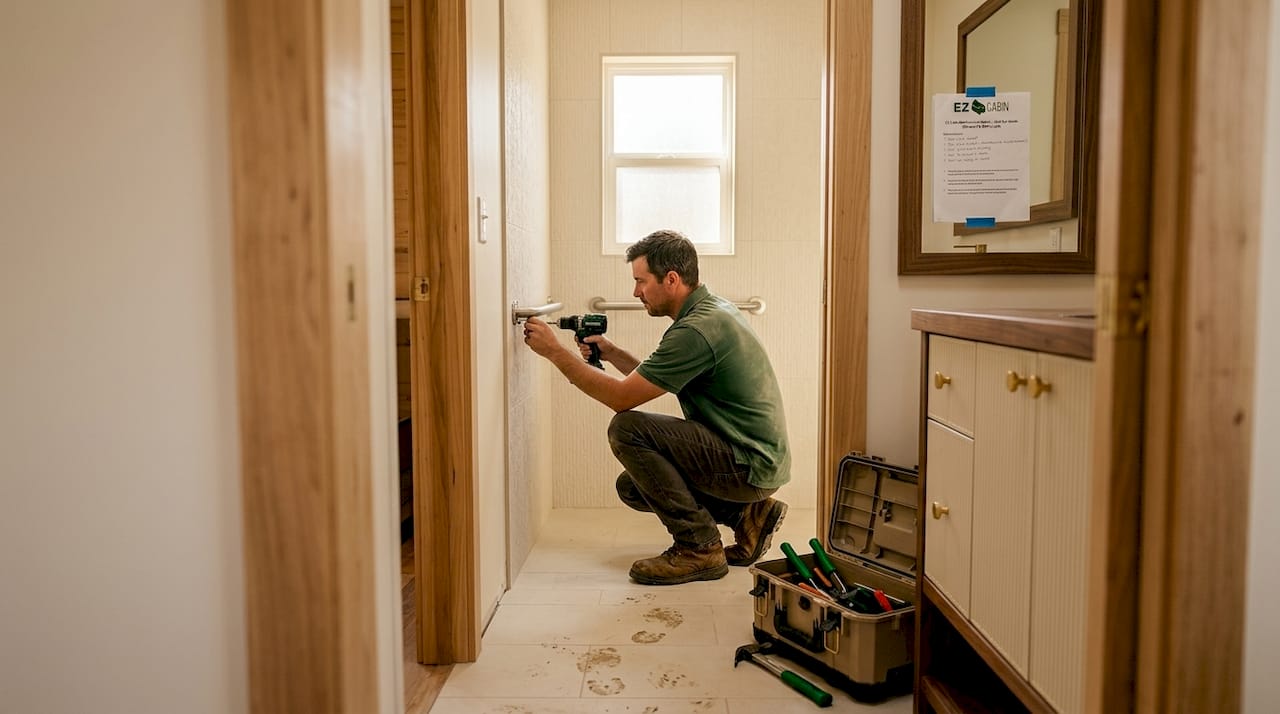
Bathroom accessibility: Grab bars, roll-in shower options, wider doorways, and zero-threshold entries are available in most modern prefab suites. These aging-in-place features are especially important if you're planning for a parent or grandparent. In Kentucky and Ohio, local building codes often require minimum accessibility standards anyway, so planning for these features from the start saves money on retrofits later.
Exterior finish options: Vinyl siding, board-and-batten, wood-look panels, and metal roofing options let you match the suite's exterior to your existing home. This matters for property value and neighborhood aesthetics.
Climate-appropriate upgrades: Kentucky and Ohio see real winters and humid summers. Insulation packages, double-pane windows, and efficient HVAC systems are not optional extras here. They're practical necessities, and good prefab suppliers build these in as standard or easy upgrades.
Options for cabin customization show how much personalization is available when you work with the right supplier. The prefab market's growth to 10-15% of new U.S. home construction reflects how mainstream this level of customization has become.
Pro Tip: When reviewing customization options, split your wish list into two columns: "must-haves" and "nice-to-haves." Must-haves are features that affect daily function, like accessibility, adequate heating, or a private bathroom. Nice-to-haves are upgrades you'd enjoy but could add later. This keeps your initial budget focused while leaving room to grow.
What to consider before choosing a prefab in-law suite
With so many benefits, it's crucial to think through key steps before moving forward with a prefab in-law suite. A little preparation upfront saves significant stress later.
Here's a practical decision checklist to work through before you commit:
- Check your zoning: Contact your local county or city zoning office to confirm that an ADU or accessory structure is permitted on your property. Rules vary across Kentucky and Ohio counties, and some HOAs have additional restrictions.
- Measure your lot: Make sure you have enough usable space after setback requirements are factored in. Setbacks dictate how close a structure can be to property lines, and they vary by location.
- Plan utility connections: Determine whether the suite will share utilities with your main home or need separate hookups for electric, water, and sewer. This affects both cost and permitting.
- Set your budget: Know your total comfortable spend before talking to suppliers. Include the structure, site prep, utility connections, permits, and any landscaping or fencing.
- Decide on purpose: Rental unit, family housing, or both? This affects what features you prioritize and how you approach financing.
- Explore financing options: You don't need perfect credit to move forward. Options like financing prefab buildings are designed specifically for homeowners who want manageable payment structures without banks making the process difficult.
| Decision factor | What to confirm | Why it matters |
|---|---|---|
| Zoning and permits | Local ADU ordinance status | Determines legality and structure type |
| Site preparation | Grading, foundation type, access | Affects delivery and installation |
| Utility hookups | Shared vs. separate connections | Drives cost and permitting complexity |
| Delivery logistics | Road access, crane needs | Impacts timeline and site cost |
| Financing terms | Monthly payment, no credit check options | Determines affordability |
| Timeline | Production plus installation window | Affects when your family can move in |
Understanding how homes are delivered in Kentucky and Ohio helps you prepare your site correctly and avoid last-minute surprises on delivery day. And knowing your portable building types before you shop helps you narrow down the right structure faster.
On financing, keep this in mind: total project timelines run 3-6 months for prefab, which means you can have a livable, finished suite faster than a traditional lender's approval process sometimes takes.
Pro Tip: Future-proof your prefab suite by planning for flexibility from day one. Install a dedicated electrical panel, choose a bathroom layout that supports accessibility modifications later, and size the structure so it can function as both family housing and a rental unit as your needs change. This single planning decision protects your investment across every life stage.
Why prefab in-law suites are changing the game for homeowners
Here's the honest take after years of watching Kentucky and Ohio homeowners navigate this decision: most people who delay building an in-law suite don't do it because of money. They delay because they believe the process is more complicated than it needs to be. They picture construction zones, permit battles, and contractor drama. That picture is based on how traditional building used to work, and it's keeping families from making a really smart move.
The families who move forward with prefab aren't necessarily wealthier or more resourceful. They've just updated their assumptions. They've realized that the choice between "do nothing" and "build a full addition" isn't the only option. A well-built prefab suite installed in a few weeks is a third option that most conventional builder marketing never mentions, because those builders don't sell prefab.
There's a bigger pattern here too. The modular and prefab building movement is fundamentally reshaping what homeownership can look like. It's creating space, literally and financially, for multigenerational families to stay connected, for retirees to earn passive income from their backyard, and for young adults to launch into independence without a 12-month apartment lease.
The families who rent out a prefab suite for $900 to $1,200 per month in a mid-size Ohio or Kentucky market aren't doing anything exotic. They're covering a mortgage payment or funding a retirement account with space they already had. The families who house an aging parent nearby aren't sacrificing their privacy. They're designing a living arrangement that serves everyone.
Exploring the full range of building types in Kentucky and Ohio shows just how many practical options are available right now for homeowners who are ready to stop waiting and start building.
The uncomfortable truth is that the "right time" to add an in-law suite never just appears. You create it by choosing a process that actually fits your timeline, budget, and life.
Ready to explore prefab in-law suite options?
If this article has you thinking seriously about what a prefab in-law suite could do for your family or your finances, EZ-Cabin makes the next step straightforward.
You can build your own suite using our AI-powered customization tool, adjusting layouts, finishes, windows, and features in real time before you spend a dollar. When you're ready to move forward, our financing options require no credit check and only your first month's payment to get started. Browse use cases and examples to see exactly how other Kentucky and Ohio homeowners are using prefab suites for family living and rental income. With delivery in 1-4 weeks for most structures, your timeline is shorter than you probably think.
Frequently asked questions
How long does it take to install a prefab in-law suite?
Most prefab in-law suites go from order to move-in in 3-6 months total, which is significantly faster than site-built construction that often runs 6-12 months or longer.
Are prefab in-law suites allowed in Kentucky and Ohio neighborhoods?
Most counties and municipalities in Kentucky and Ohio permit prefab ADUs and accessory structures, but you should verify local zoning rules and any HOA restrictions specific to your property before ordering.
What custom features can I really choose in a prefab suite?
You can personalize floor plans, kitchen layouts, bathroom configurations, accessibility features, exterior finishes, and climate upgrades, because the prefab market's growth reflects genuine demand for this level of choice in new construction.
Is financing available for prefab in-law suites?
Yes, EZ-Cabin offers financing with guaranteed approval, no credit check required, and only the first month's payment needed to get started, making it accessible for most homeowners regardless of credit history.
Are prefab in-law suites energy-efficient and durable?
Modern prefab suites are factory-built to meet or exceed local energy codes, and most come with insulation packages, efficient HVAC options, and weather-resistant exteriors designed specifically for climates like Kentucky and Ohio.