
TL;DR:
- Modern prefab construction in 2026 offers custom designs, durable materials, and faster timelines than traditional homes. Proper planning of zoning, site access, and early decision-making are essential to ensure a smooth process in Kentucky and Ohio. EZ-Cabin provides tools and support to help buyers design, finance, and customize their prefab homes efficiently.
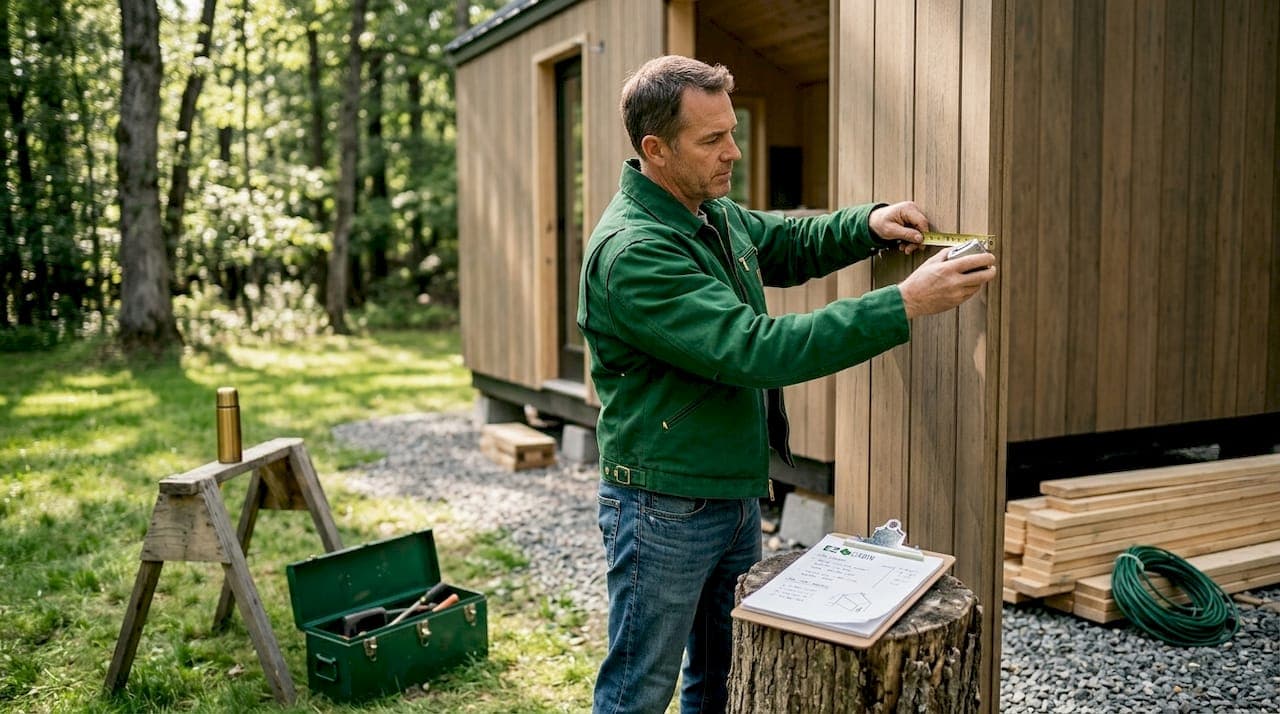
Forget everything you think you know about prefab construction. The word once conjured images of flimsy walls, cookie-cutter layouts, and homes that wouldn't survive a Kentucky winter. That picture couldn't be further from reality in 2026. Modern prefab construction delivers custom layouts, durable materials, and finishes that rival traditional site-built homes at a fraction of the timeline and cost. For homebuyers across Kentucky and Ohio shopping for cabins, tiny homes, or portable buildings, understanding what prefab really means today opens doors to genuinely affordable, high-quality living solutions you may not have considered.
Table of Contents
- What is prefab construction?
- How modern prefab homes are built: Step-by-step process
- Prefab options: Volumetric, panelized, and what fits Kentucky and Ohio buyers
- Pros and cons of prefab construction for 2026 homebuyers
- Placement, zoning, and local rules: KY/OH prefab must-knows
- How to maximize prefab success in KY/OH: What most homebuyers miss
- Find your perfect prefab: Next steps with EZ-Cabin
- Frequently asked questions
Key Takeaways
| Point | Details |
|---|---|
| Prefab equals flexibility | Modern prefab construction provides customizable, high-quality options for KY and OH homebuyers. |
| Faster build times | Factory-built modules can cut total construction time by up to half compared to traditional building. |
| Early planning matters | Success with prefab hinges on upfront design, permitting, and logistics—late changes get expensive. |
| Local rules apply | Every placement requires verifying local zoning, HOA, and permit compliance in Kentucky or Ohio. |
| Multiple prefab pathways | Volumetric, panelized, and hybrid prefab types all offer unique benefits depending on your project. |
What is prefab construction?
At its core, prefab construction is an off-site manufacturing approach where building components or full modules are fabricated in a factory, then transported to your property and assembled. Think of it as building your home in two places at once. While the factory produces your walls, floors, and roof systems in a controlled environment, your site is being prepared simultaneously.
There are three primary categories most buyers encounter:
- Modular construction: Fully enclosed three-dimensional boxes (called "modules") are built in a factory and stacked or joined on-site. These can look identical to traditional homes once complete.
- Panelized construction: Flat wall, floor, and roof panels are manufactured and shipped flat, then assembled on your lot by a crew. This method is easier to transport and fits more site configurations.
- Pre-cut or kit homes: Individual components are precision-cut in a factory and delivered as a numbered kit, requiring more assembly work on-site.
Each type serves different needs. Modular units tend to move fastest from factory to finished home. Panelized systems are typically easier to ship to rural Kentucky and Ohio properties where road access can be tricky. Peer-reviewed insights on prefab confirm that modern prefab is applied across a wide spectrum of residential formats, from cabin retreats to multi-story housing.
Here's a quick breakdown of common prefab terms:
| Term | What it means |
|---|---|
| Module | A fully enclosed 3D factory-built unit |
| Panel | A flat structural section (wall, floor, or roof) |
| Assembly | The on-site process of joining components |
| Off-site fabrication | All manufacturing done at a factory, not your lot |
| Portable building | A completed structure that can be relocated |
These aren't just technical terms. Knowing them helps you ask the right questions and avoid surprises when exploring portable building types that fit your land and lifestyle.
"Modern prefab is not just about speed. Factory-controlled conditions reduce material waste, improve consistency, and allow builders to catch structural issues before they ever reach your property."
How modern prefab homes are built: Step-by-step process
Understanding the workflow helps buyers know exactly what to expect and when. The prefab construction process follows clear, sequential stages that overlap in ways traditional building simply cannot.
- Design and engineering: Architects or designers finalize plans with transport tolerances in mind. Every dimension accounts for road width limits, crane requirements, and local code.
- Material procurement: All materials for your structure are ordered at once, reducing supply chain delays that plague traditional builds.
- Factory production: Components or modules are built indoors, protected from weather and quality-checked at multiple stages. Electrical, plumbing, and insulation are often added in the factory.
- Site preparation: While your structure is being built, your lot is graded, the foundation is set, and utilities are staged. This parallel workflow is where prefab's time savings become very real.
- Transportation: Completed modules or panels are trucked to your site, often in the early morning hours to avoid traffic restrictions.
- Module setting or panel assembly: A crane positions modules, or a crew assembles panels. A well-planned modular home can be "set" in a single day.
- Utility connections: Plumbing, electric, and HVAC are connected and inspected by local codes.
- Final inspections: Both factory certifications and on-site inspections confirm code compliance before you move in.
Pro Tip: Ask your builder for a detailed milestone schedule before signing anything. Knowing when your site needs to be ready, and when deliveries are expected, prevents costly delays that ripple through every stage.
The biggest time savings come from steps 3 and 4 running at the same time. Traditional builds do these sequentially, which can add months to your timeline. You can also review the shed installation process for an idea of how similar delivery and setup logistics work for smaller portable structures in Kentucky and Ohio.
Prefab options: Volumetric, panelized, and what fits Kentucky and Ohio buyers
Understanding the construction steps is helpful, but the prefab type you choose shapes your timeline, cost, and flexibility more than almost anything else.
Volumetric modular refers to those fully finished 3D modules. They arrive almost move-in ready, which means faster overall timelines once production wraps. However, they require larger trucks, cranes, and roads wide enough to accommodate oversized loads. Rural properties in Appalachian Kentucky or southeastern Ohio can pose real access challenges for oversized deliveries.
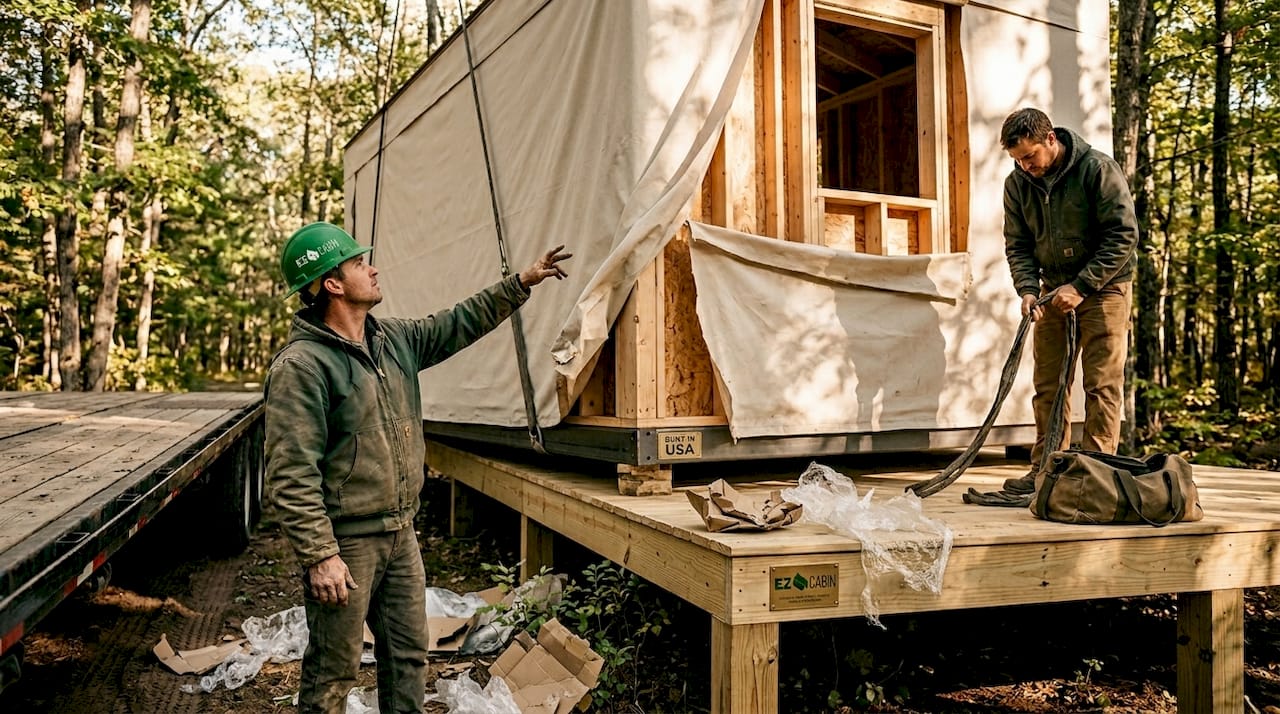
Panelized systems ship flat and stack more efficiently on trucks. They're easier to get down a narrow gravel road and often face less regulatory friction since local builders assemble them. They're also more familiar to traditional lenders and code inspectors.
Volumetric modular homes allow the fastest completion once modules are done, but they can hit more regulatory and financing hurdles than panelized systems, which are better recognized by regulators and appraisers.
Here's a direct comparison to help narrow your choice:
| Factor | Volumetric modular | Panelized | Portable building |
|---|---|---|---|
| Speed to completion | Very fast | Moderate | Fastest |
| Customization | High (upfront) | High | Moderate |
| Transport difficulty | High (large trucks) | Low to moderate | Low |
| Financing familiarity | Moderate | Higher | Very high |
| Foundation required | Almost always | Usually | Not always |
| Best for rural KY/OH | Possible but complex | Good | Excellent |
For buyers who want the benefits of a custom space without construction complexity, portable buildings are worth serious consideration. Reviewing building regulations in Ohio or the Kentucky buying guide will help you understand what's permitted on your specific lot. If multigenerational living is the goal, prefab in-law suite options offer another avenue worth exploring.
"A renovation checklist approach also applies to prefab prep: confirming utilities, access, and zoning before ordering prevents the most expensive prefab surprises."
Key factors to confirm before choosing your prefab type:
- Road width and bridge weight limits to your property
- Whether your county accepts that prefab type for residential use
- Foundation requirements tied to local frost depth and soil conditions
- HOA or deed restrictions on structure type or appearance
- Lender familiarity with your chosen construction method
Pros and cons of prefab construction for 2026 homebuyers
Once you've narrowed your options, weighing the strengths and real tradeoffs of prefab construction helps you make a confident decision.
The advantages are well-documented. Prefab residential construction is used for benefits like faster construction timelines, reduced material waste, improved quality control, greater design flexibility, and better sustainability performance. Factory conditions eliminate weather delays, reduce theft and vandalism risk, and allow builders to use precision tools not practical on most job sites.
Key benefits for Kentucky and Ohio buyers specifically:
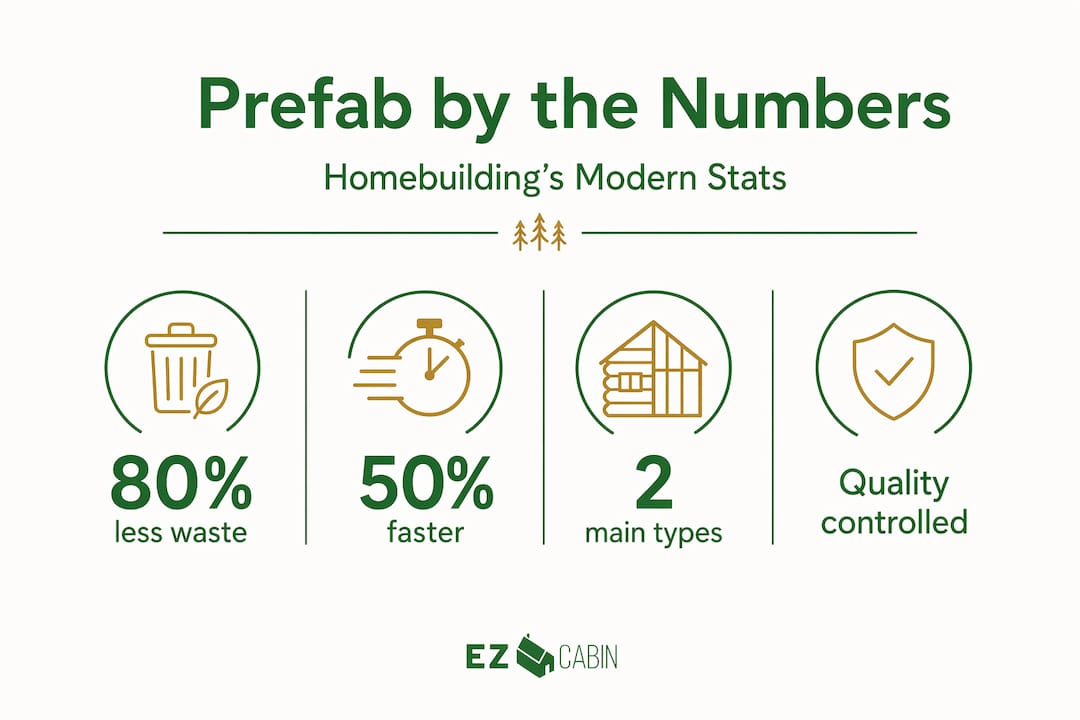
- Speed: Most prefab projects complete in 30 to 50 percent less time than traditional site builds, getting you into your cabin or tiny home faster.
- Quality consistency: Factory-produced components have tighter tolerances than hand-framed walls, which means better insulation, straighter lines, and fewer callbacks.
- Cost predictability: Materials are purchased in bulk and waste is minimized, which reduces surprise cost overruns common in traditional construction.
- Sustainability: Less site disruption and reduced waste benefit both rural land and the environment.
Pro Tip: When comparing quotes, ask whether the prefab price includes site prep, foundation, and utility hookups. These are often quoted separately and can represent 20 to 30 percent of your total project cost.
The drawbacks deserve equal honesty. Code inconsistencies between counties in Kentucky and Ohio create friction, especially for newer modular products that local inspectors haven't reviewed before. Financing can be harder to secure with some lenders who are unfamiliar with non-traditional construction. Last-minute design changes after factory production begins can be extremely costly, sometimes requiring full panel rebuilds.
Reviewing prefab shed benefits is a great starting point for understanding how prefab quality advantages apply at smaller scales. For buyers focused on cost, the affordable building guide breaks down where the real savings live in the prefab market.
One important statistic worth knowing: prefab construction can reduce overall build waste by up to 80 percent compared to traditional on-site framing, making it one of the most material-efficient ways to build in 2026.
Placement, zoning, and local rules: KY/OH prefab must-knows
Understanding prefab's strengths matters, but in Kentucky and Ohio, real success begins with knowing the local legal landscape before you spend a dollar.
Modular construction legality in Ohio depends entirely on local zoning and placement, even when the home meets the state's residential building code. What's approved in Columbus might be restricted in a rural township just 30 miles away. Kentucky follows a similar county-by-county patchwork of rules.
Here are the most common regulatory issues KY/OH buyers face:
- Zoning classification: Some rural zones permit manufactured homes but not modular. Others allow single-family site builds but restrict prefab.
- Foundation requirements: Many jurisdictions require a permanent foundation for full residential classification, which affects property value and financing.
- HOA and deed restrictions: Some developments prohibit certain structure types regardless of what the county allows.
- Utility hookup permits: Even portable buildings often need separate permits for electrical and water connections.
- Inspection sequencing: Some counties require inspections at the factory, on delivery, and again after final setup. Missing one can delay your certificate of occupancy.
Pro Tip: Before purchasing any prefab home, tiny home, or portable building, contact your county's zoning office and building department directly. Bring a description of the structure's construction method, dimensions, and intended use. Spending one hour here can save weeks of delays later.
For specific guidance on converting or upgrading a structure to residential use, shed-to-home conversion rules and rental zoning info offer detailed state-specific context.
How to maximize prefab success in KY/OH: What most homebuyers miss
Most prefab guides stop at the features list. Here's what actually determines whether your project comes in on time, on budget, and exactly as you pictured it.
The single biggest lever in any prefab project is early decision-making. Prefab success often hinges on early "design-for-fabrication" decisions around interfaces, dimensions, and system integration. Every last-minute change after production starts multiplies coordination risk and cost in ways that surprise most first-time buyers.
In our experience working with Kentucky and Ohio customers, the buyers who have the smoothest projects share a few habits. They confirm zoning eligibility before falling in love with a specific floor plan. They visit their site with a tape measure and a truck before ordering to check access. And they make all design selections, colors, windows, door placement, electrical layout, in one sitting rather than trickling in requests over weeks.
The custom living options available today are genuinely exciting, but the buyers who get burned are almost always the ones who treat the customization process as an open-ended creative exercise that can be revised anytime. Prefab is not that. It rewards front-loaded planning and penalizes indecision.
The other thing most guides skip is local logistics. A modular home that looks perfect on paper can create real headaches when your driveway has a sharp bend, your property is at the end of a long private road, or your county requires a specific inspector who has a six-week wait list. These aren't dealbreakers, but they need to be known in week one, not week eight.
The buyers who do the best in Kentucky and Ohio treat the research phase as seriously as the design phase. Both matter equally.
Find your perfect prefab: Next steps with EZ-Cabin
Ready to see what prefab can do for you? Here's how EZ-Cabin empowers Kentucky and Ohio buyers to take the next step.
EZ-Cabin makes the entire prefab and portable building process faster and simpler than traditional routes. Whether you want to sketch your layout, lock in colors and windows, or check what financing fits your budget, every tool you need is available right now.
Start by using our AI-powered tool to design your prefab home in real time, adjusting layouts, exterior colors, doors, and windows before you commit to anything. When you're ready to move forward, explore our flexible financing options with guaranteed approval and no credit check required. You can also jump straight into our customize your cabin builder to personalize your structure from the ground up. Most buildings deliver to Kentucky and Ohio customers within one to four weeks, and our London and Somerset, KY locations let you see the quality up close before you buy.
Frequently asked questions
Are prefab homes built to last in Kentucky and Ohio climates?
Yes, modern prefab homes use durable materials and factory quality control to meet or exceed local codes for Kentucky and Ohio, including requirements for wind, snow load, and temperature extremes.
How long does prefab construction actually take compared to traditional building?
Prefab projects can reduce total build time by 30 to 50 percent compared to traditional methods, primarily because volumetric modular construction runs factory production and site preparation simultaneously.
What permits do I need for a prefab home in Kentucky or Ohio?
Permits typically include zoning, building, foundation, and utility connections, and local zoning laws govern where and how modular homes can be placed, so always verify requirements before purchasing.
Can I customize a prefab cabin or tiny home as much as a site-built home?
Prefabs offer significant design choices upfront, but late design changes once factory production begins can be costly, so finalizing all selections early is essential.
What is the main risk with prefab construction for new buyers?
The biggest risk is not aligning your design choices and site logistics early enough, since last-minute coordination changes increase both cost and the chance of significant build delays.