
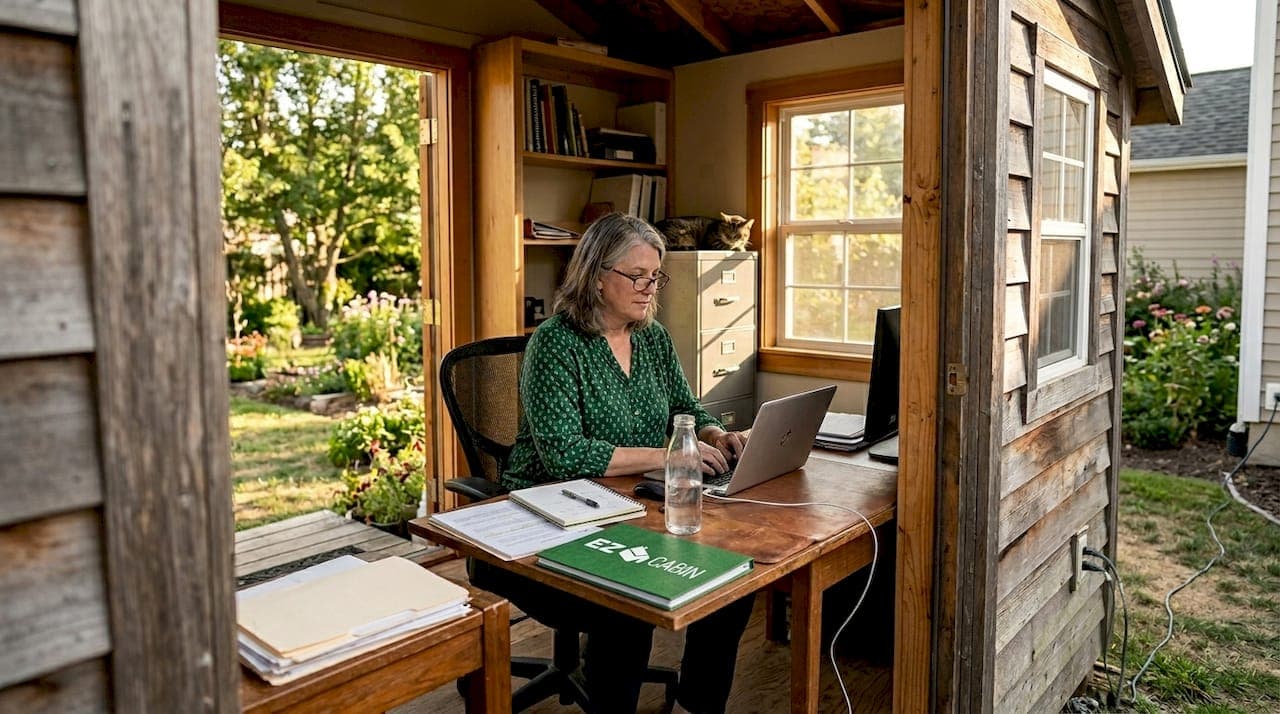
Remote work in Kentucky and Ohio presents unique challenges. Many professionals struggle with distractions at home, inadequate space for dedicated work zones, and difficulty maintaining professional boundaries. These obstacles directly impact productivity and work-life balance. Portable offices emerge as an innovative solution, offering dedicated workspaces that combine flexibility with professional functionality. This article explores how portable offices transform remote work experiences, examining types available, setup strategies, and rent-to-own options specifically designed for Kentucky and Ohio small business owners and remote professionals seeking enhanced productivity and workspace adaptability.
Table of Contents
- Key Takeaways
- Understanding portable offices and their role in remote work
- Types of portable offices and how to choose the right one for your remote work needs
- Maximizing productivity and flexibility with your portable office setup
- Benefits of rent-to-own portable office solutions for Kentucky and Ohio remote workers
- Discover your portable office options with EZ-Cabin
- Frequently asked questions about portable offices for remote work
Key Takeaways
| Point | Details |
|---|---|
| Productivity through separation | Dedicated portable offices create clear boundaries between work and home life, reducing distractions and improving focus during the workday. |
| Flexible dedicated workspaces | Portable offices provide a separate professional environment that supports organized workflows and professional video calls. |
| Customization and climate control | Customizable layouts, windows for light, and climate control options tailor the space to your needs and protect equipment. |
| Rent to own options | Small business owners in Kentucky and Ohio can access flexible financing to acquire portable offices. |
Understanding portable offices and their role in remote work
Portable offices provide flexible, dedicated workspaces that transform how remote professionals approach their daily routines. These structures are freestanding buildings designed specifically for work activities, ranging from simple shed conversions to fully equipped cabin-style offices with climate control, electrical systems, and internet connectivity. Unlike converting a spare bedroom or working from the kitchen table, portable offices create clear physical boundaries between professional and personal life.
Remote workers in Kentucky and Ohio face distinct workspace challenges. Home environments rarely provide the quiet, organized settings necessary for focused work. Family members, pets, and household responsibilities create constant interruptions that fragment attention and reduce output quality. Many homes lack sufficient space for proper office equipment, forcing professionals to work from cramped corners or shared areas. The absence of professional atmosphere makes client video calls awkward and undermines credibility.
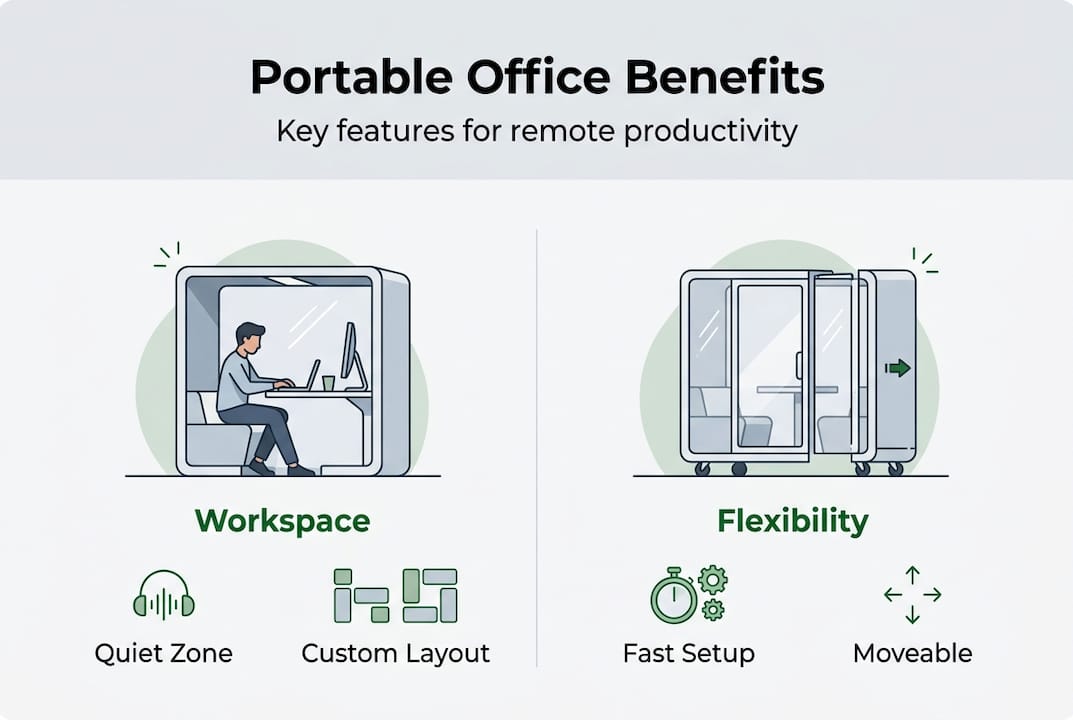
Portable offices solve these problems through physical separation. Placing a dedicated structure in your backyard or property creates a commute-free professional environment completely isolated from household distractions. You gain privacy for confidential calls, space for multiple monitors and equipment, and a psychological shift that signals work mode. The mobility advantage means you can relocate the office if you move properties or adjust its position to optimize sunlight and access.
Customization options allow tailoring spaces to specific work requirements. Add extra windows for natural light, install shelving for reference materials, or incorporate standing desk areas for health benefits. Climate control systems maintain comfortable temperatures year-round, essential for Kentucky's humid summers and Ohio's cold winters. Insulation packages protect equipment and ensure consistent work conditions regardless of outdoor weather.
Pro Tip: Position your portable office considering utility access points and natural shade patterns. Placing the structure near existing electrical sources reduces installation costs, while strategic tree placement minimizes cooling expenses during summer months.
The professional setup advantage extends beyond aesthetics. Dedicated workspace signals to clients and colleagues that you maintain serious business operations. Video conference backgrounds appear polished and intentional rather than improvised. Storage solutions keep materials organized and accessible, reducing time wasted searching for documents or supplies. Separate internet connections prevent bandwidth conflicts with household streaming or gaming activities.
Types of portable offices and how to choose the right one for your remote work needs
Various portable building types offer distinct advantages for different remote work situations. Understanding these options helps match your specific requirements with the most cost-effective solution. Cabin-style offices provide finished interiors resembling traditional buildings, with drywall, flooring, and built-in amenities. Shed-style offices offer simpler construction with open interior layouts you can customize extensively. Modular offices feature pre-configured sections that snap together, enabling quick installation and future expansion.
Each type serves different budgets and functional needs. The comparison below outlines key differences:
| Type | Size Range | Price Range | Best For | Portability |
|---|---|---|---|---|
| Cabin-style | 200-400 sq ft | $15,000-$35,000 | Full-time professionals, client meetings | Moderate, requires professional moving |
| Shed-style | 100-200 sq ft | $5,000-$15,000 | Part-time remote work, storage combo | High, can relocate with standard equipment |
| Modular | 150-300 sq ft | $10,000-$25,000 | Growing businesses, scalable needs | High, sections move independently |
| Custom builds | Varies | $20,000+ | Specialized requirements, unique designs | Low, permanent installation typical |
Selecting the right portable office requires evaluating several critical factors. Consider how many days per week you work remotely and whether your role involves client visits requiring professional presentation. Kentucky and Ohio experience significant seasonal temperature swings, making insulation and climate control essential for year-round use. Budget constraints influence not just purchase price but ongoing maintenance and utility costs.
Local zoning regulations affect placement and size restrictions. Some Kentucky counties limit accessory structures to specific square footage or require setback distances from property lines. Ohio municipalities may mandate building permits for structures exceeding certain dimensions. Research these requirements before purchasing to avoid compliance issues.
Key questions to ask before committing:
- What percentage of my work requires dedicated office space versus flexibility?
- Do I need to accommodate employees or partners in the future?
- What internet speeds and electrical capacity does my work demand?
- How much natural light do I need for my specific tasks?
- Will I conduct client meetings requiring professional appearance?
- What storage volume do my business materials require?
Rent-to-own options provide flexibility for small business owners uncertain about long-term needs. These arrangements allow testing portable office solutions without major capital commitments. You can upgrade or downsize as your business evolves, matching workspace to actual requirements rather than projections.
Maximizing productivity and flexibility with your portable office setup
Proper portable office setup transforms a basic structure into a productivity powerhouse. Strategic planning during installation prevents costly modifications later and ensures your workspace supports rather than hinders your work processes. Begin by mapping your daily workflow and identifying equipment, storage, and movement patterns your tasks require.
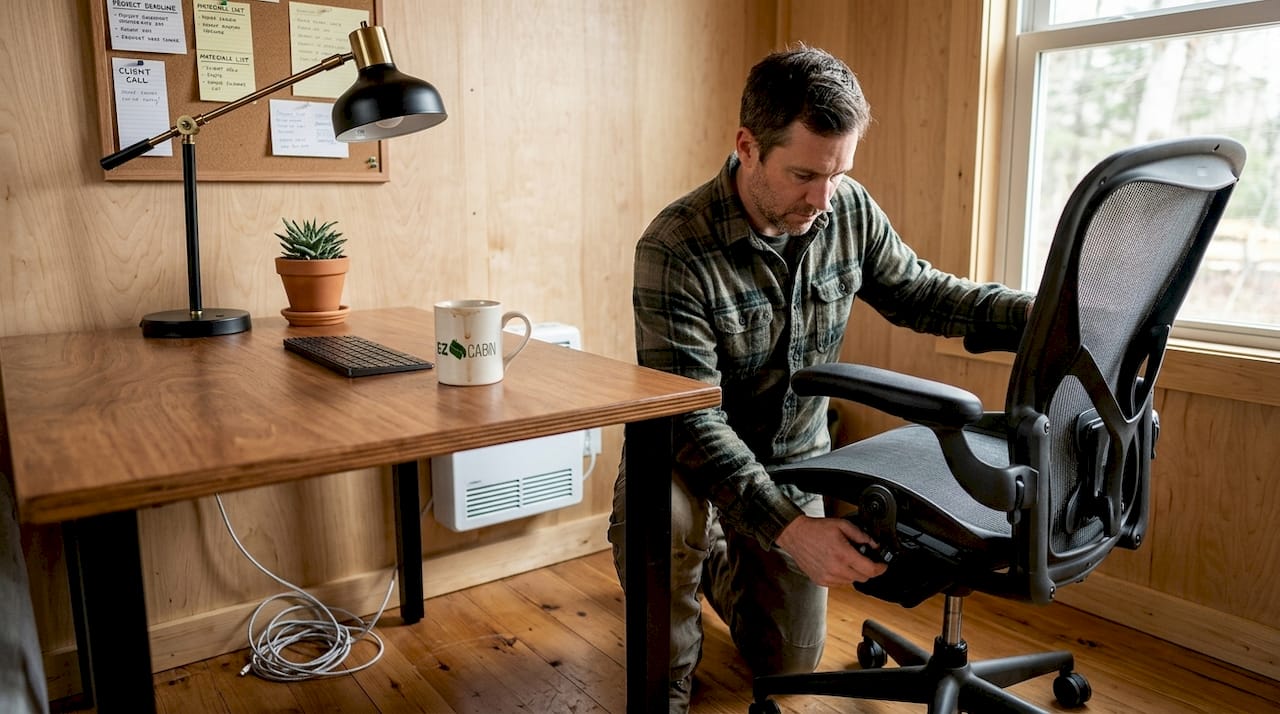
Ergonomic furniture forms the foundation of productive workspace. Invest in an adjustable desk that accommodates both sitting and standing positions, reducing health risks associated with prolonged sitting. Select a chair with lumbar support and adjustable height, armrests, and tilt. Position your monitor at arm's length with the top of the screen at or slightly below eye level to prevent neck strain. Keyboard and mouse should allow your elbows to rest at 90-degree angles.
Internet connectivity determines whether your portable office functions as a professional workspace or expensive storage shed. Run dedicated ethernet lines from your main building for maximum reliability and speed. If ethernet installation proves impractical, invest in mesh Wi-Fi systems or cellular hotspots with business-grade data plans. Test connection speeds during peak usage hours to ensure video conferencing and file transfers perform adequately.
Climate control maintains comfort and protects equipment across Kentucky and Ohio's temperature extremes. Mini-split heat pumps provide efficient heating and cooling in compact packages ideal for portable offices. Insulation packages reduce energy costs and prevent condensation issues that damage electronics. Ceiling fans improve air circulation and reduce cooling costs during moderate weather.
Lighting significantly impacts mood, focus, and eye strain. Maximize natural light through strategically placed windows while avoiding glare on screens. Add task lighting at work surfaces and ambient lighting to reduce harsh shadows. LED bulbs minimize heat generation and electricity costs while providing consistent color temperature that reduces eye fatigue.
Daily routines that maximize portable office benefits:
- Establish a morning ritual that signals work mode, such as walking to your office with coffee.
- Set specific start and end times to maintain work-life boundaries despite physical proximity to home.
- Schedule focused work blocks without checking email or messages to leverage distraction-free environment.
- Take regular breaks outside the office to prevent isolation and maintain physical movement.
- End each day by tidying workspace and creating tomorrow's priority list before leaving.
- Maintain separate office and home internet networks to psychologically separate work and personal time.
Pro Tip: Personalize your portable office with plants, artwork, or meaningful objects that boost mental well-being without creating clutter. Studies show personalized workspaces increase job satisfaction and reduce stress.
Adapting your portable office for different business scales requires planning for growth. Install additional electrical outlets beyond current needs to accommodate future equipment. Design storage systems that expand vertically to preserve floor space. Consider modular furniture that reconfigures as your team or services evolve. Small business owners should plan for occasional employee or contractor visits by including a guest seating area.
Benefits of rent-to-own portable office solutions for Kentucky and Ohio remote workers
Rent-to-own options offer affordable access to high-quality portable offices without the capital requirements that block many small businesses from upgrading their workspaces. This financing model allows you to make monthly payments toward ownership rather than paying rent that builds no equity. You gain immediate access to professional workspace while preserving cash flow for business operations and growth investments.
The rent-to-own model works through structured payment agreements. You select your portable office, agree on a total purchase price, and establish a payment schedule typically ranging from 24 to 60 months. Each payment includes a portion applied toward the purchase price. At the end of the term, you own the structure outright. Many agreements include early buyout options that reduce total cost if you pay off the balance ahead of schedule.
Compared to outright purchase, rent-to-own eliminates the barrier of large upfront payments. Traditional purchases require $10,000 to $35,000 immediately, straining small business budgets and limiting funds available for marketing, inventory, or hiring. Rent-to-own typically requires only the first month's payment to start, often $200 to $500 depending on the structure's total value. This accessibility allows businesses to upgrade workspace immediately rather than waiting years to accumulate sufficient capital.
Traditional leasing differs significantly from rent-to-own arrangements. Standard leases build no ownership equity, meaning years of payments leave you with nothing at the end. Lease agreements often include restrictions on modifications, preventing customization that optimizes the space for your specific work. Rent-to-own contracts typically allow modifications since you're purchasing the structure, enabling you to adapt the office as your business evolves.
Financial comparison over 36 months:
| Approach | Upfront Cost | Monthly Payment | Total Paid | Ownership at End |
|---|---|---|---|---|
| Outright purchase | $18,000 | $0 | $18,000 | Yes |
| Rent-to-own | $350 | $350 | $12,600 | Yes |
| Traditional lease | $500 | $400 | $14,900 | No |
| Home office conversion | $3,000-$8,000 | $0 | $3,000-$8,000 | Limited (not portable) |
Kentucky and Ohio small businesses gain specific advantages from rent-to-own portable offices:
- Preserve capital for seasonal inventory needs common in regional retail and service businesses
- Avoid credit checks that disadvantage newer businesses without established financial history
- Maintain flexibility to relocate offices if business location changes
- Build business credit through consistent payments without personal financial risk
- Deduct monthly payments as business expenses, reducing taxable income
- Scale workspace as revenue grows without abandoning previous investments
The no credit check aspect proves particularly valuable for entrepreneurs and small business owners. Traditional commercial real estate financing requires extensive credit history, business plans, and financial projections that exclude many qualified business owners. Rent-to-own providers focus on current income and payment ability rather than past credit issues, opening opportunities for businesses rebuilding after economic challenges or those operated by owners with limited credit history.
Discover your portable office options with EZ-Cabin
Transforming your remote work experience starts with exploring solutions designed specifically for Kentucky and Ohio professionals. EZ-Cabin specializes in rent-to-own portable offices that combine affordability with quality construction, offering structures that enhance productivity without straining budgets. Our selection includes cabin-style offices with finished interiors, versatile shed-style buildings, and modular options that expand as your business grows.
Customization sets EZ-Cabin apart from standard portable building retailers. Our BuildYourOwn tool lets you design your ideal workspace by selecting layouts, exterior colors, window placements, door styles, and interior configurations. Visualize your portable office in real time, adjusting features until the design perfectly matches your work requirements. Add electrical packages, insulation upgrades, or specialized storage solutions tailored to your profession.
Financing solutions eliminate barriers that prevent small business owners from accessing professional workspaces. Our guaranteed approval process requires no credit checks, focusing instead on your current ability to make monthly payments. Start with just your first month's payment and receive delivery within one to four weeks. This streamlined approach removes the friction typical of traditional dealership experiences, letting you focus on growing your business rather than navigating complicated approval processes.
EZ-Cabin delivers transparent, tech-driven buying experiences built for today's remote workers. Whether you shop online or visit our London or Somerset, Kentucky locations, you'll find straightforward pricing, flexible financing, and structures designed to enhance your productivity and professional success.
Frequently asked questions about portable offices for remote work
What are portable offices and how do they differ from traditional offices?
Portable offices are freestanding structures designed for work activities, typically placed on residential or commercial properties. Unlike traditional offices requiring permanent construction and extensive permitting, portable offices arrive pre-built or in modular sections for quick installation. They offer flexibility to relocate if needed and cost significantly less than conventional office construction while providing dedicated professional workspace.
Can portable offices be customized for specific remote work needs?
Yes, portable buildings offer extensive customization options including layout modifications, electrical configurations, window placements, insulation levels, and interior finishes. You can add features like built-in shelving, specialized lighting, climate control systems, and technology infrastructure. Customization ensures your portable office supports your specific work processes rather than forcing you to adapt to generic layouts.
How does rent-to-own work for portable offices in Kentucky and Ohio?
Rent-to-own agreements allow you to make monthly payments toward ownership of your portable office. You select your structure, agree on total price and payment term (typically 24 to 60 months), then make regular payments with a portion applied to the purchase price. Financing options often require no credit checks and only the first month's payment to start, with ownership transferring once you complete all payments.
Are portable offices legal and compliant with local zoning laws?
Portable offices are legal in most Kentucky and Ohio locations, but local zoning regulations vary by municipality and county. Some areas limit accessory structure sizes, require specific setback distances from property lines, or mandate building permits above certain dimensions. Research your local zoning ordinances before purchasing and consult with your portable office provider about compliance requirements specific to your location.
What should remote workers consider when setting up a portable office?
Prioritize ergonomic furniture, reliable internet connectivity, adequate climate control, and proper lighting when setting up your portable office. Position the structure considering utility access, natural shade, and privacy from neighbors. Plan for sufficient electrical outlets and storage solutions that accommodate current needs plus future growth. Establish daily routines that leverage the dedicated workspace to maintain work-life boundaries and maximize productivity benefits.