
Portable buildings are quietly becoming one of the smartest moves for homebuyers and property investors across Ohio and Kentucky. Whether you want a backyard cabin, a rental unit, or a flexible workspace, the demand is real and the earning potential is significant. But most buyers walk into this market without understanding permit thresholds, zoning rules, or how to maximize returns. This guide cuts through the confusion so you can make a confident, informed decision about portable buildings in 2026 and beyond.
Understanding permit requirements in Ohio and Kentucky
Permit rules for portable buildings vary more than most people expect, and getting this wrong can cost you time, money, and headaches. The good news is that the rules are manageable once you understand the key thresholds.
The most important number to know is 200 square feet. In many Ohio and Kentucky jurisdictions, structures under this size are treated as accessory buildings and often require no building permit. However, the moment you plan to use a structure for habitation, the rules change significantly. Portable cabins under 200 sq ft often need no permits in areas like Louisville, KY, but larger ones intended for living require zoning approval, utility hookups, and may qualify as accessory dwelling units (ADUs) for rental or personal use.
For anything classified as a dwelling in Ohio, the requirements get stricter. Modular and industrialized units in Ohio must comply with the Ohio Residential Building Code and often require permanent foundations, roof pitch minimums, setbacks, and minimum square footage standards, with some areas requiring as much as 950 sq ft for habitable space.
Here is a quick comparison of what triggers permit requirements:
| Factor | No permit likely | Permit required |
|---|---|---|
| Size | Under 200 sq ft | Over 200 sq ft |
| Use | Storage or workspace | Habitation or rental |
| Foundation | Skid or gravel | Permanent/concrete |
| Utilities | None | Electric, plumbing, HVAC |
Key rules that apply across most Ohio and Kentucky counties:
- Setbacks: Most areas require structures to sit a minimum distance from property lines, often 5 to 10 feet.
- Roof pitch: Habitable structures typically require a minimum pitch to meet code.
- Zoning classification: Residential, agricultural, and commercial zones each have different allowances.
- HOA rules: Even if the county allows it, your homeowners association may have additional restrictions.
Before you buy, always check the shed installation guide for your specific county. Local rules shift more often than state codes, and what applied last year may not apply today.
Pro Tip: Visit your county zoning office website or call them directly before purchasing any structure over 150 sq ft. A five-minute conversation can save you thousands in fines or relocation costs.
Understanding the portable building types available in your area also helps you choose a structure that fits within your local rules from the start.
Investment benefits: Portable cabins and rental ROI
Now that permits are clear, let's look at the real earning potential. Portable cabins are not just convenient, they are generating serious income for investors across Kentucky and Ohio.
Rental income benchmarks tell a compelling story. Portable buildings in KY and OH are earning landlords between $150 and $350 per night when listed as short-term rentals. That range depends on location, amenities, and how well the unit is customized for guests. A well-placed cabin near a lake or state park in Kentucky can hit the top of that range consistently during peak season.
Compare that to the cost of building. Prefab portable structures save buyers 10 to 15% compared to traditional site-built construction. That gap in upfront cost, combined with rental income, creates a return on investment timeline that surprises most first-time investors.
Here is how portable cabins stack up against site-built options:
| Category | Portable cabin | Site-built structure |
|---|---|---|
| Upfront cost | Lower by 10-15% | Higher |
| Build time | 1-4 weeks | 3-12 months |
| Flexibility | Relocatable | Fixed |
| Financing options | Rent-to-own, HUD loans | Traditional mortgage |
| Rental potential | High (ADU or short-term) | High but slower setup |
For investors thinking about cabin investment returns, the top factors that drive ROI are:
- Foundation type: A permanent foundation increases financing options and resale value.
- Utility connections: Electric and plumbing unlock habitation status and higher rental rates.
- Location: Proximity to tourism, lakes, or urban centers drives demand.
- Insurance coverage: Proper coverage protects your asset and satisfies lender requirements.
- Zoning classification: ADU designation opens long-term rental markets.
One edge case worth knowing: tiny homes on wheels (THOWs) are treated differently than ADUs. THOWs are often restricted to RV parks and cannot be placed on standard residential lots without special approval. If your goal is boosting Airbnb profits with a portable cabin, an ADU on a permanent foundation is typically the stronger play.
For a deeper look at building an affordable rental unit strategy in these states, the numbers are more accessible than most people realize.
Customization options for portable buildings
Once you understand the earning potential, personalization is the next step. Customization is where portable buildings go from generic structures to income-producing or lifestyle-enhancing assets.
The main categories of customization include:
- Siding and exterior finishes: Wood, vinyl, and metal options affect both curb appeal and maintenance costs.
- Floor plan layouts: Open concept, lofted, or partitioned designs serve different use cases.
- Insulation packages: Critical for year-round use in Ohio and Kentucky climates.
- Windows and doors: Placement and style affect both natural light and security.
- Electrical and plumbing rough-ins: Pre-wired or pre-plumbed units save significant time during setup.
- Security features: Deadbolts, reinforced doors, and camera-ready exteriors matter for rental units.
Customization does more than improve appearance. A well-insulated, thoughtfully designed cabin can command higher nightly rental rates and attract longer bookings. Appraisers also factor in finish quality and utility readiness when valuing structures on permanent foundations.
Compliance is the part most buyers overlook during customization. Any modification that changes the use of a structure, adds plumbing, or increases square footage may require a new or amended permit. Per Ohio Revised Code Chapter 4781, verify your local zoning before making significant changes, especially if you are converting a storage building into a habitable space.
Workspace conversions are a growing trend. A standard 12x24 cabin with proper insulation and electrical service becomes a fully functional home office or studio. Rental unit conversions require more, including bathroom facilities and code-compliant egress windows, but the rental premium is worth the investment.
Pro Tip: Customization that adds utility connections and insulation can increase your building's appraised value by 20% or more, which matters if you plan to refinance or sell the property later.
Exploring cabin customization options early in your planning process helps you budget accurately and avoid surprises. You can also browse small building ideas to see what layouts and features are trending in Kentucky and Ohio right now.
Financing and ownership tips for portable and modular buildings
Affordability is one of the biggest draws of portable buildings, and the financing options available in 2026 make ownership more accessible than ever.
Here are the main paths buyers and investors use to finance portable structures:
- Rent-to-own programs: No credit check required, low entry cost, and flexible terms. You make monthly payments and own the building outright at the end of the term.
- HUD and manufactured home loans: Available for structures on permanent foundations that meet HUD standards.
- Personal property loans: Shorter terms and higher rates, but accessible for buyers with limited credit history.
- Cash purchase: Fastest path to ownership with no ongoing payment obligations.
For buyers without strong credit, rent-to-own is often the best starting point. Portable building financing programs in Kentucky and Ohio are specifically designed to remove the credit barrier that stops many buyers from moving forward.
"Prefab buildings save buyers 10 to 15% on cost and can be approved with little or no credit, making them one of the most accessible paths to property ownership available today."
For investors, the key risk to manage is overextending on customization before confirming zoning and permit status. A building that cannot legally be rented generates zero return. The smart sequence is: verify zoning, confirm permit requirements, then invest in upgrades.
Prefab financing benchmarks consistently show that buyers who place their structure on a permanent foundation gain access to better loan products, lower rates, and stronger resale value. It is a one-time investment that pays off across the life of ownership.
Pro Tip: Ask your lender specifically about HUD Title I loans for personal property. They are often overlooked but can cover portable structures that do not qualify for traditional mortgages.
If you are considering a smaller footprint, tiny home financing options are also available without credit checks and with minimal upfront requirements.
What most investors miss about portable buildings in Ohio
Here is the honest reality that experienced investors figure out after their first or second purchase: the biggest mistakes are not financial, they are procedural.
Most buyers focus on the building itself and skip the groundwork. Local permit rules in Ohio and Kentucky are not static. Counties update zoning ordinances regularly, and what your neighbor got approved two years ago may not be available today. The investors who succeed treat cabin value insights as a starting point, not a guarantee.
The second thing most people miss is the compounding effect of customization. A basic cabin generates basic income. A well-insulated, properly permitted, thoughtfully designed unit in a good location generates significantly more, and it appreciates differently too. The gap between a generic portable building and a customized one is not just aesthetic, it is financial.
Finally, the most successful portable building investors treat these structures as flexible assets. Markets shift. A short-term rental that performs well today might do better as a long-term ADU in two years. Choosing the right foundation and utility setup from the start gives you the flexibility to pivot without starting over.
Next steps: Explore customizable portable buildings in Ohio and Kentucky
If you have made it this far, you already have more clarity than most buyers who walk into this market. You understand the permit thresholds, the rental income potential, the customization options, and the financing paths available in Ohio and Kentucky.
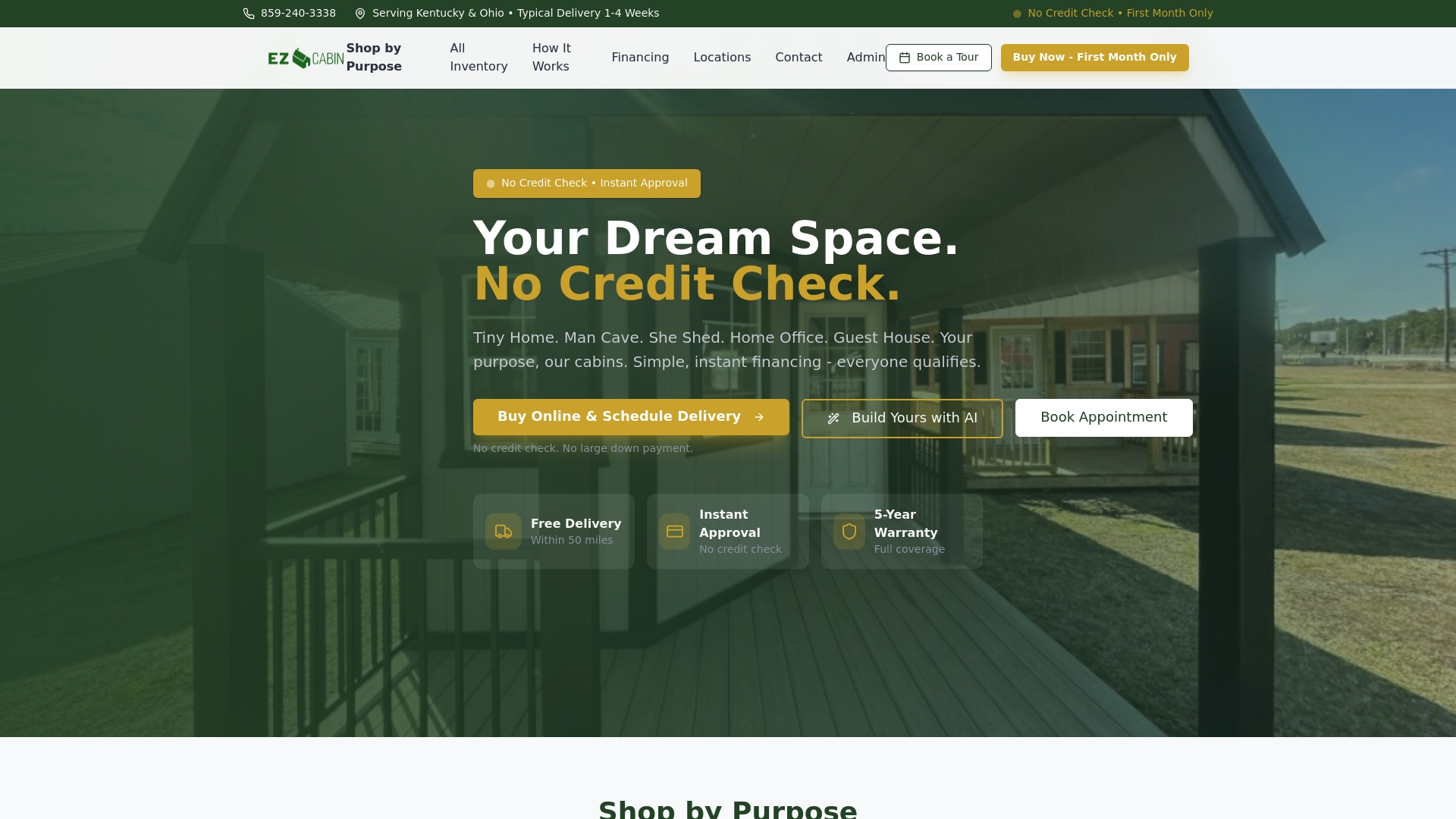
At EZ-Cabin, we make the next step simple. You can shop cabins and sheds across our full inventory, use our AI-powered tools to customize your building in real time before you buy, and explore easy building financing options that require no credit check and only the first month's payment to get started. Most buildings deliver within one to four weeks. Whether you are buying your first backyard cabin or adding a rental unit to your property portfolio, we are ready to help you move forward.
Frequently asked questions
Do I need a permit for a portable building in Ohio or Kentucky?
Permits are generally not required for buildings under 200 sq ft, but if you plan to use the structure for habitation, rent it out, or place it in a restricted zone, local zoning approval and additional permits will likely be required.
How much rental income can I expect from a portable cabin in KY or OH?
Typical short-term rental rates range from $150 to $350 per night depending on location, amenities, and season, with well-placed cabins near tourist areas reaching the top of that range consistently.
Can I finance a portable building if I don't have good credit?
Yes. Rent-to-own programs and HUD manufactured loans are available for buyers with limited or no credit history, and providers like EZ-Cabin offer guaranteed financing approval with no credit check required.
What are the main risks or mistakes when buying a portable building?
The most common mistakes include skipping local zoning verification, underestimating foundation requirements, and overlooking permit thresholds under ORC 4781, all of which can delay your project or limit how you can legally use the structure.