

TL;DR:
- Converting a shed into a livable space requires insulation, HVAC, electrical, and proper foundation upgrades.
- Local laws in Kentucky and Ohio vary; permits and restrictions significantly influence shed use and habitation.
- Costs for a livable shed range from $10,000 to over $80,000 depending on size, finishes, and utility needs.
Most people assume a shed is just a place to stack lawn equipment and forget about it. But across Kentucky and Ohio, homeowners and renters are turning quality outbuildings into home offices, guest cabins, hobby studios, and even accessory dwelling units. The catch? Making a shed truly livable takes more than a coat of paint and a space heater. You need to understand what upgrades are required, what local rules allow, and what the real costs look like before you spend a dollar. This guide covers all of it, so you can move forward with confidence instead of costly surprises.
Table of Contents
- What makes a shed livable?
- Local laws and rules: what's allowed in Kentucky and Ohio?
- Breaking down the costs: sheds, conversions, and extras
- Choosing the right shed: models, durability, and reviews
- A realistic look: what most shed guides leave out
- Find your ideal livable shed solution
- Frequently asked questions
Key Takeaways
| Point | Details |
|---|---|
| Check local rules first | Zoning, permits, and ADU laws vary widely by city and county. |
| Budget realistically | Conversions cost more than expected—plan for insulation, HVAC, and code upgrades. |
| Choose durable models | Brands like Tuff Shed and Lifetime offer weather-resistant, customizable options. |
| Code compliance is crucial | Foundations and correct permits are key to safe, legal livable sheds. |
What makes a shed livable?
A standard storage shed and a livable shed might look similar from the outside, but they are built and equipped very differently. A basic shed keeps your tools dry. A livable shed keeps you comfortable, safe, and functional year-round. That gap between the two is filled with specific upgrades, and skipping any of them leads to problems fast.
Here is what separates a livable shed from a basic storage box:
- Insulation: Walls, floors, and ceilings need proper insulation to manage temperature. Without it, a shed in Ohio winters becomes unusable within weeks.
- HVAC: A mini-split system is the most popular choice for sheds because it heats and cools without ductwork.
- Electrical: A dedicated circuit from your main panel or a subpanel is required for lighting, outlets, and appliances.
- Egress windows: Required by most codes for any space where a person sleeps or works for extended periods.
- Foundation: A permanent foundation is often required for dwellings, along with residential framing, insulation, mini-split HVAC, and electrical and plumbing permits.
- Framing quality: Residential-grade framing holds up better under insulation loads and interior finishing work.
Understanding basic shed construction terms helps you ask the right questions when shopping or planning upgrades. It also helps you spot corners being cut.
Livable sheds work well as work-from-home offices, guest sleeping quarters, art or music studios, and hobby workshops. The key is matching the upgrade level to the intended use. A weekend hobby room needs less than a full-time home office, and a guest cabin needs more than both.
Pro Tip: Before you buy any shed or start any conversion project, call your local zoning office and ask two questions: Is this parcel zoned for accessory structures? And is habitation allowed in those structures? The answer shapes every decision that follows.
If you are weighing whether to build from scratch or buy prefab, look into the prefab shed benefits that apply specifically to Kentucky and Ohio homeowners. Prefab often saves time and money while delivering consistent quality.
Local laws and rules: what's allowed in Kentucky and Ohio?
Once you know what a livable shed requires, the next hurdle is understanding whether your plans are legal where you live. This is where a lot of buyers get burned, because there is no single statewide rule in either state.
Kentucky has no statewide ADU law; every county and city sets its own rules. Sheds under 200 square feet are often exempt from permits when used for storage, but that exemption disappears the moment you plan to use the space for habitation. Cities like Louisville, Shively, and Union explicitly prohibit people from living in accessory structures.
Here is a quick comparison of common rule categories:
| Rule type | Typical requirement |
|---|---|
| Permit exemption | Under 200 sq ft, storage only |
| Setback distance | Usually 5-10 ft from property line |
| Habitation allowed | Requires ADU approval and code compliance |
| HOA restrictions | Varies widely; check CC&Rs |
| Zoning type | Residential R-1 often limits accessory structures |
Key things to check before moving forward:
- Zoning classification of your property (R-1, R-2, agricultural, etc.)
- Setback requirements from property lines, fences, and the primary structure
- HOA or landlord rules that may restrict outbuildings entirely
- ADU ordinances if you want the space to qualify as a legal guest dwelling
- Utility connection rules for water, sewer, and electric hookups
"In many Kentucky cities, living in an accessory structure is simply not permitted, regardless of how well it is built. The path to legal habitation usually runs through the ADU approval process, which varies by county."
If your goal is a full conversion, the shed to tiny home conversion guide for Kentucky and Ohio walks through the specific steps in detail. And if you are still deciding between a shed and a larger structure, the shed vs garage comparison can help clarify which fits your property and goals better. For a broader look at why outbuildings are gaining value, check out what is driving interest in modern sheds in Kentucky right now.
Breaking down the costs: sheds, conversions, and extras
With the legal groundwork covered, the next practical question is: what will your ideal shed actually cost? The range is wide, and it depends heavily on size, intended use, and finish level.
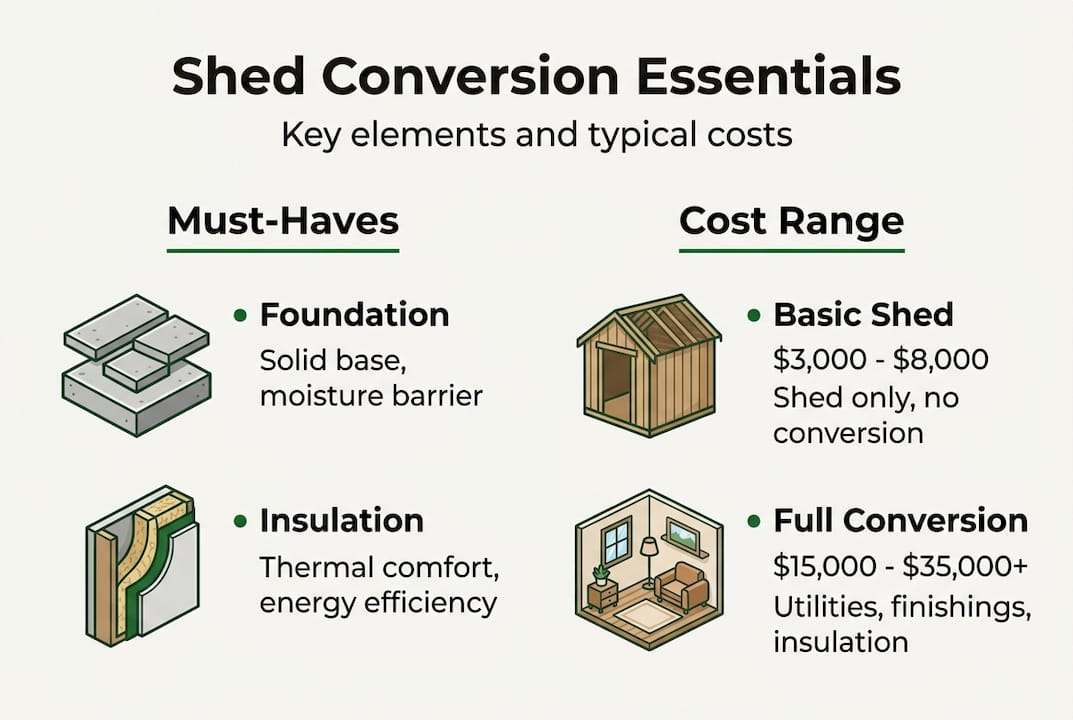
Here is a realistic cost breakdown by project type:
| Project type | Size | Estimated cost |
|---|---|---|
| Basic storage shed | 8x10 | $2,000 to $4,000 |
| Home office conversion | 10x12 | $10,000 to $18,000 |
| Full livable ADU | 400-600 sq ft | $40,000 to $80,000 |
These numbers come from real project data. A budget shed in the 8x10 range runs $2,000 to $4,000, a pro-grade office conversion lands between $10,000 and $18,000, and a full ADU at 400 to 600 square feet climbs to $40,000 to $80,000 depending on finishes and utility connections.
Here is what drives costs up during a conversion:
- Insulation and vapor barrier installation, typically $1,500 to $4,000 depending on shed size
- Mini-split HVAC system including installation, usually $2,500 to $5,000
- Electrical panel and wiring, ranging from $1,500 to $4,500 with permits
- Plumbing rough-in if you want a sink or bathroom, adding $3,000 to $8,000
- Foundation upgrade if required by code, which can add $2,000 to $6,000
Pro Tip: Budget at least 20% above your initial estimate. Code surprises, utility connection fees, and material price shifts are common, and running short mid-project is far more expensive than planning ahead.
If upfront cost is a concern, explore your shed financing options before assuming the project is out of reach. Flexible rent-to-own programs have changed how shed ownership financing works for Kentucky and Ohio buyers, making livable sheds accessible at almost any budget level.
Choosing the right shed: models, durability, and reviews
With costs and rules in mind, the next step is choosing a shed that will last and be easy to customize for year-round comfort. Not every shed on the market is built to handle insulation, interior finishing, or the weight of real use.
Here is how three popular approaches stack up:
- Tuff Shed: Rated 3.9 out of 5 across user reviews, praised for durability and customization options. With over 1.5 million units installed, they have a long track record. Users note solid construction but flag that upgrades add up quickly.
- Lifetime sheds: Known for weather resistance and structural stability, with floors rated to hold loads over 1,500 lbs. They stay dry after heavy rain and hold up well in temperature swings common to Ohio and Kentucky.
- Pole barn style: Versatile and spacious, these work well for larger projects if properly permitted. They offer more headroom and open floor plans, which makes interior finishing easier.
"Conversions fail most often not because of the shed itself, but because of what is underneath it and what paperwork was skipped. A great shed on a bad foundation, or without permits, becomes a liability instead of an asset."
When evaluating any model, ask these questions before buying:
- Is the framing rated for interior wall finishing and insulation?
- What is the floor load rating?
- Does the manufacturer offer upgrade packages for windows, doors, and electrical prep?
- Is the warranty voided by interior modifications?
For creative ideas on how to finish and personalize your space, the shed customization ideas guide covers layouts, materials, and design choices that work well in real projects. And if you are still weighing prefab versus custom build, revisiting prefab sheds advantages can help you make a more confident decision.
A realistic look: what most shed guides leave out
Most guides walk you through the benefits and leave out the part where things go sideways. We have seen enough projects to know what actually causes regret, and it almost never comes down to the shed itself.
The biggest issue is foundation shortcuts. Buyers pour a gravel pad instead of a proper concrete slab, then discover their county requires a permanent foundation for any structure used as a dwelling. The shed gets built. The permit gets denied. The project stalls.
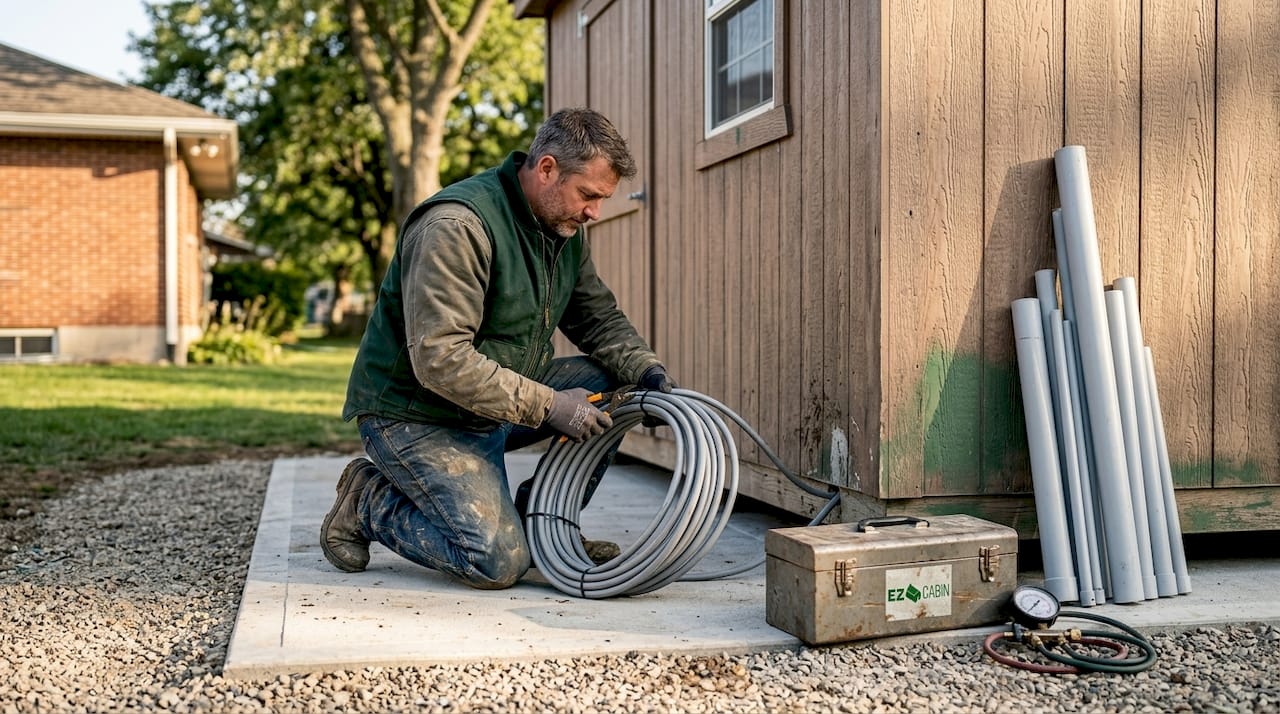
The second most common mistake is underestimating utility complexity. Running electricity from a main panel to a backyard shed sounds simple. Add a subpanel, a dedicated circuit for HVAC, and code-required outlets, and you are looking at a real electrical project that needs a licensed contractor and an inspection.
Comfort is also underestimated. A shed that feels fine in October can be miserable by January without the right insulation rating for your climate zone. Kentucky and Ohio both sit in zones that demand serious thermal performance.
The projects that succeed follow a clear pattern: permits first, foundation right, insulation to code, then everything else. Skipping any step to save money upfront usually costs more to fix later. The step-by-step shed setup guide is worth reading before you finalize any plan.
Find your ideal livable shed solution
Ready to take the next confident step from plans to reality? EZ-Cabin makes it easy to go from idea to delivered structure without the usual dealership friction.
You can browse available sheds across a wide range of sizes and styles, then use our AI-powered tool to customize your shed in real time, adjusting colors, windows, doors, and layout before you commit. Flexible shed financing options with guaranteed approval and no credit check mean you can get started with just the first month's payment. Most structures are delivered within one to four weeks to anywhere in Kentucky or Ohio.
Frequently asked questions
Can I legally live in a shed in Kentucky or Ohio?
In most cities, habitation in accessory structures is prohibited; cities like Louisville, Shively, and Union explicitly ban it. Legal habitation typically requires ADU approval and full code compliance.
What should I budget to convert a shed to a home office or guest cabin?
Plan on $10,000 to $18,000 for a pro-grade office conversion and $40,000 to $80,000 for a fully livable ADU that includes insulation, HVAC, and permits.
Do I need special permits or upgrades for a livable shed?
Yes. Most localities require a permanent foundation and permits for electrical, plumbing, and occupancy before any shed can legally be used as a living or working space.
Which shed brands are best for year-round use?
Tuff Shed and Lifetime are the most consistently rated options, with Tuff Shed scoring 3.9 out of 5 for durability and Lifetime sheds praised for weather resistance and structural load capacity.
Recommended
- Shed installation guide 2026: step-by-step for KY and OH
- Step-by-step shed setup guide for DIY success in KY & OH
- Shed to tiny home conversion guide for KY & OH in 2026
- Top benefits of prefab sheds for Kentucky and Ohio homeowners
- Complete Guide to Blueprints for Residential Projects - Florida Licensed Engineers