
Not all portable buildings play by the same rules in Kentucky and Ohio. A backyard shed, a cabin retreat, and a manufactured home may look similar on a lot, but they carry very different legal requirements, financing paths, and long-term values. Many buyers in both states discover this the hard way, after purchasing a structure that doesn't qualify for the loan they expected or sits in violation of local zoning. This guide breaks down exactly what separates these building types, what the law actually requires in Kentucky and Ohio, and how to make a choice that protects your investment from day one.
portable buildings, sheds, and cabins: Key differences and uses
The portable building category is broader than most people realize. At the entry level, you have basic storage sheds, which are small, uninsulated, and designed purely for keeping tools and equipment dry. Step up from there and you reach portable cabins and backyard offices, which are insulated, finished, and built for year-round use. At the top of the spectrum sit manufactured homes and modular ADUs (accessory dwelling units), which are engineered for full-time living and subject to the most regulation.
Understanding portable building types before you buy helps you match the structure to your actual goal. Here's a quick comparison:
| Building type | Size range | Mobile? | Living potential | Common use cases |
|---|---|---|---|---|
| Storage shed | 8x8 to 12x24 | Yes | No | Tools, lawn equipment, overflow storage |
| portable cabin | 12x24 to 16x40 | Yes | With upgrades | Office, studio, guest cabin, rental |
| manufactured home | 14x70 to 28x80 | Limited | Yes (HUD-code) | Full-time residence |
| modular ADU | 400-1,200 sq ft | No | Yes | Long-term rental, in-law suite |
Portable sheds and cabins cost between $15,000 and $75,000 and fit uses from offices to studios, making them the most flexible entry point for most homeowners and investors. That price range also means you can often skip traditional financing entirely and use a rent-to-own arrangement instead.
The most popular uses we see across Kentucky and Ohio include:
- Home offices and studios: Remote workers and creatives who need a dedicated, distraction-free space without a costly addition.
- Short-term rental income: A cabin on a rural lot can generate consistent weekend rental revenue with minimal upfront cost.
- Storage and garages: portable garages are especially popular in areas where attached garage builds are cost-prohibitive.
- Guest accommodations: A finished cabin gives visiting family their own space without a hotel bill.
Semi-mobile structures give you flexibility, but they do face real limits. Without the right electrical, plumbing, and insulation upgrades, most portable cabins cannot legally be used as a primary residence. Plan for those upgrades from the start if residential conversion is your goal.
Pro tip: If you ever want to convert your cabin into a legal rental or living space, choose a certified structure from the beginning. Going back and retrofitting a basic shed to meet habitation codes almost always costs more than buying the right building upfront.
regulations and permits for portable buildings in Kentucky and Ohio
Once you understand your options, knowing the legal requirements can save you hassles and extra costs. The rules vary more than most buyers expect, even within a single state.
In Kentucky, permit requirements depend heavily on your city or county. No permit is needed for sheds under 200 sq ft in Louisville, but living in them is prohibited regardless of size. That distinction matters. You can build a small shed without paperwork, but the moment you want to sleep, work, or run utilities through it, you're in a different regulatory category entirely.
Ohio takes a different approach at the state level. Ohio preempts local rules on manufactured home foundations and tie-downs, meaning statewide standards override city ordinances for those structures. This actually makes compliance more predictable for manufactured home buyers in Ohio, since you're following one set of rules instead of dozens of local variations.
Here's a state-by-state comparison of key regulatory factors:
| Factor | Kentucky | Ohio |
|---|---|---|
| Small shed permit threshold | Often 200 sq ft or less | varies by municipality |
| manufactured home foundation rules | Local jurisdiction | State preemption applies |
| habitation permit required? | Yes, always | Yes, always |
| setback rules | Local zoning | Local zoning |
| utility hookup inspections | Required for living use | Required for living use |
The steps most buyers should follow before placing any structure:
- Contact your county zoning office and confirm setback requirements for your lot.
- Ask specifically whether your intended use (storage, office, or living) changes the permit category.
- Check whether your city has adopted a specific threshold for permit exemptions.
- If you plan utility connections, schedule a pre-inspection with your local building department.
- Review the shed permit guide for a detailed checklist before breaking ground.
For buyers interested in making a structure livable, the livable sheds guide covers what upgrades trigger additional permit requirements. And if you're thinking about a full shed to tiny home conversion, the legal steps are more involved but absolutely doable with the right preparation.
Pro tip: Never assume rural means unregulated. Even in unincorporated Kentucky counties, setback rules and utility connection standards still apply. A quick call to the county judge-executive's office can save you a costly relocation later.
financing and licensing: manufactured homes versus portable structures
Legal compliance is only part of the equation. financing and official approvals directly affect what and how you buy.
The financing landscape splits cleanly into two categories. manufactured homes that carry a HUD label and sit on a permanent foundation can qualify for traditional mortgage products, including FHA and VA loans. Kentucky's rural housing loans through the usda now permanently finance manufactured homes meeting HUD criteria, but most portable sheds and cabins are not eligible for those programs.
Portable cabins and sheds are typically purchased through one of three methods:
- Cash purchase: The fastest path. No approval process, no interest, and delivery can be scheduled immediately.
- rent-to-own (RTO): The most popular option for buyers without perfect credit. You make monthly payments and own the building outright at the end of the term. No credit check is required with most providers.
- Personal loan or home equity line: An option for buyers who want to finance a higher-end cabin or ADU but don't qualify for a construction loan.
Here's how the financing options stack up:
| Structure type | Common financing | Credit check? | loan program eligible? |
|---|---|---|---|
| Storage shed | Cash or RTO | No (RTO) | No |
| portable cabin | Cash or RTO | No (RTO) | No |
| HUD manufactured home | FHA, VA, usda, RTO | Yes (mortgage) | Yes |
| modular ADU | Construction loan, home equity | Yes | Sometimes |
On the licensing side, Kentucky law requires licensing for manufactured home dealers and installers, and certification and insurance are mandatory. This matters when you're vetting sellers. If a dealer can't show you their state license, walk away.
For investors exploring cabins as investments, RTO arrangements are especially attractive because they allow you to place a revenue-generating structure on a property without tying up large amounts of capital. The financing portable options page breaks down the full range of payment structures available in 2026.
Cost snapshot: Basic sheds start around $3,000. Quality portable cabins run $15,000 to $75,000. modular ADUs typically start at $230,000 or more when site work and installation are included.
value, appreciation, and investment impact: What savvy buyers must know
Now that you've seen what goes into setup and compliance, let's look at how your choices affect both short and long-term value.
Here's the counterintuitive reality most buyers miss: portable structures offer unmatched flexibility, but they rarely appreciate in value the way traditional buildings do. That's not necessarily a problem. For business use, short-term rentals, or quick workspace solutions, appreciation isn't the goal. Cash flow and low entry cost are. A $20,000 cabin that generates $800 per month in rental income pays for itself in just over two years.
Permanent structures tell a different story. backyard cabins can boost property value in Kentucky and Ohio by 10 to 20 percent if they're ADU or rental compliant. That's a meaningful number on a $300,000 property.
Key value considerations for buyers and investors:
- portable sheds and basic cabins: Low appreciation, high flexibility. Best for business use, storage, and temporary needs.
- finished cabins as rentals: Strong cash flow potential, especially in rural Kentucky and Ohio tourism corridors.
- manufactured homes: manufactured homes often depreciate while modular cabins can appreciate like site-built homes, which is a critical distinction for long-term investors.
- modular ADUs: The strongest appreciation play, but also the highest entry cost and most regulatory complexity.
"The best investment isn't always the most expensive one. It's the one that fits your specific zoning, financing, and use case perfectly."
For buyers focused on making sheds livable, the value equation shifts significantly once you add plumbing, electrical, and insulation. A well-upgraded cabin on a compliant lot can function as a legal rental unit and add real appraised value to your property. The investment potential of cabins is real, but it requires intentional planning from the start.
Pro tip: Before buying any portable structure with investment intent, pull your property's zoning classification and confirm whether ADU or short-term rental use is permitted. That single step can be the difference between a high-return asset and an expensive storage unit.
Our take: Why nuanced choices matter more than ever in Kentucky and Ohio
We've worked with hundreds of buyers across Kentucky and Ohio, and the pattern is consistent. The buyers who end up happiest aren't necessarily the ones who spent the most or bought the biggest structure. They're the ones who asked the right questions before they bought.
Too many people focus on the sticker price and skip the deeper questions: What does my zoning actually allow? Will this structure qualify for the financing I need in three years? Does this fit my five-year plan for the property? Those questions matter far more than whether the cabin has a metal or shingle roof.
Here's the contrarian take we'd offer: sometimes a simple, well-placed portable shed outperforms a fancy manufactured home as an investment. Not because it's worth more, but because it fits the need precisely, costs less to set up, and generates returns faster. The detailed portable building options available today give buyers more choices than ever, which means the decision requires more thought, not less. Local code knowledge, honest financing expectations, and a clear intended use are what separate smart buyers from expensive lessons.
Ready to act? explore affordable, customizable options for Kentucky and Ohio
You now have the framework to make a confident, well-informed portable building decision. The next step is finding the right structure and locking in your financing before prices or availability shift.
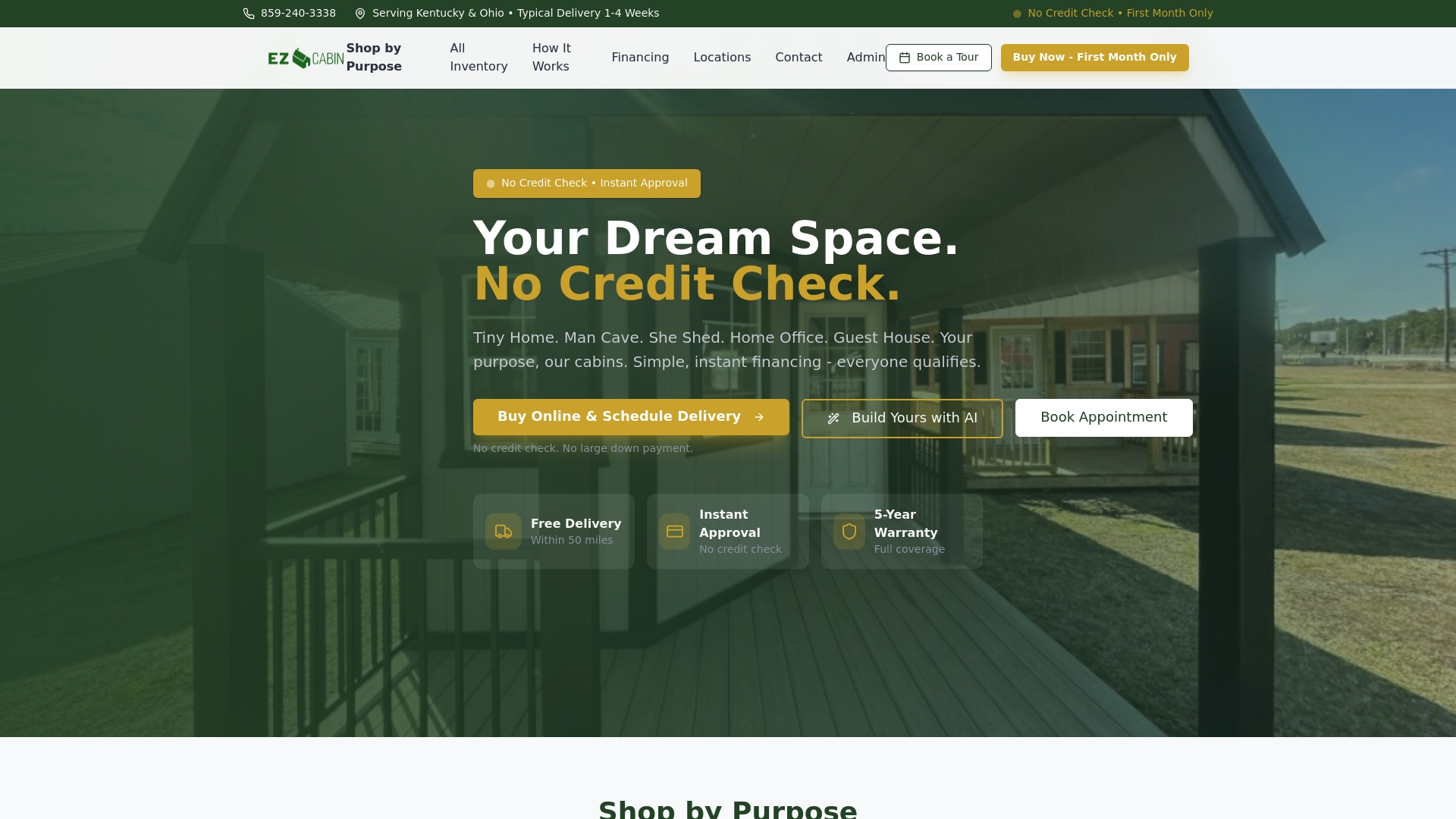
At EZ-cabin, you can browse all cabins and sheds in our current inventory and use our AI-powered customization tools to design your space in real time before you commit. Need flexible payment options? Our financing and RTO options require no credit check and only the first month's payment to get started. If you'd rather see a building in person, visit our EZ-cabin locations in KY and OH in London or Somerset, KY. Most buildings are delivered within one to four weeks.
frequently asked questions
Can you live in a portable shed or cabin in Kentucky?
Residential use requires code-compliant upgrades and permits. In Louisville, sheds under 200 sq ft cannot be used as homes regardless of how they're finished.
What are the main financing options for portable buildings?
Most buyers use cash or rent-to-own arrangements. usda loans for HUD-manufactured homes in Kentucky are available, but portable sheds and cabins do not qualify for those programs.
How do portable buildings affect property value in Kentucky and Ohio?
Compliant backyard cabins can increase property value by 10 to 20 percent, especially when permitted as ADUs or legal rental units.
Are manufactured homes or modular cabins a better investment?
modular cabins tend to appreciate more like traditional homes, while manufactured homes often lose value over time, making modular the stronger long-term investment in most cases.
What permits do I need for a portable building in Kentucky?
It depends on your city or county. Louisville exempts small sheds under 200 sq ft from permits, but any habitable structure requires a building permit regardless of size.