
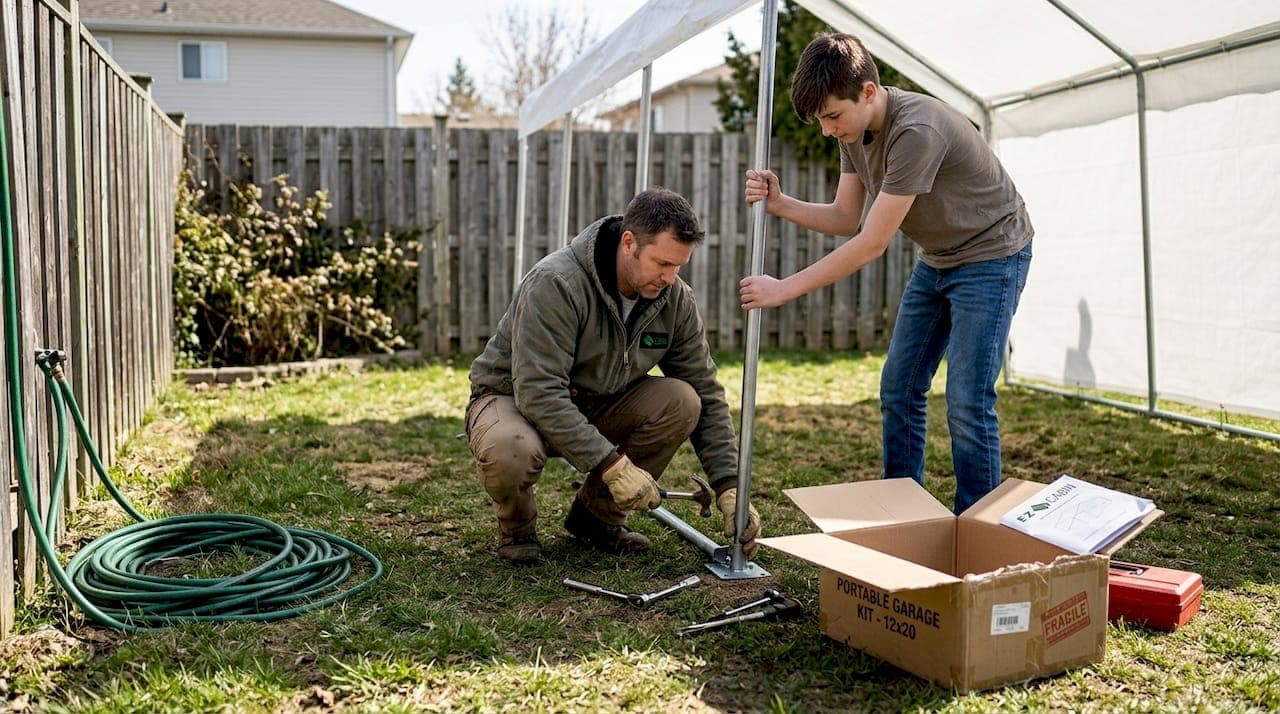
If your car sits outside through Kentucky winters or your Ohio garage is packed wall to wall with no room to spare, you already know the frustration. Permanent garages cost tens of thousands of dollars and are completely off the table for renters. That's where portable garages step in. These pre-fabricated kits use metal frames and polyethylene covers to give you real, usable shelter without a permanent foundation. This guide walks you through everything: why portable garages work, what you need, how to build one, and how to keep it standing through whatever Kentucky or Ohio weather throws at it.
Table of Contents
- Why choose a portable garage?
- What you'll need: Tools, materials, and location
- Step-by-step: Assembling your portable garage
- Common mistakes and troubleshooting tips
- What to expect: Results, maintenance, and flexibility
- Find your perfect portable garage with EZ-Cabin
- Frequently asked questions
Key Takeaways
| Point | Details |
|---|---|
| Portable garage benefits | Flexible, affordable, and renter-friendly storage that protects your belongings. |
| Simple assembly process | Most pre-fab portable garages can be built with basic tools in a day. |
| Kentucky & Ohio suitability | With proper materials and anchoring, portable garages stand up to regional weather. |
| Routine upkeep matters | Regular inspection and maintenance extends garage life and reliability. |
Why choose a portable garage?
Portable garages solve a problem that millions of homeowners and renters face every year: not enough covered space. Whether you need to protect a truck, store lawn equipment, or carve out a workshop area, a portable garage delivers real value without the price tag of a permanent build.
The biggest advantage is flexibility. You can set one up on a gravel pad, a concrete slab, or even packed dirt. If you move, you take it with you. If your needs change, you can expand or swap it out. That kind of adaptability is something a poured concrete garage can never offer. Understanding portable garage basics helps you pick the right size and style from the start.
Here's what makes portable garages stand out:
- No permanent foundation required, making them legal for most rental properties
- Significantly lower cost compared to stick-built garages, with real cost savings that can reach 50% or more
- Fast setup, often completed in a single day by two people
- Relocatable, so your investment moves with you
- Available in practical sizes like 10x20 ft and 12x20 ft for single or double vehicle coverage
Most quality kits use galvanized steel frames rated at 14-gauge thickness, paired with 180g polyethylene waterproof covers. That combination handles rain, UV exposure, and moderate wind loads well. It's not a permanent structure, but it's far more capable than most people expect.
Quick stat: A basic portable garage kit typically costs between $300 and $1,500 depending on size and materials, compared to $20,000 or more for a permanent attached garage.
What you'll need: Tools, materials, and location
Before you open a single box, gather your tools and scout your location. Skipping this step is the number one reason builds go sideways.
Pre-fabricated kits are designed to be assembled without permanent foundations, using heavy-duty tarps or polyethylene covers stretched over metal frames. That means the tools list is short, but each item matters.
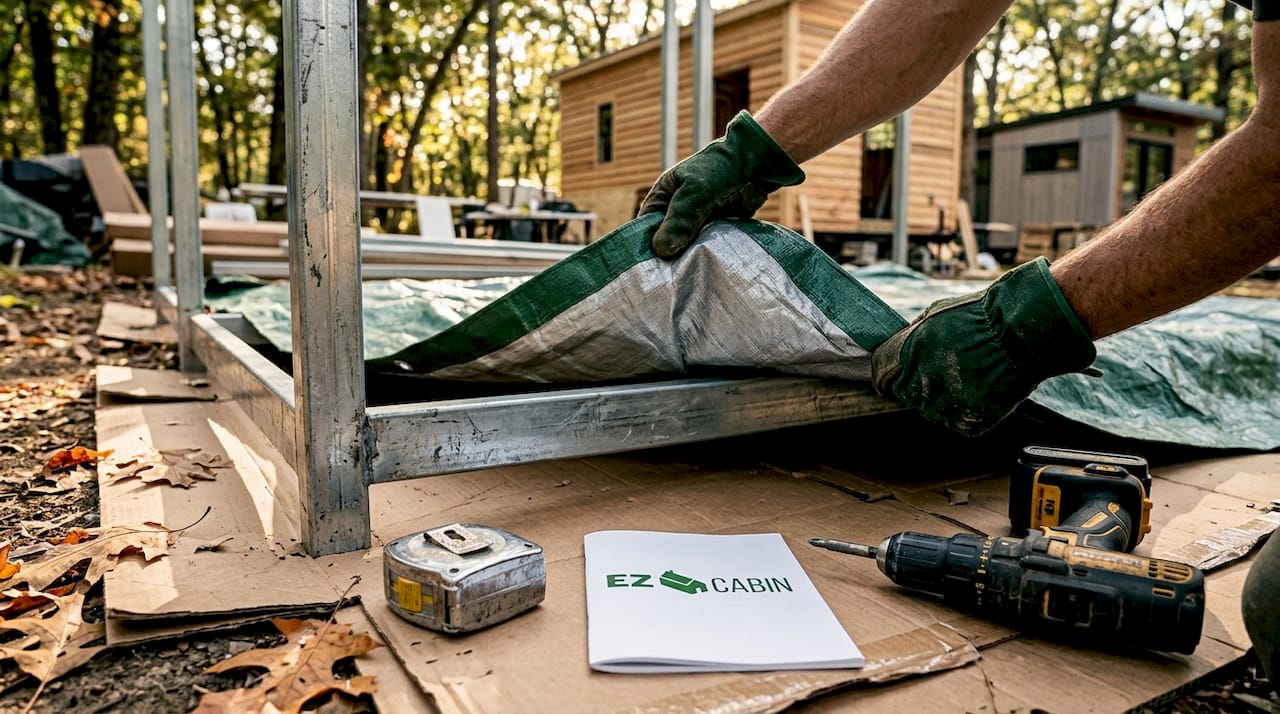
| Item | Recommended spec | Purpose |
|---|---|---|
| Steel frame kit | 14-gauge galvanized | Main structure |
| PE cover | 180g polyethylene | Weatherproofing |
| Ground anchors | Auger-style, 18 in. | Wind resistance |
| Rubber mallet | Standard | Frame assembly |
| Socket wrench set | Metric and standard | Bolt tightening |
| Level | 4 ft. minimum | Ensuring plumb frame |
| Measuring tape | 25 ft. | Layout accuracy |
| Work gloves | Heavy-duty | Hand protection |
For your site, think through these steps before you start:
- Choose level ground. Even a slight slope causes frame stress and pooling water.
- Check drainage. Water should flow away from the structure, not toward it.
- Clear overhead obstructions. Tree branches and power lines are real hazards.
- Measure your footprint. Add 2 ft. on each side beyond your vehicle or storage needs.
- Consider your surface. Gravel is ideal for drainage. Concrete works great. Bare dirt is acceptable but needs compaction.
For garage space optimization in Kentucky and Ohio, also think about sun orientation. A north-south orientation reduces heat buildup inside during summer months. And if you're comparing portable building types before committing, carports, enclosed garages, and open canopy styles all have different footprint and anchoring needs.
Pro Tip: Kentucky and Ohio both see strong spring storms with gusts over 50 mph. Use auger-style ground anchors rated for at least 500 lbs. of pull-out force. Stake every corner and add mid-span anchors on longer sides.
Safety warning: Never assemble a portable garage frame alone in windy conditions. Unsecured frame sections act like sails and can tip or collapse without warning. Always wait for calm weather and work with at least one other person.
Step-by-step: Assembling your portable garage
Assembly order matters more than most people realize. Rushing ahead or skipping steps creates alignment problems that are hard to fix once the frame is up.
- Lay out your footprint. Use stakes and string to mark the exact corners of your garage. Double-check measurements before touching the frame.
- Sort your frame parts. Lay out all poles, connectors, and hardware by type. Match them to the instruction diagram before you start connecting anything.
- Build the base frame first. Connect the bottom horizontal rails and confirm they're square using a measuring tape diagonally across corners. Both diagonal measurements should match.
- Raise the vertical uprights. Attach them to the base connectors and brace them temporarily with a helper holding each one plumb.
- Install the roof arches or ridge poles. Work from one end to the other, connecting each arch to the uprights and to each other.
- Drape and secure the cover. Start at the center and work outward. Use all included bungee loops or straps. A loose cover flaps, wears out faster, and catches wind.
- Anchor the structure. Drive ground anchors at every corner first, then add mid-span anchors. Attach the frame to anchors using the included cables or straps.
- Inspect everything. Walk the perimeter, check every bolt, tug every anchor strap, and confirm the cover is fully seated.
A common size for portable garages is 10x20 ft, which fits one full-size truck or two smaller vehicles side by side. If you're thinking about expanding garage space later, choose a kit brand that sells extension sections.
| Feature | Metal frame kit | DIY wood and tarp |
|---|---|---|
| Setup time | 4 to 8 hours | 8 to 16 hours |
| Estimated cost | $400 to $1,500 | $200 to $600 |
| Durability | 5 to 15 years | 1 to 3 years |
| Relocatable | Yes, easily | Difficult |
| Weather resistance | High (PE cover, steel) | Low to moderate |
| Permit risk | Low (non-permanent) | Varies |
For a deeper look at structure types, the shed vs. garage comparison breaks down which option fits different storage and workspace needs. And if you want to understand the full range of modular garage benefits before deciding, that resource covers customization and cost in detail.
Pro Tip: Always assemble with a partner. Beyond safety, a second set of hands cuts your build time nearly in half and prevents the frustrating experience of a frame section falling while you reach for a bolt.
Common mistakes and troubleshooting tips
Even a well-designed kit can fail if the setup is rushed or the site is wrong. These are the mistakes we see most often from Kentucky and Ohio customers.
- Poor anchoring. This is the top cause of portable garage failure. Skipping anchors or using lightweight stakes in soft soil is a recipe for wind damage.
- Uneven ground. A sloped site puts uneven stress on the frame, causes the cover to pool water, and makes doors and panels misalign.
- Skipping local permit checks. Most areas don't require permits for non-permanent structures, but some do. A quick call to your county office takes five minutes and saves a headache.
- Ignoring cover tension. A loose cover flaps in the wind, wears through at contact points, and lets water pool instead of shedding.
- Skipping seasonal maintenance. Bolts loosen over time. Covers stretch. Anchors shift in freeze-thaw cycles common in Ohio and Kentucky winters.
Improper anchoring is the leading cause of wind damage to portable garages with 14-gauge steel frames and 180g PE covers. The frame itself is strong. The weak point is almost always the connection to the ground.
For more on long-term portable garage ownership tips and financing options, that resource covers what to expect after the build. And if you're weighing different garage building options with warranty coverage, it's worth comparing before you buy.
Pro Tip: After every major storm, walk your portable garage and check the cover for tears, check every anchor strap for slack, and tighten any bolts that have worked loose. This five-minute check extends the life of your structure by years.
Weather callout: Kentucky and Ohio experience tornado watches, ice storms, and high-wind events regularly. A properly anchored portable garage handles most of these conditions. An improperly anchored one becomes a projectile hazard. Never skip the anchoring step.
What to expect: Results, maintenance, and flexibility
A well-built portable garage performs better than most people expect. With a galvanized steel frame and a quality PE cover, you're looking at a structure that sheds rain, blocks UV, and handles moderate snow loads without issue.
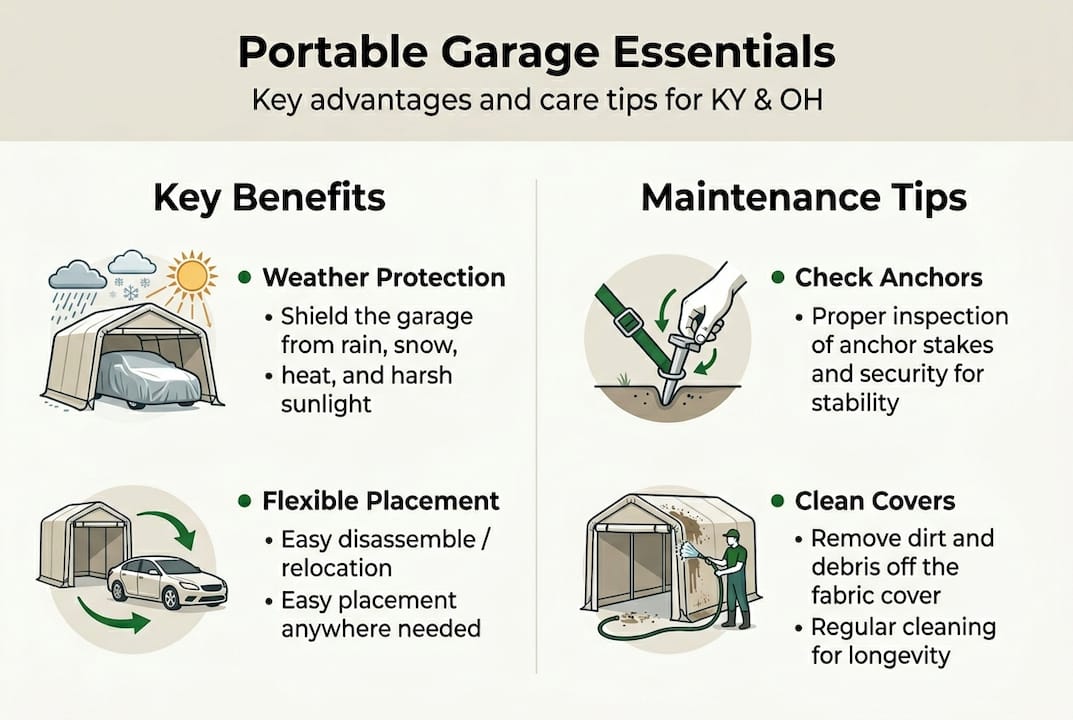
No permanent foundation is what makes portable garages the top choice for renters and frequent movers in Kentucky and Ohio. You're not locked in. If you move across the state or just want to reposition the structure on your property, disassembly takes a few hours and everything packs back into the original bags.
Here's what routine maintenance looks like:
- Clean the cover twice a year with mild soap and water to prevent mildew and UV degradation
- Tighten all bolts at the start of spring and fall, when temperature swings are most extreme
- Check anchors after any storm with winds above 30 mph
- Remove heavy snow accumulation promptly, especially wet snow that can exceed 20 lbs. per square foot
- Inspect the cover for small tears and patch them immediately before they spread
With proper care, a quality metal frame kit lasts 7 to 15 years. Basic kits with lighter covers may need a cover replacement after 3 to 5 years, but the frame often outlasts several covers. If you're curious about other portable building ideas that could complement your garage, sheds and carports pair well for expanded storage.
The real value of a portable garage isn't just the shelter it provides today. It's the fact that your investment stays useful no matter where life takes you next.
Find your perfect portable garage with EZ-Cabin
Building your own portable garage is a great option, but sometimes you want something sturdier, more customized, or simply ready to go without the weekend project. That's exactly what EZ-Cabin offers Kentucky and Ohio residents.

At EZ-Cabin, you can build your own portable garage using our AI-powered design tool, choosing your size, color, doors, and upgrades in real time before you buy. If financing is a concern, our portable garage financing program requires no credit check and only your first month's payment to get started. Most buildings are delivered within 1 to 4 weeks. Ready to move forward? Secure your building today and get covered storage without the wait, the hassle, or the hidden fees.
Frequently asked questions
Are permits required for portable garages in Kentucky and Ohio?
Most localities do not require permits for non-permanent structures under a certain square footage, but rules vary by city and county. Always call your local office before you build to confirm.
How long does it take to assemble a portable garage kit?
Most pre-fabricated kits can be assembled in one day by two adults using basic hand tools. Larger kits or complex sites may take a full weekend.
What weather conditions can a portable garage withstand?
Quality portable garages with 14-gauge steel frames and 180g PE covers handle most Kentucky and Ohio weather well, but proper anchoring is what separates a safe structure from a wind hazard.
Can I relocate or reuse my portable garage if I move?
Yes. Because there is no permanent foundation, most portable garages disassemble in a few hours and can be rebuilt at a new location without any special equipment.
Is a portable garage secure for long-term storage?
With proper anchoring and routine maintenance, a portable garage with 14-gauge steel frames and quality PE covers can protect vehicles and equipment safely for many years.