

TL;DR:
- Downsizing offers lower costs, maintenance, and environmental benefits, improving quality of life.
- Options include tiny homes, cabins, and shed conversions with varying costs and timelines.
- Legal permits depend on structure size and placement, requiring proper zoning and utility approvals.
Thinking about downsizing often brings up two fears: giving up comfort and spending more than expected. Both are myths worth busting right now. A converted shed home in Kentucky can run around $70,000 for 480 square feet, while tiny homes nationally cost $30,000 to $150,000 depending on size and finish. Kentucky and Ohio homeowners have more options than ever, from portable cabins to shed conversions to modular tiny homes. This guide walks you through every major path, what each costs, what the law requires, and how to budget smartly so you can make a confident move without second-guessing yourself.
Table of Contents
- Why downsize? Benefits and common misconceptions
- Downsizing options: Tiny homes, cabins, and shed conversions
- Legal, zoning, and permit essentials in Kentucky and Ohio
- Budgeting and real costs: What homeowners should expect
- A fresh take: Why downsizing is more about freedom than square footage
- Ready to downsize? Find your ideal solution easily
- Frequently asked questions
Key Takeaways
| Point | Details |
|---|---|
| Wide range of options | KY and OH homeowners can downsize with tiny homes, cabins, and shed conversions at multiple price points. |
| Understand legal rules | Permits, local codes, and foundation needs differ by structure and location—always check county rules first. |
| Real cost savings | Downsized homes offer up to 80% lower utility bills and new affordability in taxes and insurance. |
| Plan your budget | Expect upfront costs from $15,000 to $350,000 depending on choice and always add 10-15% for contingencies. |
| Lifestyle upgrade | Many homeowners report greater flexibility, lower stress, and more financial security after downsizing. |
Why downsize? Benefits and common misconceptions
With the stage set, let's explore why so many Kentucky and Ohio homeowners are choosing to downsize. The motivations are real and practical, not just trendy.
Here are the most common reasons people make the switch:
- Lower monthly costs: Smaller homes mean smaller utility bills, lower property taxes, and cheaper insurance premiums.
- Less maintenance: A 400 sq ft cabin takes a fraction of the time and money to maintain compared to a 2,000 sq ft house.
- Environmental benefits: Smaller spaces use less energy and generate less waste, which matters to a growing number of homeowners.
- Simpler lifestyle: Less space means fewer things to manage, clean, and repair.
- Financial flexibility: Freed-up equity or savings can fund travel, retirement, or other priorities.
One of the biggest fears people have is that downsizing means cramped, uncomfortable living. That's not the case. A well-designed 600 sq ft cabin with an open floor plan, smart storage, and quality finishes can feel more livable than a poorly laid out 1,500 sq ft house. Customizable cabins prove this point every day, with buyers choosing layouts that fit their actual routines rather than defaulting to oversized spaces they rarely use.
The numbers back it up too. Utilities can run 80% less in a tiny home compared to a standard house, and lower property taxes make the ongoing savings even more significant. Insurance costs drop as well, especially for portable structures.
"The hardest part of downsizing wasn't the space. It was letting go of the idea that bigger automatically means better." — Kentucky homeowner who converted a 2,250 sq ft log cabin lifestyle to a compact cabin setup.
Pro Tip: Before you worry about square footage, list the five rooms or spaces you actually use every day. Most people discover they live in about 40% of their current home.
Exploring portable building options early in the process helps you see what's possible before committing to any one path.
Downsizing options: Tiny homes, cabins, and shed conversions
Now that you know the benefits, let's break down your main options for downsizing. Each path has a different cost structure, timeline, and set of requirements.
| Option | Typical size | Estimated cost | Move-in speed |
|---|---|---|---|
| DIY tiny home | 100-400 sq ft | $30,000-$60,000 | 6-18 months |
| Modular/ADU tiny home | 300-600 sq ft | $80,000-$350,000 | 2-6 months |
| Portable cabin | 200-800 sq ft | $15,000-$80,000 | 1-4 weeks |
| Shed conversion | 120-480 sq ft | $20,000-$70,000 | 2-8 weeks |
One real-world example: a Tuff Shed converted to a tiny home in Kentucky cost $70,000 for 480 sq ft, while modular ADUs run $80,000 to $350,000 and portable cabins can start as low as $15,000. The right choice depends on your budget, land situation, and how fast you need to move.
Here's a quick numbered guide to picking the right type:
- Set your budget first. Know your ceiling before falling in love with a specific option.
- Check your land. Do you own property in Kentucky or Ohio already? That changes everything.
- Decide on permanence. Do you want a foundation or a portable structure you can relocate?
- Consider timeline. Portable cabins arrive in weeks; modular builds take months.
- Think about customization. If layout matters a lot to you, look at options with design flexibility built in.
Pro Tip: Affordable shed solutions are often overlooked as living spaces, but a well-insulated, finished shed with plumbing and electrical can rival a purpose-built tiny home at a fraction of the price.
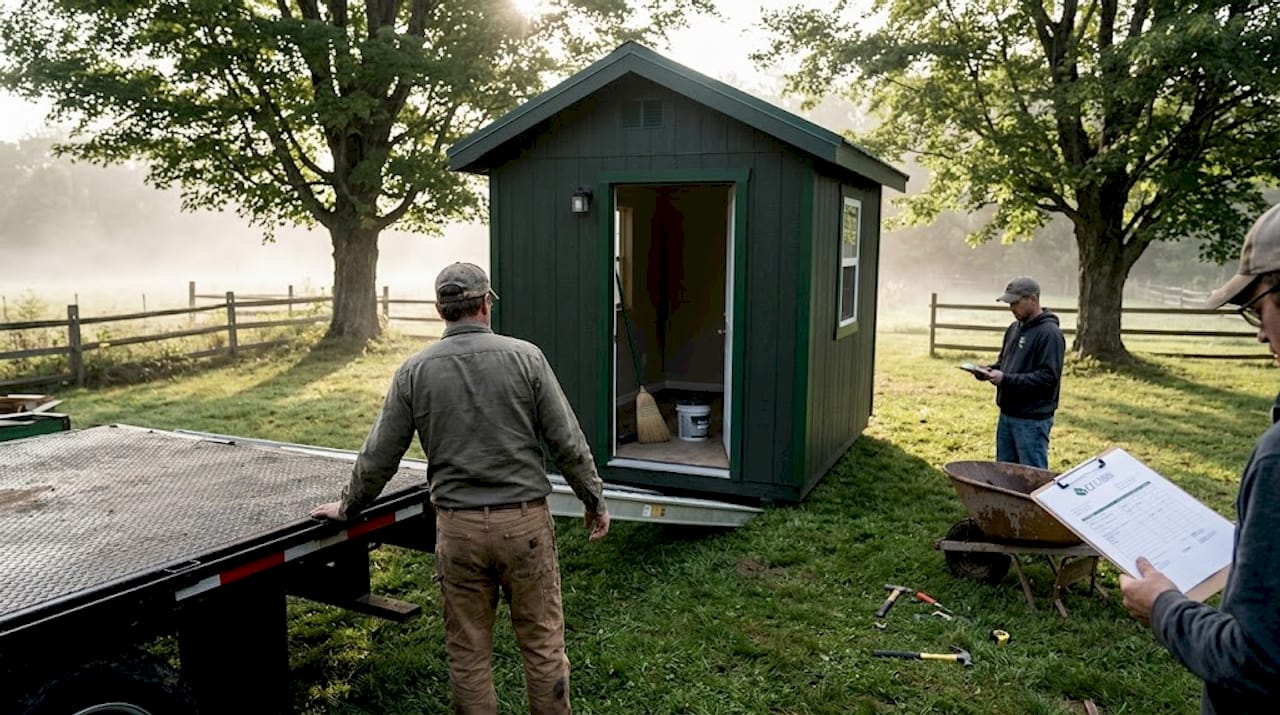
If speed matters, delivered cabin and shed options are hard to beat. Most portable buildings land on your property within one to four weeks of purchase.
Legal, zoning, and permit essentials in Kentucky and Ohio
Selecting a type is just the start. You'll need to consider key legal requirements next. This is where many buyers get tripped up, and a little preparation saves a lot of headaches.
Here's a breakdown of what typically applies in Kentucky and Ohio:
| Structure type | Typical permit requirement | Foundation needed? | Code category |
|---|---|---|---|
| Shed under 120-200 sq ft | Often none | No | Accessory structure |
| Tiny home on foundation | Yes, building permit | Yes | Residential dwelling |
| Tiny home on wheels | Varies, often RV code | No | RV or vehicle |
| ADU/modular cabin | Yes, full permit | Yes | Residential/ADU |
Structures under 120 to 200 sq ft often require no permit, but the moment you add plumbing, electrical, or plan to sleep in it full time, local codes usually kick in. Whether your structure sits on a foundation or wheels is a critical distinction. Foundation-based homes fall under residential building codes, which means inspections, setback rules, and utility hookups. Wheel-based structures often fall under RV regulations, which have different insurance and financing implications.
Key points to check before you buy:
- Zoning classification: Is your land zoned for residential use, agricultural, or mixed? Each allows different structures.
- Setback requirements: Most counties require structures to sit a minimum distance from property lines.
- Utility connections: Hooking up water, sewer, and electric often requires separate permits.
- HOA rules: If your property is in a planned community, HOA rules may restrict tiny homes or sheds used as dwellings.
Always call your county zoning office before purchasing. A five-minute phone call can save you from buying a structure you can't legally place on your land.
For those considering a workspace or hobby space rather than a full dwelling, choosing a home office shed often comes with fewer regulatory hurdles than a full residential conversion. And if you're in Ohio, reviewing tiny home insurance in Ohio early helps you understand coverage options before you commit to a structure type.
Budgeting and real costs: What homeowners should expect
Legal rules inform your choices, but costs drive them. Let's clarify what to budget for so there are no surprises after you sign anything.
Here's a realistic breakdown of what you'll spend:
- Portable cabin: $15,000 to $80,000 depending on size and finish
- Shed conversion: $20,000 to $70,000 including insulation, plumbing, and electrical
- Modular tiny home: $80,000 to $350,000 with full foundation and utilities
- Foundation and utility hookups: Add $8,000 to $25,000 on top of the structure cost
- Insurance: Often $400 to $1,000 per year in Ohio for a tiny home or cabin
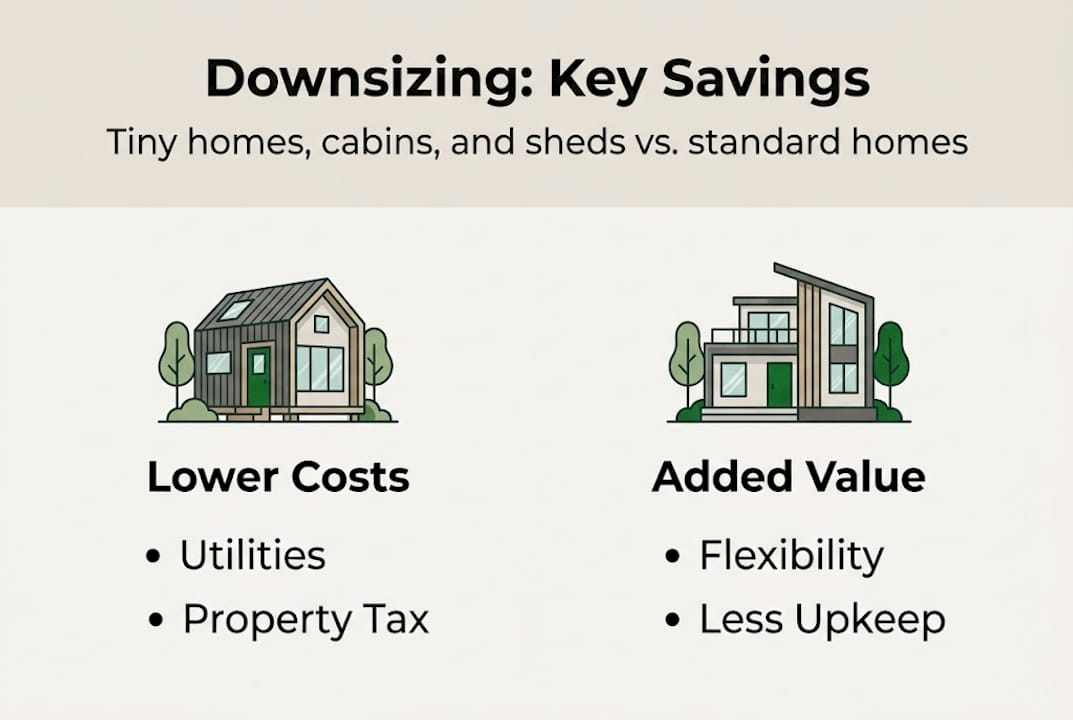
The ongoing savings are where the real story lives. Utilities can cost 80% less in a smaller home, and property taxes drop significantly when your assessed value is lower. Insurance is cheaper too, especially for portable or wheel-based structures.
Financing works differently here than with a traditional home. Standard mortgages are rarely available for tiny homes or portable cabins. Most buyers use personal loans or RV loans, which have shorter terms but faster approval. This is actually an advantage for buyers who want to avoid long-term debt.
Pro Tip: Always budget a 10 to 15% contingency on top of your total project estimate. Unexpected costs like grading, septic installation, or permit fees catch people off guard more often than not.
Reviewing building types and costs side by side helps you see where your dollar goes furthest. And if you're weighing the long-term value, understanding affordable cabin investments in Kentucky and Ohio shows how these structures hold and even gain value over time. You can also explore cabin value in Kentucky and Ohio to see how resale and rental potential factor into the decision.
A fresh take: Why downsizing is more about freedom than square footage
You've seen the practicals. Now here's the mindset shift that changes everything.
Most people approach downsizing by asking, "What will I give up?" That's the wrong question. The right one is, "What will I gain?" A Kentucky couple who cut their home size in half reported gaining flexibility, lower stress, and a greater sense of peace. Not because the home was smaller, but because the burden was lighter.
We've seen this pattern repeat across Kentucky and Ohio. The homeowners who thrive after downsizing are not the ones who found the cheapest option. They're the ones who stopped measuring success in square feet and started measuring it in free weekends, lower bills, and the ability to make choices without financial pressure.
The real gains from downsizing are control and time. Less upkeep means more weekends doing what you actually enjoy. Lower costs mean more financial breathing room. A well-chosen tiny cabin is not a compromise. It's a deliberate trade of excess space for a life that fits better.
That's a trade worth making.
Ready to downsize? Find your ideal solution easily
If you're inspired to take action, here's how to find affordable downsizing solutions right in Kentucky and Ohio.
At EZ-Cabin, we make the process straightforward. You can build your own tiny home using our AI-powered customization tool, adjusting layouts, colors, windows, and upgrades in real time before you buy. No dealership friction, no hidden fees. Our affordable financing options require no credit check and only the first month's payment to get started. If you'd rather see buildings in person, visit our locations in London or Somerset, KY. Or browse our full selection of rent-to-own cabins and sheds online and get delivery scheduled within one to four weeks.
Frequently asked questions
How much does it typically cost to downsize to a tiny home or cabin in Kentucky or Ohio?
Tiny homes range from $30,000 to $150,000, while ADUs and modular cabins with foundation and customization typically run $80,000 to $350,000. Portable cabins can start as low as $15,000 depending on size and finish.
Do I need a permit to build a shed or tiny home for living in KY or OH?
In many areas, structures under 120 to 200 sq ft may not require a permit, but larger homes and most ADUs need permits and foundation compliance to qualify as legal dwellings.
What are ongoing costs like for utilities and insurance compared to a standard home?
Utilities can be 80% less expensive in a tiny home, and insurance in Ohio often runs just $400 to $1,000 per year, making ongoing costs dramatically lower than a traditional house.
What financing options are most common for sheds, cabins, and tiny homes?
Personal loans and RV loans are the most common paths since standard mortgages are rarely available for small or portable structures. Both options tend to have faster approval timelines than traditional home loans.