

TL;DR:
- Converting garages into purpose-built studios offers significant cost savings, utilizing existing structures and foundations.
- Proper planning of zoning, permits, and construction ensures legal compliance, enhancing home value and ROI.
If you need extra space for a creative project or home office but dread the cost of a full addition, the benefits of garage studios are worth serious attention. Kentucky and Ohio homeowners are increasingly converting underused garages into purpose-built workspaces, recording rooms, and art studios — at a fraction of the cost of traditional construction. The appeal is simple: the foundation and roof are already there, the footprint fits most residential lots, and the result is a dedicated space that does not compete with your living room. This article walks through every key factor, from zoning rules to return on investment, so you can decide whether a garage studio makes sense for your situation.
Table of Contents
- Key criteria for evaluating garage studios
- Affordability and cost savings of garage studios
- Enhanced creative workflow and customized studio performance
- Home value increase and return on investment from garage studios
- Comparing garage studios with other home space solutions
- Why treating your garage studio as a full buildout unlocks the main benefits
- Explore customizable garage studios with EZ Cabin's BuildYourOwn platform
- Frequently asked questions
Key criteria for evaluating garage studios
Before you pick a paint color or order acoustic panels, you need to understand the rules that govern garage conversions in your specific area. Skipping this step is the single most common reason projects stall or cost far more than budgeted.
In Lexington-Fayette County, garage-to-ADU conversions are permitted under local zoning with conditions including owner-occupancy requirements and size limits, typically capped around 800 square feet. Ohio imposes its own set of requirements: garage conversions must meet energy, electrical, and egress standards including insulation minimums, GFCI/AFCI outlets, and off-street parking preservation.
Understanding the different garage types in Kentucky and Ohio helps you determine which structures qualify for conversion under local codes. And if your current garage is cramped, knowing how to optimize your Kentucky and Ohio garage space first can clarify whether conversion or expansion makes more sense.
Key criteria to evaluate before starting:
- Zoning classification: Confirm your property is zoned for the intended use (residential studio, ADU, or workshop).
- Permit requirements: Most structural and electrical changes require a building permit, which affects both timeline and budget.
- Egress compliance: Ohio and many Kentucky jurisdictions require windows or doors that meet minimum egress dimensions for habitable rooms.
- Parking preservation: Converting a garage cannot violate minimum off-street parking requirements set by local ordinance.
- Owner-occupancy rules: Some ADU designations require the property owner to live on-site.
Early planning here is not just bureaucratic box-checking. Catching a zoning conflict before breaking ground saves weeks of redesign and thousands in wasted materials.
Now that you know what criteria matter, let's explore the specific benefits garage studios offer.
Affordability and cost savings of garage studios
The garage studio benefits start with the math, and the math is compelling. Because you are reusing an existing foundation and roof, you avoid two of the largest line items in any construction project. Garage conversions cost up to 60% less per square foot than new home additions precisely because of this structural reuse.
The actual numbers vary by scope. Budgets typically range from $6,000 for a basic studio finish to $50,000 or more for a full ADU with a kitchen and bathroom. A podcaster who needs insulation, drywall, lighting, and a mini-split HVAC unit can realistically complete a quality space for $15,000 to $25,000, depending on local labor rates in Ohio or Kentucky.
The biggest cost drivers to plan around:
- Plumbing rough-in: Adding a sink or bathroom can add $5,000 to $15,000 to the budget.
- HVAC installation: A mini-split system suitable for a 400 to 600 square foot studio runs $2,500 to $5,000 installed.
- Electrical panel upgrade: Older garages often need a subpanel to support studio equipment loads.
- Permitting fees: These vary by county but typically run $500 to $2,000 in Kentucky and Ohio markets.
For a more detailed project planning framework, the garage addition guide for KY and OH covers phase-by-phase cost management specific to this region.
Pro Tip: Get three bids from licensed contractors before committing to any scope. In smaller Ohio and Kentucky markets, labor rates vary more than you might expect, and a second bid can save 15% to 20% on the same project.
With cost savings clear, let's see how garage studios benefit your creative workflow and lifestyle.
Enhanced creative workflow and customized studio performance
A garage studio is not just a cheaper room. When designed intentionally, it performs at a level that genuinely improves the quality of your work. That distinction matters more than most people realize until they have tried to record audio in a spare bedroom next to a furnace closet.
Purpose-built studios require acoustic treatment and soundproofing to deliver consistent broadcast-quality audio and video, which DIY bedroom setups simply cannot replicate reliably. The garage studio advantages here include better wall mass, the ability to decouple the structure from living area noise, and more freedom to mount acoustic panels without worrying about resale appeal.
Beyond sound, a dedicated garage studio gives you environmental control. Planning your HVAC, insulation, and vapor barrier during the initial buildout stabilizes temperature and humidity year-round. In Kentucky's humid summers and Ohio's frigid winters, that stability protects equipment and keeps recording sessions consistent.
Key performance upgrades to plan from day one:
- Acoustic decoupling: Use resilient channels or staggered stud walls to reduce sound transmission between the studio and the main house.
- Vapor barrier installation: Critical in both Ohio and Kentucky climates to prevent condensation damage to equipment and flooring.
- Dedicated electrical circuits: Studio gear benefits from circuits isolated from household loads to reduce hum and interference.
- Natural light control: Garage spaces often allow for blackout-capable windows that standard bedrooms do not.
To understand whether expanding your existing garage is a better first step, the guide on how to expand your garage outlines structural options worth exploring before committing to a full interior conversion.
Pro Tip: Plan your cable runs before the drywall goes up. Retrofitting conduit through finished walls in a studio space costs three to four times more than rough-in during construction.
Next, let's examine the impact of garage studio conversions on home value and resale potential.
Home value increase and return on investment from garage studios
The financial case for garage studios goes beyond monthly savings on studio rental fees. A well-executed, permitted conversion can add real equity to your property. Permitted garage conversions typically increase home value by 10% to 30%, with most homeowners recovering 60% to 80% of construction costs at resale.
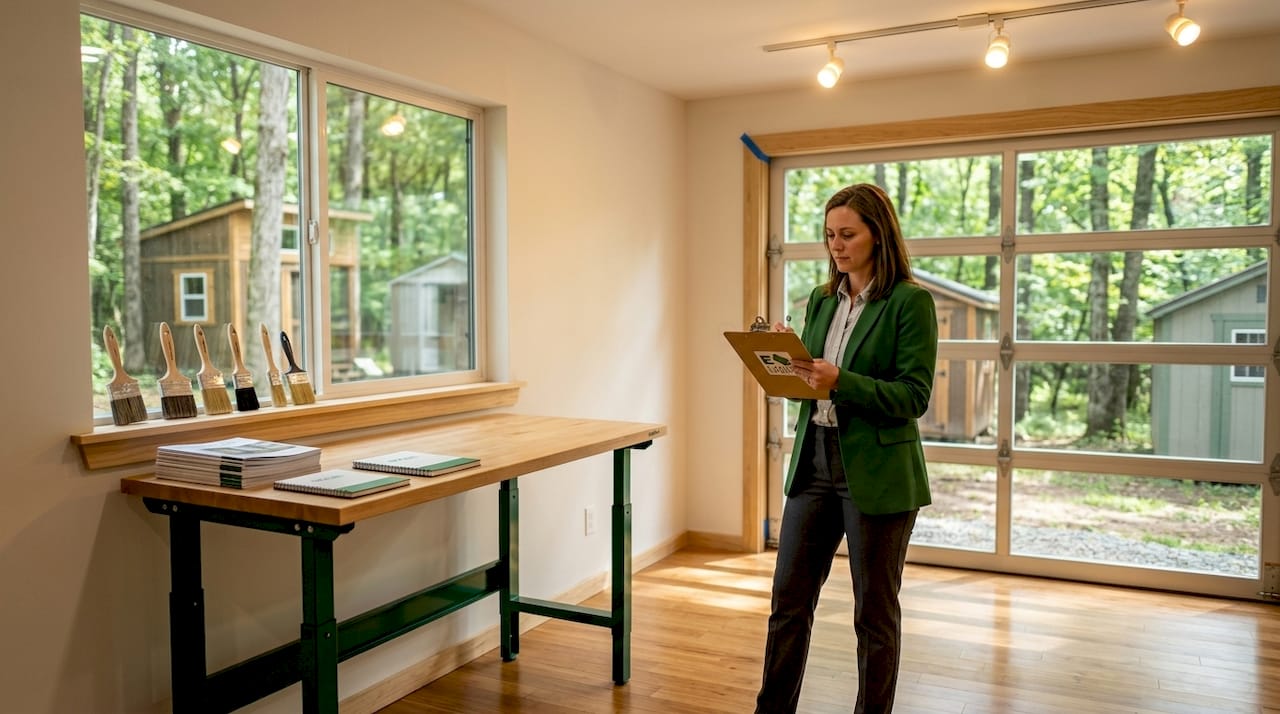
The Ohio market adds a wrinkle worth knowing. Living-space conversions in Ohio carry an estimated 45% to 60% ROI, but suburban buyers often expect some garage parking to remain. Converting a two-car garage entirely to studio space can actually reduce buyer pool size in certain Ohio suburbs.
| Approach | Estimated ROI | Buyer appeal | Best for |
|---|---|---|---|
| Full ADU conversion | 60%–80% | Strong in urban/college towns | Rental income, long-term use |
| Studio only (no bath) | 50%–65% | Moderate | Creatives, home offices |
| Partial conversion (keep 1 bay) | 55%–70% | High in suburban markets | Resale flexibility |
| Workshop/utility studio | 40%–55% | Variable | Hobbyists, tradespeople |
A smart approach in many Kentucky and Ohio markets is a partial conversion that retains one garage bay for parking while converting the rest to studio use. You preserve suburban buyer expectations while still gaining the dedicated workspace. For information on how to finance the project without traditional credit approval hurdles, the garage ownership financing options guide is worth reading before approaching a lender.
Understanding the financial benefits, let's compare garage studios to other space options so you can decide what suits you best.
Comparing garage studios with other home space solutions
The advantages of garage studios become clearest when you set them side by side with alternatives. Each option has its place, but the trade-offs are significant.
Garage-to-studio conversions reuse existing structures for major cost and time savings compared to new construction. A new home addition of comparable square footage typically takes four to six months and costs two to three times more. A garage studio conversion can reach a functional finish in six to twelve weeks with the right contractor.
| Option | Average cost | Time to complete | Permanence | Customization |
|---|---|---|---|---|
| Garage studio conversion | $15,000–$50,000 | 6–12 weeks | High | High |
| New home addition | $40,000–$100,000+ | 4–6 months | High | High |
| Portable building | $5,000–$20,000 | 1–4 weeks | Medium | Medium |
| DIY spare room | $2,000–$8,000 | Variable | Low | Low |
Portable garages and studios offer a genuine budget alternative, especially when zoning or budget rules out a conversion. The trade-off is that acoustic performance and HVAC integration typically fall short of a properly built garage studio.
DIY room conversions, while cheap upfront, tend to accumulate ongoing costs. Poor acoustic treatment means equipment purchases to compensate. Poor climate control means humidity damage. A step-by-step DIY improvement framework can help with finish work, but the structural performance of a garage studio is difficult to replicate without professional involvement.
Key reasons garage studios win the comparison for most creatives and homeowners:
- They add permanent property value that portable buildings do not.
- They support full professional-grade buildouts that DIY rooms cannot match.
- They qualify for permitted ADU status in many Kentucky and Ohio jurisdictions, unlocking rental income potential.
- They offer more design flexibility than any other existing-structure option on your property.
With these comparisons, you are better equipped to make the right decision. Let's add expert perspective for deeper clarity.
Why treating your garage studio as a full buildout unlocks the main benefits
Here is something most garage studio articles will not tell you directly: the difference between a project that delivers real, lasting value and one that becomes a money pit is almost never the design choices. It is whether the owner treated it as a full buildout from day one or as a "finishing job."
When you treat a garage conversion as cosmetic, meaning new flooring, a coat of paint, and some plug-in lights, you will eventually spend money twice. You will renovate now and then again when you discover the moisture problem behind the drywall, the missing egress window that a buyer's inspector flags, or the substandard insulation that makes the space unusable in July.
The biggest benefits come from treating garage studios as fully compliant habitable rooms with ADU permits rather than cosmetic finishes. That framing changes which contractors you hire, which inspections you schedule, and which upgrades you prioritize. It is also what qualifies the space for legal rental income in places like Lexington.
Equally important is sequencing. Separating zoning and permitting decisions from studio design choices early in the project prevents the most common and expensive delays. Creatives often want to jump straight to acoustic treatment and gear setup. The professionals who get the best outcomes nail the zoning approval and permit scope first, then let the studio design follow.
If your situation involves converting a smaller structure rather than a full garage, the shed to tiny home conversion guide for KY and OH covers the same permitting-first philosophy for alternative structures.
The return on a garage studio, both financially and creatively, scales directly with how seriously you treat the buildout. Half measures produce half results.
Explore customizable garage studios with EZ Cabin's BuildYourOwn platform
If you are a Kentucky or Ohio homeowner ready to move from planning to building, EZ Cabin makes the process straightforward. You can design your ideal garage studio using the BuildYourOwn customization platform, which lets you adjust layouts, windows, doors, exterior colors, and functional upgrades in real time before you commit to anything.

Financing is not a barrier here. EZ Cabin offers flexible rent-to-own financing with guaranteed approval and no credit check required. You only need the first month's payment to get started, and most buildings deliver within one to four weeks. For those who prefer to see structures in person before deciding, EZ Cabin has physical locations in Kentucky and Ohio where you can walk through options with knowledgeable staff. Whether you shop online or visit a location, the process is built to get you into your studio without unnecessary friction.
Frequently asked questions
Can I convert my garage into a legal living or creative space in Lexington, KY?
Yes, Lexington allows garage-to-ADU conversions up to 800 square feet with owner-occupancy and permit compliance, including minimum ceiling height and egress window requirements.
What building code upgrades are required for garage conversions in Ohio?
Ohio requires ceiling heights of at least 7 feet, egress windows or doors for bedrooms, improved insulation, electrical upgrades such as GFCI/AFCI circuits, and maintaining minimum off-street parking compliance.
How much can a garage studio conversion add to my home's value?
A well-executed, permitted conversion can increase home value by 10% to 30% and typically recoup 60% to 80% of construction costs at resale, depending on your local market.
What are the main benefits of building a garage studio versus a DIY creative space?
Garage studios deliver professional soundproofing and acoustic treatment along with climate control that DIY bedroom or spare room setups cannot consistently match, resulting in fewer technical problems and better output quality.
Are there financing options available for garage studio construction in Kentucky and Ohio?
Yes, homeowners can use home equity loans, construction loans, or rent-to-own plans with no credit check required, such as those offered by EZ Cabin, to finance a garage studio project without traditional approval hurdles.