
TL;DR:
- Portable buildings in Kentucky and Ohio are affordable, costing as little as $9,000 compared to traditional homes over $500,000.
- They are constructed in controlled environments, reducing costs and eliminating the need for land or permanent foundations.
- Flexible financing options like rent-to-own make ownership accessible without perfect credit, allowing for investment and potential rental income.
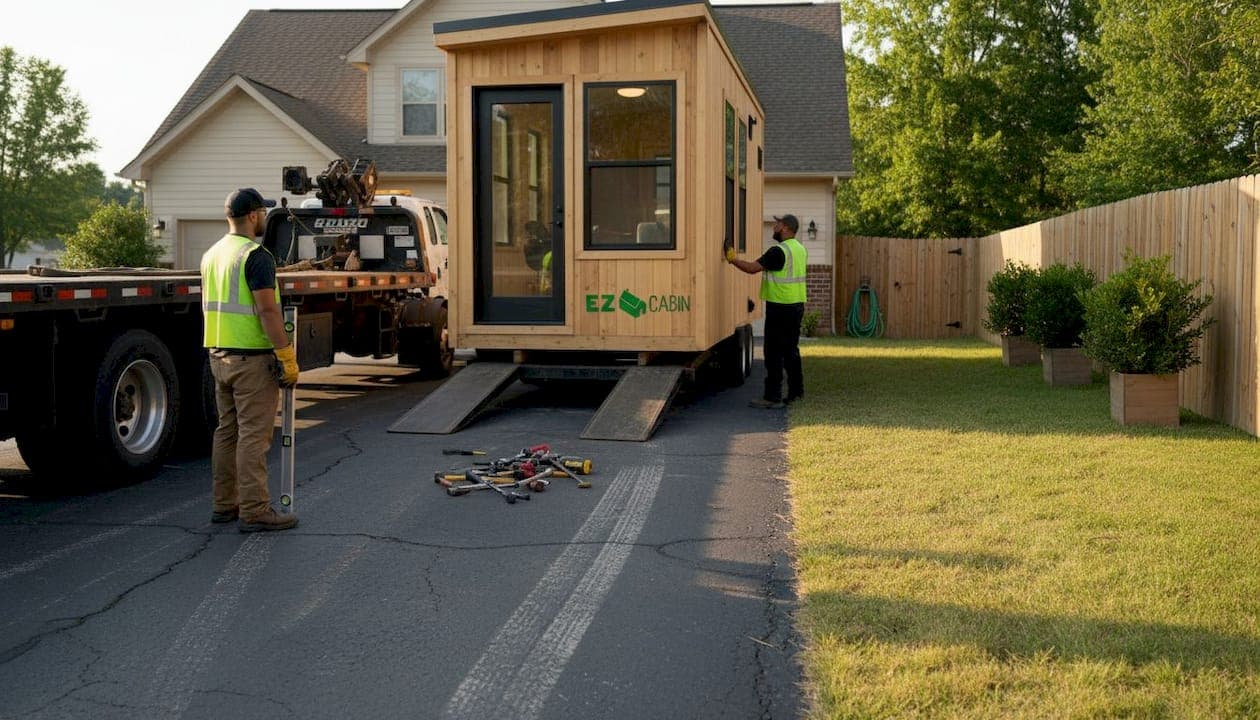
Portable buildings in Kentucky and Ohio are turning heads for a simple reason: a quality cabin, shed, or tiny home can cost as little as $9,000, while the average site-built home in the region tops $500,000. That gap is staggering, yet many buyers still assume portable buildings are flimsy, limited, or hard to finance. They are none of those things. This guide breaks down real costs, compares your options honestly, and shows you how flexible financing makes ownership possible even without perfect credit. If you are a homebuyer, investor, or someone just tired of paying rent with nothing to show for it, keep reading.
Table of Contents
- What makes portable buildings affordable?
- Comparing options: Portable buildings vs. renting and traditional homes
- Customization choices that keep costs in check
- How flexible financing expands affordability
- Our perspective: What most affordability guides miss
- Find your affordable building with EZ-Cabin
- Frequently asked questions
Key Takeaways
| Point | Details |
|---|---|
| Substantial cost savings | Portable buildings cost a fraction of site-built homes in Kentucky and Ohio. |
| Accessible ownership options | Flexible financing makes it possible to own without high upfront cost or credit requirements. |
| Customizable for any use | Buyers can tailor sheds, cabins, and tiny homes for personal or investment goals without breaking the bank. |
| Equity beats rent | Monthly payments build ownership and long-term value, unlike rent. |
What makes portable buildings affordable?
The price difference between a portable building and a traditional home is not a fluke. It comes down to how these structures are built, sourced, and delivered.
Portable buildings are constructed in controlled factory or shop environments where material waste is minimized and labor is specialized. There is no weather delay, no on-site crew waiting around, and no expensive general contractor markup. Builders order materials in bulk, which drives down per-unit costs significantly. That savings gets passed directly to you.
Land is another factor. Site-built homes require a permanent foundation and often include land costs in the purchase price. Portable buildings do not. You place them on your existing property, a rented lot, or land you already own. That alone removes tens of thousands of dollars from the equation.
Here is a look at typical price ranges across common structure types:
| Structure type | Typical price range |
|---|---|
| Basic storage shed | $9,000 to $15,000 |
| Cabin or lofted building | $18,000 to $35,000 |
| Garage or workshop | $20,000 to $45,000 |
| Tiny home or livable unit | $30,000 to $50,000 |
| Manufactured home | ~$112,000 |
| Site-built home | $500,000+ |
As you can see, portable buildings in KY and OH offer a dramatically lower entry point than any traditional housing option. You can explore the full range of affordable portable building options to see what fits your budget and goals.
Key reasons portable buildings stay affordable:
- Factory-direct construction cuts out middlemen
- No permanent foundation required
- Shorter build times reduce labor costs
- Modular designs reduce material waste
- Delivery is included in most purchase agreements
Pro Tip: Customization is one of the biggest variables in final cost. Prioritize functional upgrades like insulation, electrical, and windows before cosmetic additions. For more on how smart choices pay off, read these customizable cabins insights before you finalize your order.
Comparing options: Portable buildings vs. renting and traditional homes
Once you understand what drives the price of portable buildings, the next logical question is: how do they actually compare to renting or buying a conventional home?
The answer might surprise you. Kentucky rent averages $1,000 to $1,400 per month depending on the area. That is $12,000 to $16,800 per year, and every dollar of it goes to your landlord. You build zero equity. A portable building, financed through a rent-to-own program, can run $300 to $600 per month and puts you on a path to full ownership.
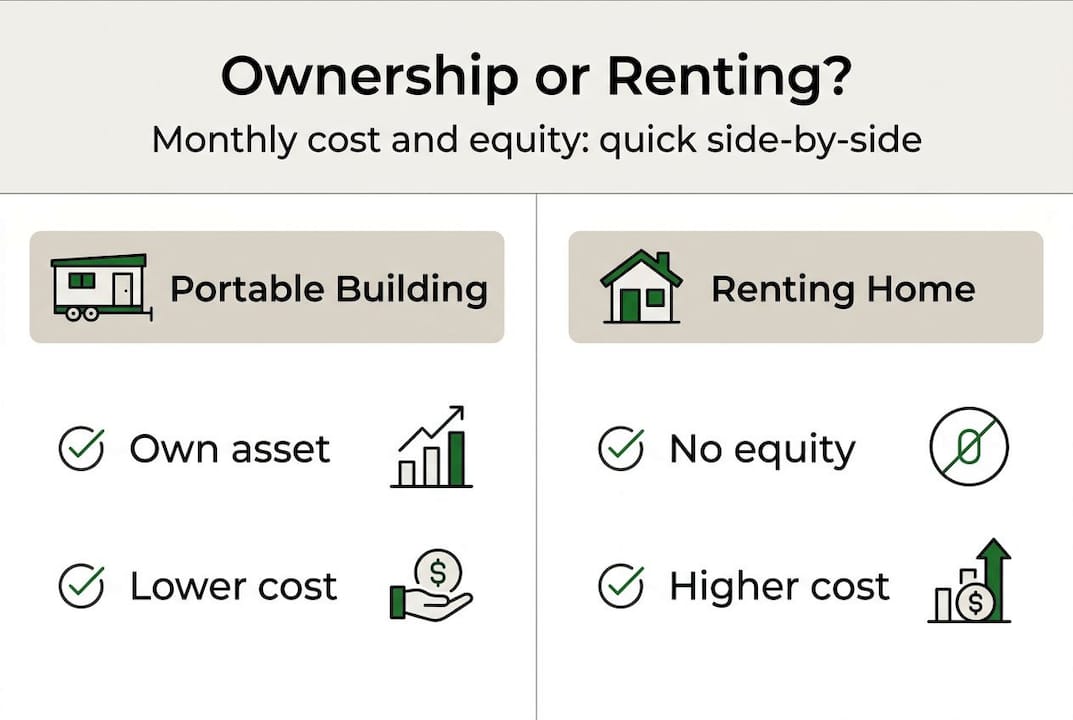
| Option | Monthly cost | Equity built | Flexibility |
|---|---|---|---|
| Renting an apartment | $1,000 to $1,400 | None | Low (lease terms) |
| Site-built home mortgage | $2,000 to $3,500 | Yes, slowly | Low (fixed location) |
| Portable building (financed) | $300 to $600 | Yes | High (can relocate) |
| Portable building (paid off) | $0 | Full ownership | Maximum |
The flexibility angle is often overlooked. A portable building can be moved if you relocate, repurposed as a rental unit, or expanded over time. A traditional home cannot do any of that.
Here is a simple process for evaluating which option fits your situation best:
- Add up your current monthly rent or mortgage payment for the next five years.
- Compare that total to the full purchase price of a portable building in your size range.
- Factor in any equity you would build through ownership.
- Consider secondary uses: rental income, home office, guest space, or storage.
- Check whether flexible financing eliminates any upfront barrier you currently face.
For buyers thinking about livable structures, reviewing tiny home conversion costs and the full livable sheds guide will give you a clear picture of what full-time or part-time living actually costs in these structures.
Key insight: Over five years of renting at $1,200 per month, you spend $72,000 and own nothing. A $30,000 portable building financed over the same period costs less and leaves you with a paid-off asset.
Customization choices that keep costs in check
Customization is one of the most exciting parts of buying a portable building. It is also where budgets can quietly balloon if you are not paying attention.
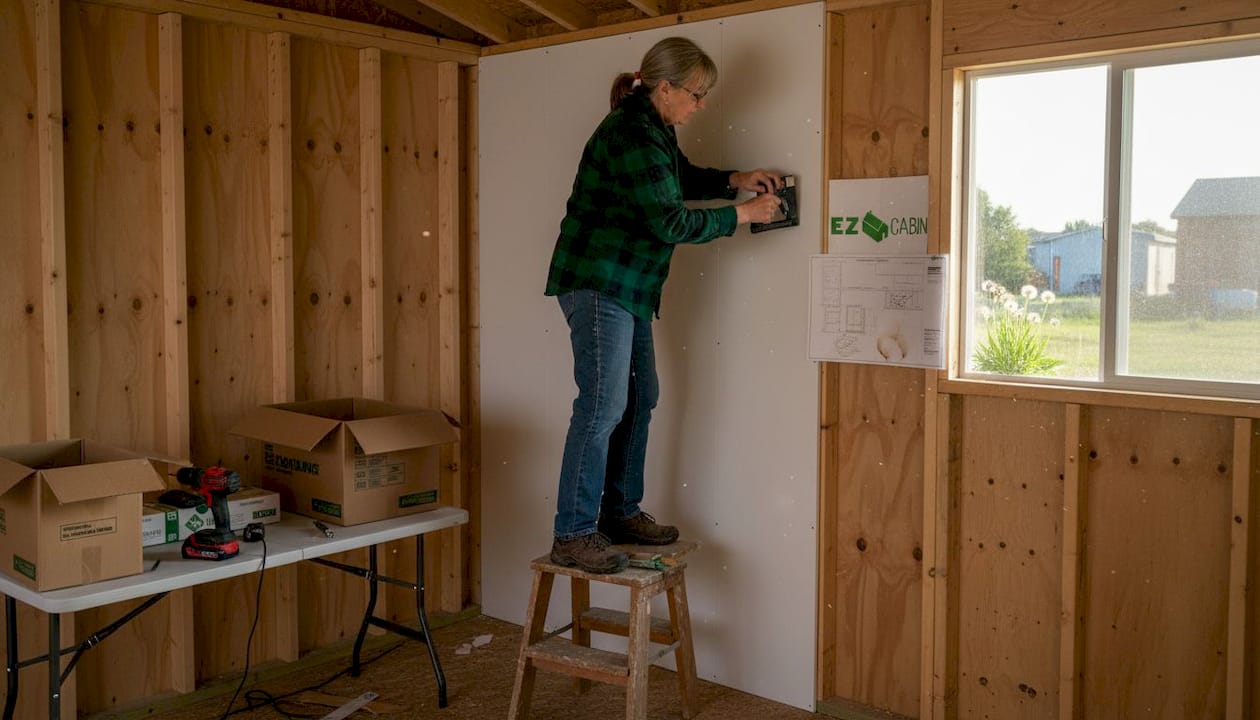
The good news is that smart customization does not have to mean expensive customization. Buyers who select only essential upgrades consistently keep their total spend well below the cost of a new manufactured home, while still getting a building that works exactly the way they need it to.
The key is separating must-haves from nice-to-haves before you start adding options.
Cost-effective upgrades worth prioritizing:
- Insulation packages: Critical for year-round comfort and energy savings in Kentucky and Ohio winters
- Electrical rough-in: Far cheaper to add during construction than after delivery
- Loft additions: Maximize square footage without increasing the footprint
- Extra windows or skylights: Improve natural light and ventilation at a low cost
- Treated wood flooring: Durable and easy to maintain over the long term
Common pitfalls to avoid:
- High-end exterior finishes that add cost but not function
- Oversized doors or custom hardware that inflate the price without practical benefit
- Luxury interior packages on buildings intended for storage or workshop use
Pro Tip: If you plan to use your building as a rental or investment property, focus on durability and low-maintenance features rather than aesthetics. Tenants care about function. Investors care about margins. The prefab shed benefits article outlines which features hold up best over time, and the affordable shed solutions guide shows how to get the most from your budget.
Planning for future expansion is also smart. Some buyers start with a basic shell and add features later as their budget allows. That staged approach keeps initial costs low while still delivering a building that grows with your needs.
How flexible financing expands affordability
Customization decisions shape your total cost, but how you pay for that building shapes whether ownership is actually within reach. This is where flexible financing changes everything for Kentucky and Ohio buyers.
Traditional bank loans require credit checks, down payments, and lengthy approval processes. Portable building financing often works completely differently. Rent-to-own options let buyers skip the credit check entirely and still build equity while using the building from day one.
Here are the main financing pathways available to buyers in this region:
- Rent-to-own: Make monthly payments with no credit check required. A portion of each payment goes toward ownership. At the end of the term, the building is yours.
- In-house financing: Offered directly by the retailer with simplified approval. Often requires only the first month's payment to get started.
- Cash purchase: Pay in full upfront and avoid any financing costs entirely. Best for buyers with available savings.
- Personal loans: Some buyers use personal loans from credit unions or community banks. These may require a credit check but often carry lower interest rates.
"Owning a portable building in Kentucky can cost less per month than renting an apartment, with the added benefit of building equity you actually keep."
The no-credit-check route is particularly valuable for buyers who have been locked out of traditional financing. It removes one of the biggest barriers to ownership without requiring you to wait years to repair your credit score. For a full breakdown of how these programs work, the tiny home financing options guide covers every pathway in detail.
Ownership also opens up secondary income potential. A paid-off portable building on your property can generate rental income, serve as an Airbnb-style short-term rental, or house a family member. That is an asset working for you, not a monthly expense draining your account.
Our perspective: What most affordability guides miss
Most articles about portable building costs stop at the price tag. They list numbers, compare categories, and move on. What they miss is the bigger picture: true affordability is about what ownership does for your financial life over time, not just what you pay today.
We have worked with buyers across Kentucky and Ohio who initially focused only on finding the cheapest building possible. Some of them ended up spending more in the long run because they skipped insulation, chose weak flooring, or picked a size that did not fit their actual needs. They had to retrofit or replace components within a few years.
The buyers who come out ahead are the ones who treat a portable building like any other investment. They plan for how the space will be used, what upgrades will hold value, and how financing fits into their monthly budget without creating strain. They also think about exit options: can this building be sold, rented, or relocated if life changes?
Savvy investors are already using portable buildings this way, as seen in this look at investing in sheds across Kentucky and Ohio. The takeaway is consistent: the buyers who win are the ones who look past the sticker price and think about total value.
Find your affordable building with EZ-Cabin
If this guide has helped clarify your options, the next step is seeing what is actually available in your price range.
At EZ-Cabin, we serve buyers across Kentucky and Ohio with a full selection of portable cabins, sheds, garages, and tiny homes. Our affordable financing options include no-credit-check and rent-to-own programs that require only your first month's payment to get started. You can explore portable buildings online, use our AI-powered customization tools to design your space in real time, and schedule delivery in as little as one to four weeks. Not sure how you want to use your building? Browse our building use cases to find the setup that fits your life. Visit us in London or Somerset, KY, or start online today.
Frequently asked questions
What is the lowest price for a portable building in Kentucky or Ohio?
Entry-level portable buildings start at $9,000 depending on size and features, making them one of the most accessible ownership options in the region.
Can I buy a portable building with no credit check?
Yes. Rent-to-own programs in Kentucky and Ohio do not require credit checks, and in-house financing options often have minimal approval requirements as well.
Are portable buildings a good investment versus renting?
Owning a portable building helps you build equity monthly and can cost significantly less per month than renting an apartment in Kentucky or Ohio.
Are custom upgrades on a portable building worth the cost?
Functional upgrades like insulation and electrical work add genuine long-term value, while choosing only essential upgrades keeps your total spend well within an affordable range.