
TL;DR:
- Garages in 2026 are now strategic, multifunctional, and highly organized spaces.
- Modular and prefab garages offer insulation, EV readiness, and customizable storage options.
- Homeowners should consider durability, permits, and long-term value when choosing garage types.
Most Kentucky and Ohio homeowners treat the garage as a dumping ground rather than a functional room with real potential. That thinking is changing fast. In 2026, the garage has quietly become one of the most innovative spaces in the home, with modular organization systems, factory-built prefab structures, and portable buildings reshaping what's possible at almost every budget. Whether you're protecting a new EV, adding a dedicated workshop, or simply fighting back against years of clutter, this guide breaks down exactly what's trending, what actually works, and how to choose the right garage solution for your property.
Table of Contents
- What's shaping garage trends in 2026?
- Modular garage solutions: Organization, insulation, and EV-readiness
- Permanent modular vs. portable garages: What's right for your home?
- Installation and setup: What Kentucky & Ohio homeowners need to know
- The real value of garage upgrades: Beyond just storage
- Bring your 2026 garage vision to life
- Frequently asked questions
Key Takeaways
| Point | Details |
|---|---|
| 2026’s top garage trends | Modular designs and portable solutions are reshaping garage organization and function for Kentucky and Ohio homes. |
| Permanent vs. portable choice | Permanent modular garages offer durability and EV integration; portable units provide fast, affordable flexibility. |
| Efficient installation | Factory-built components and DIY kits dramatically reduce labor—setup can take just a few hours. |
| Long-term benefits | Modern garages boost energy efficiency, home value, and adaptability for future needs. |
What's shaping garage trends in 2026?
Walk into a modern garage showroom today and you'll barely recognize what you see. The days of nailing random pegboards to drywall are over. Modular garage basics have evolved into something far more strategic, and the market is responding accordingly.
Three big forces are driving change right now:
- Consumer demand for flexible, organized space. Homeowners aren't just parking cars anymore. Garages now double as home gyms, workshops, hobby studios, and remote work spaces.
- The electric vehicle wave. EV ownership in the U.S. is climbing steadily, and that means garages need to accommodate charging infrastructure, which changes the design conversation entirely.
- Prefab and modular construction catching up to traditional builds. Factory-built structures have improved dramatically in quality, insulation, and customization options.
"The garage is no longer an afterthought. In 2026, it's an intentional room that homeowners plan with the same care as a kitchen remodel."
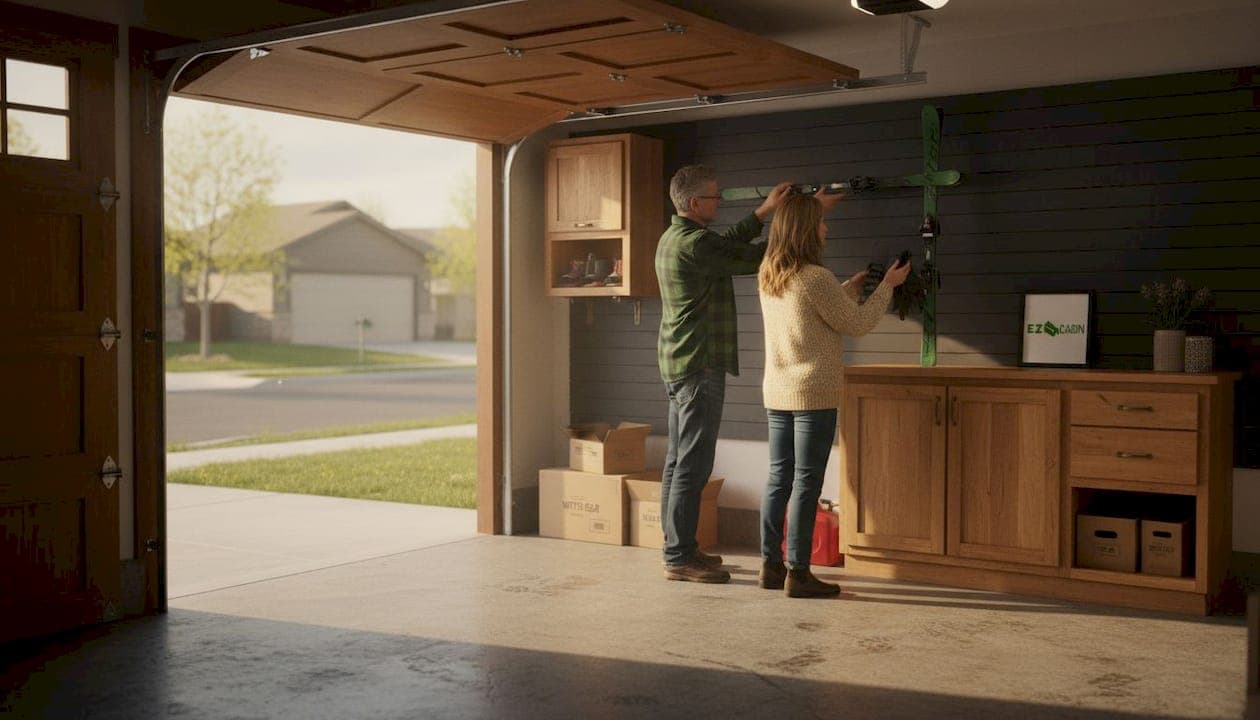
One of the clearest signals in the industry is the shift toward zoned storage systems. Slatwall panels and vertical storage are a dominant 2026 trend, replacing random shelving with architectural, wall-mounted systems that organize tools, sports gear, and seasonal items by zone and function. This isn't a cosmetic upgrade. It's a fundamentally different way of thinking about how a garage works.
For Kentucky and Ohio homeowners, this shift matters because both states experience wide seasonal swings. A well-organized, properly insulated garage pulls double duty as extra living and storage space during harsh winters and hot summers. That utility translates directly into home value and daily convenience.
Modular garage solutions: Organization, insulation, and EV-readiness
With a clear sense of the broader trends, let's examine what defines the modern modular garage in 2026.
Modern prefab and modular garages aren't the flimsy kits from a decade ago. Prefab garages in 2026 now feature R-13 to R-19 wall insulation with R-30 roof assemblies, prewired electrical options, EV-ready conduit runs, and modular add-ons like lofts and built-in cabinetry. That's a spec sheet that rivals many traditional stick-built garages.
Here's a quick breakdown of what to expect at different price points:
| Garage type | Typical cost range | Key features |
|---|---|---|
| Single-car prefab (uninsulated) | $8,000 to $12,000 | Basic structure, standard door |
| Single-car prefab (insulated) | $12,000 to $18,000 | R-13 walls, climate control ready |
| Two-car insulated modular | $18,000 to $35,000 | Full insulation, loft option, prewired |
| Two-car premium (EV-ready) | $35,000 to $45,000 | R-19+ walls, EV conduit, cabinetry |
The insulation numbers here are not just about comfort. R-value (a measure of thermal resistance) directly affects your heating and cooling costs. A garage with R-19 walls keeps temperatures stable, which protects tools, paint, lubricants, and vehicle batteries from the kind of freeze-thaw cycles that Kentucky and Ohio winters deliver regularly.
Here's how to think about your modular garage upgrade in order of priority:
- Start with the structure. Decide on footprint and whether you need a one or two-car configuration before adding features.
- Prioritize insulation. R-13 minimum for walls if you ever plan to use the space as anything other than basic parking.
- Add electrical capacity. A 100-amp subpanel gives you room to grow, including EV charging.
- Consider EV conduit even if you don't own an EV yet. Rough-in costs a fraction of retrofitting later.
- Plan storage zones. Slatwall, loft storage, and base cabinetry are far easier to integrate during construction than after.
Pro Tip: If you're ordering a modular garage, ask your supplier specifically about garage space optimization layouts. Many companies offer pre-configured interior packages that are significantly cheaper than custom arrangements and still address most homeowner needs.
The ability to add a loft is one of the most underrated modular features. A standard 24-by-24-foot two-car garage can gain 200 to 300 square feet of overhead storage with a loft addition, effectively doubling functional capacity without increasing the building's footprint.
Permanent modular vs. portable garages: What's right for your home?
Understanding modular features sets the stage for a critical choice: permanent or portable? Let's break down the options.
This is where homeowners often get tripped up, because the two categories serve genuinely different needs. Neither one is universally better. The right choice depends on your land situation, budget, timeline, and long-term plans.
| Feature | Permanent modular | Portable garage |
|---|---|---|
| Foundation required | Yes (concrete slab) | No |
| EV-ready options | Yes | Limited |
| Relocation | No | Yes |
| Weather durability | High | Moderate |
| Setup time | Days to weeks | 3 to 5 hours |
| Upfront cost | Higher ($8K to $45K+) | Lower ($1,500 to $8,000) |
| Permits often required | Yes | Usually not |
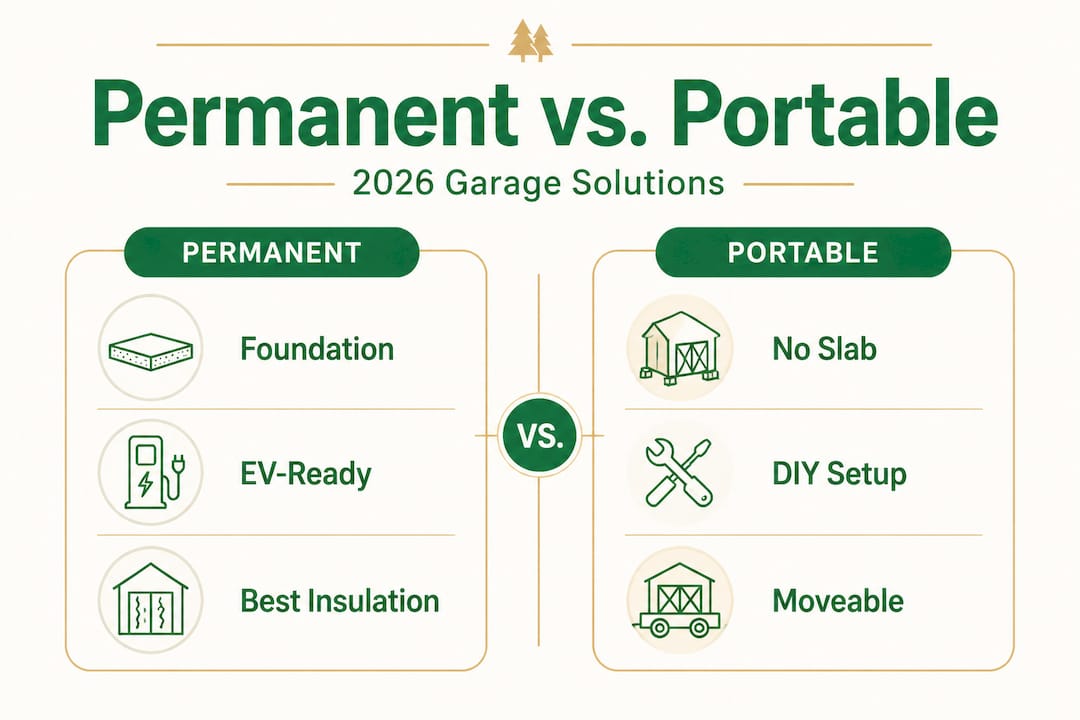
Permanent modular garages offer the durability and integration of traditional construction with faster build times. They sit on a concrete slab, connect to your home's electrical system, and are designed to last decades. Portable garages, on the other hand, require no foundation, no permits in most Kentucky and Ohio counties, and can be relocated if you move or rearrange your property.
Here's where Kentucky and Ohio homeowners need to think carefully:
- Both states experience significant wind events and heavy snow loads. Portable garages, while convenient, are less durable in extreme storms than their permanent metal counterparts.
- If you're in a flood plain or have soft soil, a portable unit on gravel may actually perform better than a slab-mounted structure in some situations.
- Permanent modular garages almost always require a building permit. Portable units typically do not, but local regulations vary by county and city.
- For renters or homeowners on larger rural properties, a portable garage offers flexibility that a permanent structure simply cannot match.
Pro Tip: Check out garage building types before you finalize your choice. Understanding the four main structural types and their warranty differences can save you real money and prevent costly surprises after purchase.
If you're leaning toward a DIY kit, keep in mind that both permanent and portable options require at least two to three people for assembly. Underestimating labor is one of the most common mistakes homeowners make when budgeting a garage project.
Installation and setup: What Kentucky & Ohio homeowners need to know
After choosing a garage type, it's time to plan installation. Here's what Kentucky and Ohio homeowners need to know.

One of the strongest arguments for prefab and modular garages is the time savings on your property. Offsite factory fabrication, which includes processes like robotic welding and precision panel cutting, reduces onsite labor by 50 to 70 percent compared to traditional stick-built construction. That means less disruption to your daily life and a much faster path from purchase to use.
Here's a practical installation sequence for permanent modular garages:
- Site prep. Level the ground, remove sod or debris, and establish drainage if needed.
- Pour the slab. Concrete needs 7 days minimum to cure before structure placement.
- Structure delivery. Most prefab panels arrive on a flatbed and are craned or forklift-placed.
- Panel assembly. Wall and roof panels connect on the slab with brackets and hardware.
- Electrical rough-in. Run conduit, install subpanel, and rough in any EV charging lines.
- Finishing. Install garage door, windows, insulation batts if not pre-installed, and any interior systems.
For portable garages, the process is dramatically simpler. A standard single-car portable unit with two to three helpers can be assembled in 3 to 5 hours on a flat, compacted gravel pad. No concrete, no permits in most areas, no waiting weeks for a slab to cure.
If you're planning to build a portable garage on your Kentucky or Ohio property, start by checking your county zoning office online. Most rural areas have generous size thresholds before permits kick in, but it's always worth confirming before you start moving gravel.
Pro Tip: Read through a step-by-step shed setup guide before you start any DIY garage project. The preparation and foundation steps apply directly to portable and prefab garages and will help you avoid the two most common pitfalls: unlevel ground and improper drainage.
Wind and snow certifications matter more than most people realize. Kentucky averages 50 to 60 mph wind gusts during severe thunderstorm season. Ohio's lake-effect snowfall in the northern part of the state creates significant roof load requirements. When you're evaluating any garage structure, ask specifically about its design wind speed rating and snow load capacity in pounds per square foot. A structure rated for 90 mph wind and 35 psf snow load is meaningfully safer than a basic economy unit with no certifications.
The real value of garage upgrades: Beyond just storage
With the practical groundwork covered, let's step back to reflect on what these shifts in garage design truly mean for Kentucky and Ohio homeowners.
Here's a perspective most articles won't give you: the garage is the most underpriced room in your home relative to what it can actually deliver. Conventional wisdom treats it as a storage closet with a big door. But that framing costs homeowners real money every year.
Think about what a well-upgraded modular garage actually replaces. Offsite storage units in Kentucky run $80 to $200 per month. A dedicated workshop saves hobbyists from renting time at a makerspace. An insulated, climate-controlled two-car garage protects a $40,000 vehicle from paint degradation, battery stress, and weather damage that isn't always covered by insurance. When you add those numbers up over five years, a $20,000 modular garage investment looks remarkably different.
The lifestyle angle is just as strong. Families who upgrade their garages consistently report using the space for kids' activities, fitness, creative projects, and even guest overflow during holidays. That's not just square footage. That's quality of life.
We've also seen homeowners treat an upgraded garage as space insurance for the future. The family that installs an EV-ready two-car garage in 2026 is positioned for the next decade of vehicle technology without a costly retrofit. The homeowner who adds a loft to their prefab structure has effectively created a bonus room that an appraiser will recognize at resale.
Portable garages can save Kentucky and Ohio homeowners significantly compared to traditional construction when the goal is immediate, practical protection rather than a permanent addition. But the smartest move isn't always the cheapest one upfront. It's the one that delivers value across multiple dimensions: protection, utility, flexibility, and resale.
The conventional wisdom that garages are secondary spaces is simply outdated. In 2026, the homeowners getting the best return on their property investments are the ones treating the garage as seriously as any other room in the house.
Bring your 2026 garage vision to life
You now have a clear picture of what modular and portable garages offer in 2026 and how to choose the right solution for your Kentucky or Ohio property.

At EZ-Cabin, we make it simple to put these ideas into action without the typical dealership hassle. Whether you're ready to secure your new garage today or want to start from scratch and build your own modular garage using our AI-powered customization tool, we have options that fit real budgets and real timelines. Our flexible garage financing requires no credit check, just your first month's payment to get started, and most buildings are delivered within one to four weeks. Stop planning and start building the garage your property deserves.
Frequently asked questions
How long does it take to install a modular or portable garage?
Portable garages can go up in 3 to 5 hours with two to three people on flat, prepped ground, while permanent modular garages add time for a concrete slab and panel assembly, often spanning one to two weeks total.
Are portable garages sturdy enough for Kentucky and Ohio weather?
Portable units with wind and snow certifications offer solid seasonal protection, but they are generally less robust than permanent metal structures in severe storms, which is worth factoring into your decision if you're in a high-wind or heavy-snow area.
What makes modular garages a top trend in 2026?
Modular garage systems, including slatwall panels, rail systems, and vertical zoning, lead 2026 design trends because they maximize every square foot and adapt easily to changing storage and lifestyle needs.
Can I add custom storage or a loft to a prefab garage?
Yes. Most modular prefab garages support loft add-ons and built-in cabinetry packages, and many suppliers offer these as configurable options at the time of purchase rather than expensive retrofits later.